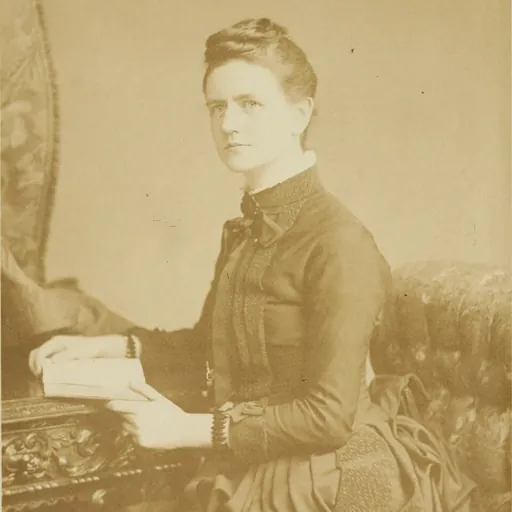
About Constance Naden
Lived 1858 – 1889 (aged 31). Constance Naden was a British philosopher, poet and writer.
Constance Caroline Woodhill Naden (24 January 185823 December 1889) was an English writer, poet and philosopher. She studied, wrote and lectured on philosophy and science, alongside publishing two volumes of poetry. Several collected works were published following her death at the young age of 31. In her honour, Robert Lewins established the Constance Naden Medal and had a bust of her installed at Mason Science College (now the University of Birmingham). William Ewart Gladstone considered her one of the nineteenth century's foremost female poets.
Early life Constance Naden was born on 24 January 1858 at 15 Francis Road, Edgbaston, Birmingham, England to Caroline Ann Woodhill Naden who died within two weeks of giving birth, and Thomas Naden, an architect, later president of the Birmingham Architectural Association. from 12 days old until her grandparents' deaths. Her father lived with the Woodhills for a time, but by 1871 the census shows that he was living nearby with a new wife and Naden's four half-siblings aged between three and seven. At age eight Naden was sent to a local Unitarian day school, where she developed a talent for painting. In 1885 she won the "Paxton prize" for an essay upon the geology of the district.
Naden published a number of essays defending this view, in the Journal of Science, Knowledge, The Agnostic Annual and other periodicals. In his work The Social Organism (1860), Spencer compared society to a living organism and argued that, just as biological organisms evolve through natural selection, society evolves and increases in complexity.
Poetic writing In 1881, Naden published her first volume of poetry Songs and Sonnets of Springtime.
Later life
Naden's grandmother Woodhill died on 21 June 1887#tag:ref|Naden's Grandfather Woodhill died previously on 27 December 1881.
She returned to England in June 1888 and bought a house on Park Street, Grosvenor Square,
Naden was described as: slight and tall, with a delicate face and 'clear blue-grey eyes.' She was regular and active in her habits. She had a penetrating voice, and was thoroughly self-possessed in public speaking. Naden's last letter to Robert Lewins, which is printed on the opening pages of the 1891 essay collection Further Reliques of Constance Naden details the circumstances of the surgery and her worries regarding it. She was buried in the nonconformist Key Hill Cemetery, Birmingham. The gravestone was badly damaged over the course of the twentieth century, and in September 2017 a campaign was launched to replace it with a more fitting memorial. A rededication ceremony for the new gravestone took place on Saturday 11 May 2019.
Remembrance Naden was lauded after her death for her philosophical writings, by Robert Lewins, M.D., her contributions to poetry, her support of the women's suffrage cause in popular women's periodicals, and for her "Pantheistic view of immortality" by William Ewart Gladstone, in which he ranked her among the nineteenth century's top female poets. Herbert Spencer, who had been an important influence on her work, remarked: "I can think of no woman, save 'George Eliot,' in whom there has been this union of high philosophical capacity with extensive acquisition. Unquestionably her subtle intelligence would have done much in furtherance of rational thought; and her death has entailed a serious loss." Lewins founded the Constance Naden Medal at Mason College in her honour,
On 14 December 2009, the Birmingham Civic Society provided a commemorative blue plaque which was unveiled by the Lord Mayor. It is located at her childhood home, Pakenham House 20 Charlotte Road, Edgbaston. The inscription reads "Constance C.W. Naden 1858–1889 Poet, Scientist and Philosopher lived here for most of her life."
Naden's grave in Key Hill Cemetery is shared with her mother and maternal grandparents. During the twentieth century the stone was broken up and buried, along with other memorials in the area; in 2010 it was excavated by the Friends of the Cemetery but it remained illegible. On 11 May 2019, following a successful fundraising campaign by the Constance Naden Trust, a rededication ceremony was held to mark the installation of Constance Naden's new gravestone. The replacement stone reproduces the text on the original but draws additional attention to Naden's achievements with the words 'Poet, philosopher, artist, Scientist' newly inscribed near the top of the stone along with a line from her 1881 poem 'The Pantheist's Song of Immortality': 'For earth is not as though thou ne'er hadst been'.
Posthumous publications Three books were published posthumously, Induction and deduction, and other essays (1890), Further Reliques of Constance Naden (1891) and The Complete Poetical Works of Constance Naden (1894).
Critical reception Naden's poetry has received increasing attention since the 1980s, as people sought to recover lost women's voices. A range of scholarship on her life and works has appeared, with particular focus on the interplay between literature and science in her works, her relationship with freethought, and her proto-feminist ideas. Clare Stainthorp has published an overview of the first three decades of critical writings on Naden, in which she also suggests avenues for future research. In 2019, Stainthorp's book Constance Naden: Scientist, Philosopher, Poet provided the first in depth consideration of Naden's life and explored the significance of her published and unpublished poems and essays.
Don’t just read it —
keep it.
Full-length biographies made to live with: read them, listen on the way to work, watch them tonight.
- E-book
- Audio
- Video
Instant download · yours to keep · every purchase keeps this site free
Important facts
People in Constance Naden's life
Named in this biography and alive at the same time



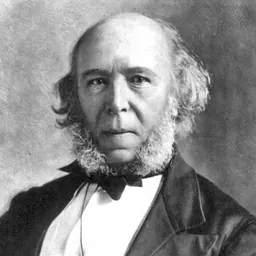
Related people
Same field, nearest in time




Contemporaries
People whose lives overlapped Constance Naden's



Frequently asked questions
Who was Constance Naden?
English writer, poet and philosopher (1858-1889)
When was Constance Naden born?
Constance Naden was born on 24 January 1858 in Edgbaston.
When did Constance Naden die?
Constance Naden died on 23 December 1889 in Mayfair.
What was Constance Naden's occupation?
Constance Naden was a philosopher, poet and writer.
What nationality was Constance Naden?
Constance Naden was British.
Sources & further reading
Cite this page
APA: Biography.guide. (2026). Constance Naden. https://biography.guide/constance-naden/
MLA: "Constance Naden." Biography.guide, https://biography.guide/constance-naden/.
Chicago: "Constance Naden." Biography.guide. https://biography.guide/constance-naden/.
Data last updated: 2026-09-22 · Spot an error? Report a correction.
Portrait: Wikimedia Commons · author & licence
Page generated 2026-09-27 05:03 UTC