
About Constance Cary Harrison
Lived 1843 – 1920 (aged 77). Constance Cary Harrison was an American socialite and writer.
Constance Cary Harrison (pen name, Refugitta; April 25, 1843 – November 21, 1920), also referred to as Mrs. Burton Harrison, was an American playwright and novelist. She and two of her cousins were known as the "Cary Invincibles"; the three sewed the first examples of the Confederate Battle Flag.
Harrison belonged to an old Virginia noble family of the Fairfaxes and was related to the Jeffersons. Her home was destroyed during the American Civil War and consequently she witnessed much of the horrors of that struggle. After the war ended, she accompanied her mother on a trip to Europe. Upon her return to the United States, she married Burton Harrison, a lawyer and American democratic politician, who was at one time the Secretary of President Jefferson Davis. They moved to New York in 1876, and there she began her literary life. Her first magazine article was A Little Centennial Lady, which attracted much attention, and thereafter, she wrote a great deal.
Few literary women in New York were better known at the time, her home a social and literary center. She produced several plays, chiefly adaptations from the French. The work that probably gained her more reputation abroad was The Anglomaniacs, which appeared in The Century without her name. It ranked her at once among the best of the novelists. Some of her other works included, Golden Rod, The Story of Helen Troy, Woman's Handiwork in Modern Houses, Old-Fashioned Fairy Book, Bric-a-Brac Stories, Flower de Hundred, Miy Lord Fairfax of Greenway Court, The Homes and Haunts of Washington, The Russian Honeymoon, Sweet Bells Out of Tune, A Daughter of the South and Other Tales, Bar Harbor Days, and An edelweiss of the Sierras, Golden-rod, and other tales.
Origins Constance Fairfax Cary was born at Lexington, Kentucky ) on April 25, 1843 into a planter aristocrat family, to parents Archibald and the Hon. Monimia ( Fairfax) Cary. Archibald Cary was the son of Wilson Jefferson Cary and Virginia Randolph.
Wilson Jefferson Cary was a descendant of the ancient and prominent English gentry family of Cary, lords of the manor of Clovelly in Devon and of Cockington and Tor Abbey, as is related in a genealogical work by Fairfax Harrison (1869–1938) of Belvoir House, Fauquier County, Virginia (son of Constance Cary Harrison) The Devon Carys, 2 vols., New York, 1920.
The Hon. Monimia Fairfax was the daughter of American peer, Thomas Fairfax, 9th Lord Fairfax of Cameron, and Lady Margaret Herbert, who was the granddaughter of John Carlyle and Sarah Fairfax. Her brother was Clarence Cary, who was prominent in New York society. Archibald Cary was a subscriber to the Monticello Graveyard (1837). They lived at Cumberland, Maryland, where he was editor of its leading newspaper, The Cumberland Civilian. When he died in 1854, her mother, Monimia, moved the family in with her grandmother at Vaucluse Plantation in Fairfax County, Virginia, until the outbreak of the Civil War.
Civil War years Confederate flag sewn by Constance Cary (reverse). Cary sewed her name on the blue stripe in the lower right of the flag. After the seizure of Vaucluse and its demolition (to construct Fort Worth, as a part of the defenses of Washington, D.C.) she lived in Richmond, Virginia, during the American Civil War and moved in the same set as Varina Davis, Mary Boykin Chesnut, and Virginia Clay-Clopton. She was published in Southern magazines under the pen name "Refugitta".
Constance Cary lived with her Baltimore cousins, Hetty and Jennie; her mother served as the girls' chaperone. The three young ladies became known as the "Cary Invincibles". In September 1861, they sewed the first examples of the Confederate Battle Flag following a design created by William Porcher Miles and modified by General Joseph E. Johnston.
According to her own account, one flag was given to General Joseph E. Johnston, one to Confederate general P. G. T. Beauregard, and hers to Confederate general Earl Van Dorn. Later during the war, she assisted her mother as a nurse at Camp Winder.
She later met her future husband, Burton Harrison (1838–1904), a private secretary for Confederate President Jefferson Davis, and helped win his release from Fort Delaware after the war's end.
After the war Harrison and her mother spent the winter of 1865 in Paris before returning to New York City in 1866. She and Burton Harrison were married on November 26, 1867, at St. Anne's Church (Westchester County, New York). Their wedding breakfast was at Morrisania, the country home of her uncle, Gouverneur Morris Jr. Burton Harrison held various public offices while Constance spent her time writing and being involved in the city's social scene.
In 1871, the Harrisons first visited Bar Harbor, Mount Desert Island, Maine, staying at the cottage of Captain Royal George Higgins. Sometime in the 1880s, they commissioned Arthur Rotch of the architectural firm Rotch & Tilden to build a seaside cottage called "Sea Urchins", with a garden designed by Beatrix Farrand. The property now is owned by the College of the Atlantic, transformed into Deering Common, student center. "Sea Urchins" was the center of hospitality during the Gilded Age in Bar Harbor and she entertained many noted visitors there, including friend and neighbor James G. Blaine, who lived at "Stanwood". The Harrisons' winter home was a mansion on East 29th Street, New York.
Harrison died in Washington, D.C., in 1920, at the age of 77. She is buried in Ivy Hill Cemetery, Alexandria, Virginia.
Works
The works of Constance Cary Harrison include:
Magazine articles and stories
Dramatic literature Two Strings to Her Bow (1884) The Mouse Trap (1886) Weeping Wives (1886) Behind a Curtain (1887) Tea at Four O'Clock (1887)
Other prose
Produced at Madison Square theater in 1888.
Noted actress Minnie Maddern Fiske appeared in the 1901 production of this play.
Don’t just read it —
keep it.
Full-length biographies made to live with: read them, listen on the way to work, watch them tonight.
- E-book
- Audio
- Video
Instant download · yours to keep · every purchase keeps this site free
Important facts
Family & relationships
People in Constance Cary Harrison's life
Named in this biography and alive at the same time



Related people
Same field, nearest in time

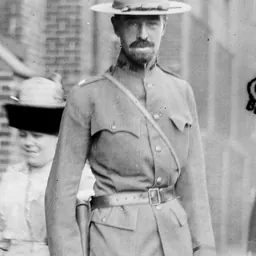
Contemporaries
People whose lives overlapped Constance Cary Harrison's
Frequently asked questions
Who was Constance Cary Harrison?
American writer (1843-1920)
When was Constance Cary Harrison born?
Constance Cary Harrison was born on 25 April 1843 in Port Gibson, Fairfax County.
When did Constance Cary Harrison die?
Constance Cary Harrison died on 21 November 1920 in Washington, D.C..
What was Constance Cary Harrison's occupation?
Constance Cary Harrison was a socialite and writer.
What nationality was Constance Cary Harrison?
Constance Cary Harrison was American.
Sources & further reading
· Wikipedia: Constance Cary Harrison
· DBpedia: Constance Cary Harrison
Cite this page
APA: Biography.guide. (2026). Constance Cary Harrison. https://biography.guide/constance-cary-harrison/
MLA: "Constance Cary Harrison." Biography.guide, https://biography.guide/constance-cary-harrison/.
Chicago: "Constance Cary Harrison." Biography.guide. https://biography.guide/constance-cary-harrison/.
Data last updated: 2026-09-20 · Spot an error? Report a correction.
Page generated 2026-09-27 05:29 UTC