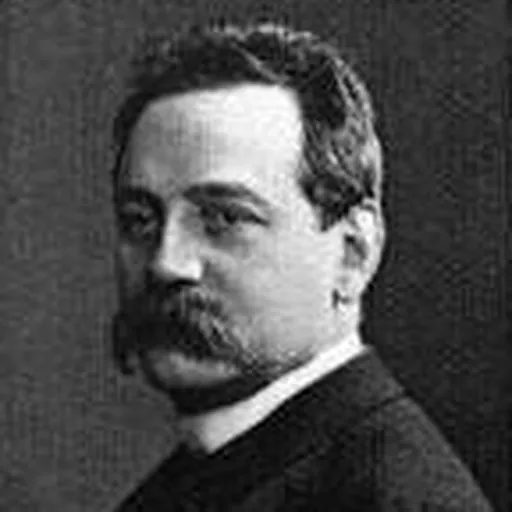
About Conrad Haußmann
Lived 1857 – 1922 (aged 65). Conrad Haußmann was a German politician, civil servant, jurist, opinion journalist, poet and translator.
Conrad Haußmann – or "Haussmann" in English spelling – (8 February 1857 – 11 February 1922) was a liberal German politician during the German Empire and the early years of the Weimar Republic. He was a member of the state parliament of Württemberg from 1889 and of the national Reichstag from 1890 until his death in 1922. Following World War I, he was one of the founders of the German Democratic Party (DDP).
Family Born on 8 February 1857 in Stuttgart, Conrad Haußmann came from a family that was active in democratic politics in the Kingdom of Württemberg. His father, Julius Haußmann, was involved in the German Revolution of 1848; his mother, Marie Stoffel, was Swiss. His twin brother Friedrich became a member of the German Reichstag. Haußmann married Helene Kausler in 1887 and, with her, had two sons. The eldest, Robert, worked as a lawyer in Stuttgart and was president of the local bar association. Wolfgang Haußmann (1903–1989) was minister of justice in Baden-Württemberg from 1953 to 1966.
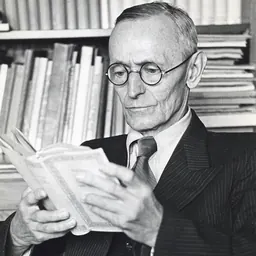
Education and professional life After graduating from the Eberhard-Ludwigs-Gymnasium in Stuttgart, Haußmann studied law in Zürich, Munich, Berlin and Tübingen and settled as a lawyer in Stuttgart in 1883. In 1907 he took part with the writers Hermann Hesse, with whom he was friends, and Ludwig Thoma in the founding of the political-literary magazine ("March"), which was initially published by Albert Langen. It was intended as a "constructive counterpart" to Langen's satirical magazine Simplicissimus. Haußmann, who was committed to Franco-German reconciliation following the 1870–1871 Franco-Prussian War, provided the writer Anatole France and Jean Jaurès, a leading French social democrat, with the opportunity to contribute to . After the merger of his party with the German Free-minded Party and the Free-minded Union to form the Progressive People's Party, he increasingly assumed a leading role in the liberal movement of the German Empire.
Prior to the outbreak of World War I, he made intensive efforts to establish contacts with French deputies at meetings in Bern and in Basel in order to reduce tensions. In July 1917, he was one of the initiators of a resolution in the Reichstag calling for a negotiated peace to end the war. On 14 October 1918, Haußmann was appointed state secretary without portfolio in the cabinet of Max von Baden, where he was responsible for drafting Chancellor Baden's statements. With the transition to the first post-monarchical government, Haußmann gave up his post, although the new chancellor, Friedrich Ebert, would have liked to include him in his cabinet. At the state level, he assumed the chairmanship of the newly founded German Democratic Party (DDP) at the end of 1918.
In early 1919, Haußmann was elected as a DDP delegate to the Weimar National Assembly, the body that drafted a new constitution for Germany and acted as its interim parliament. He served as vice president of its Presidium and chaired the "Committee for the Preliminary Consultation of the Draft Constitution of the German Reich". In 1920, Haußmann failed to be elected president of the People's State of Württemberg. He withdrew from state politics but was a member of the Weimar Reichstag until his death on 11 February 1922.
Don’t just read it —
keep it.
Full-length biographies made to live with: read them, listen on the way to work, watch them tonight.
- E-book
- Audio
- Video
Instant download · yours to keep · every purchase keeps this site free
Important facts
People in Conrad Haußmann's life
Named in this biography and alive at the same time




Related people
Same field, nearest in time





Contemporaries
People whose lives overlapped Conrad Haußmann's



Frequently asked questions
Who was Conrad Haußmann?
German politician (1857-1922)
When was Conrad Haußmann born?
Conrad Haußmann was born on 8 February 1857 in Stuttgart.
When did Conrad Haußmann die?
Conrad Haußmann died on 11 February 1922 in Stuttgart.
What was Conrad Haußmann's occupation?
Conrad Haußmann was a politician, civil servant, jurist, opinion journalist, poet and translator.
What nationality was Conrad Haußmann?
Conrad Haußmann was German.
Sources & further reading
Cite this page
APA: Biography.guide. (2026). Conrad Haußmann. https://biography.guide/conrad-haussmann/
MLA: "Conrad Haußmann." Biography.guide, https://biography.guide/conrad-haussmann/.
Chicago: "Conrad Haußmann." Biography.guide. https://biography.guide/conrad-haussmann/.
Data last updated: 2026-09-22 · Spot an error? Report a correction.
Portrait: Wikimedia Commons · author & licence
Page generated 2026-09-27 05:02 UTC