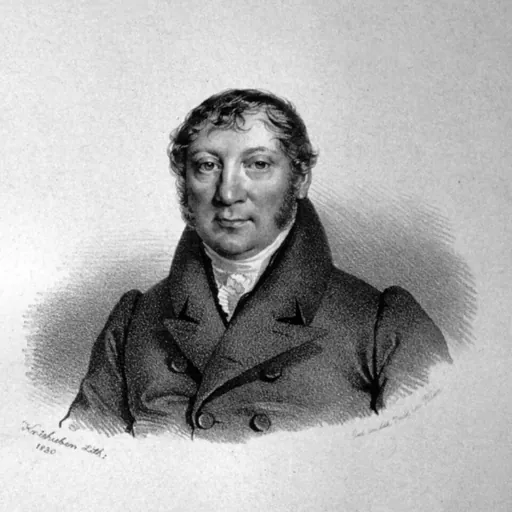
About Conrad Graf
Lived 1782 – 1851 (aged 68). Conrad Graf was an Austrian piano maker and musical instrument maker.
Conrad Graf (17 November 1782 in Riedlingen, Further Austria – 18 March 1851 in Vienna) was an Austrian-German fortepiano maker. His pianos were used by Beethoven, Schubert, Chopin, Liszt, Mendelssohn, and Robert and Clara Schumann, among others.
Life and career Graf began his career as a cabinet maker, studying the craft in his native Riedlingen in south Germany, in what was then Further Austria. He reached the status of journeyman in 1796 and migrated to Vienna in either 1798 or 1799. In 1800 he served briefly in an all-volunteer military unit, the Jäger Freikorps, then became apprenticed to a piano maker named Jakob Schelkle, who worked in Währing, then a suburb of Vienna. When Schelkle died in 1804, Graf married his widow Katherina and took over the shop.
The Graf family had two children listed in census records: Karalina Schelklin (born 1802), from Katherina's previous marriage, and Juliana Graf (born 1806). Katherina died in 1814, and Graf did not remarry. Graf was successful in this milieu. By 1809, he was employing ten workers. In 1811, he relocated from the original suburban location to new quarters in the (more expensive) central city. Many of the workers lived in the same building, which included ten apartments. The lower cost of factory-produced instruments led in the 19th century to widespread ownership of pianos by the middle class.
In 1835, Graf won a gold medal for his pianos in 1835 at the first Viennese industrial products exhibition. His pianos were often owned and played by celebrated musicians (see below).
In 1840 Graf retired and sold the firm to Carl Stein, who was the grandson of the famous piano builder Johann Andreas Stein. The case was laminated
Thanks to their sturdy construction, Graf pianos have lasted for a long time. Over 60 of them have survived to the present day and can be found in many of the musical instrument museums of Europe and the United States.
With a single exception, the surviving Graf pianos are grands. The exception is a notable one, an 1829 pyramid piano (a kind of upright) built on commission and extravagantly decorated with caryatids, an ornamental urn, and other sculptures. It is kept in the Gemeentemuseum in the Hague.
For downloadable sound files illustrating the tone of a Graf, see External Links below.
Graf as inventor
Although Graf's pianos are generally considered conservative in their design, there is evidence that Graf explored various ways to improve them. His technical innovations included the strengthened interior bracing mentioned above, a new method of leathering hammers. At various stages (about 1810–1820, and also 1826; see below) he explored the possibility of adding a fourth string per note. Graf also built a mechanical saw for cutting veneer, capable of cutting strips up to 57 cm. wide, Graf's sound-channeling device, mentioned above, was also part of this effort.
Following Beethoven's death in 1827, Graf took the piano back and sold it to the Wimmer family of Vienna. The importance of the Graf to Beethoven's career is probably minor. According to Good, "the only work he wrote for piano after getting it was the four-hand transcription of the Grosse Fugue ... and the indications are that he was playing very little even for himself in the last three years of his life."
In 1829, the 19-year-old Frédéric Chopin came to Vienna from Poland to give concert performances on the piano. Both Graf and his rival Matthäus Andreas Stein offered Chopin an instrument to use. Chopin, who was familiar with foreign pianos, unhesitatingly selected the Graf, and his Vienna concerts were a success. According to Goldberg, Chopin continued to "cherish" Graf instruments during his subsequent career in Paris.
The famous virtuoso Franz Liszt, who played Graf pianos, must have been something of a thorn in Herr Graf's side, as the Graf piano was not always capable of standing up to the violence that Liszt inflicted on it during his more impassioned moments of playing. Friedrich Wieck wrote in his diary during Liszt's 1838 visit to Vienna, "We heard Liszt today at Conrad Graf's who was sweating as his piano did not survive the great duel—Liszt remained the victor." Wieck described another concert on the same visit in which Liszt "destroyed" two Grafs, as well as an Erard piano lent to him by Sigismond Thalberg.
Felix Mendelssohn also admired instruments from Graf. He acquired one in 1832 which he used in the family house and recitals in Berlin, and later another for use in Dusseldorf.
In 1840, Graf gave one of his firm's grand pianos as a gift to the young piano virtuoso Clara Wieck (Friedrich's daughter), on the occasion of her marriage to Robert Schumann. When Schumann died in 1856, Clara gave the instrument to her friend Johannes Brahms, who used it for his work until 1873. He then donated it to the Gesellschaft der Musikfreunde; today it is on display in the Kunsthistorisches Museum in Vienna.
During the 1880s, the young Gustav Mahler owned and played a very old piano, a Graf from about 1836. The instrument is currently housed in the Cobbe Collection near Guildford in England. The collection's web site suggests that Mahler simply could not afford a better piano at the time. Other musicians who owned or played Graf pianos included Friedrich Kalkbrenner and Camille Pleyel.
Assessment
Of Graf's instruments, Wythe says they "represent the culmination of Viennese classical piano building in the style of J. A. Stein and Anton Walter: they are uncorrupted by modern 'advances' such as the steel frame and the repeat action, and show none of the unwieldiness that eventually led to the decline of the Viennese piano." Kottick and Lucktenberg describe Graf thus: "although a conservative builder, Graf was well thought of, and some of the best nineteenth-century German pianists preferred his instruments." The report of the exhibition where Graf's pianos won a gold medal said: The distinguished characteristics of his pianos have gained them the attention of the entire musical world; indeed, there is a strong market for his instruments not only domestically but in all parts of the civilized world ... [they] must be included among the most successful achievements in the art of piano building. The surviving Graf instruments are about two centuries old; the musicologist Robert Winter has voiced strong criticism of performers who choose to use historical instruments, including Graf pianos, that may sound very poorly after such a great passage of time. However, a number of modern builders have created new copies of Graf pianos, and these non-dilapidated instruments have been adopted by a variety of modern performers for both concerts and recordings.
Recordings made with originals fortepianos of Conrad Graf
Esther Hoppe, Florian Birsak. Wolfgang Amadeus Mozart. Mozarts Costa-Violine. Label: belvedere. Played on Conrad Graf fortepiano (1839). Natalia Rehling. Frédéric Chopin. Sonata No. 2, Preludes op. 28. Label: paladino music. Played on Conrad Graf fortepiano (after 1828). Hardy Rittner. Frédéric Chopin. Complete Etudes. Label: MDG. Played on Conrad Graf fortepiano (c. 1835). The Atlantis Trio (Penelope Crawford, Jaap Schröder, Enid Sutherland) Felix and Fanny Mendelssohn. Klaviertrios. Label: Musica Omnia. Played on a Graf fortepiano. Paul Badura-Skoda. Franz Schubert. Fantaisie Pour le Piano-forte. Label: Astree. Played on a Conrad Graf 1824 fortepiano. Erich Höbarth, Alexander Rudin, Aapo Häkkinen. Franz Schubert. Piano Trio No. 2, Arpeggione Sonata. Label: Naxos. Played on Conrad Graf fortepiano (1827). Daniel Paul Horn. Franz Schubert, Felix Mendelssohn. Wanderings: Fanatasies of Schubert & Mendelssohn. Label: Titanic. Played on Conrad Graf fortepiano (c. 1829). Malcolm Bilson. Franz Schubert. Piano Sonatas D.850, D.568. Label: Hungaraton Classics. Played on Conrad Graf ca.1835 fortepiano. Jörg Demus. Robert Schumann. Musik auf historischen Instrumenten aus dem Erbdrostenhof zu Münster. Label: FSM. Played on Conrad Graf fortepiano (c. 1835). Jörg Demus. Robert Schumann. Fantasiestücke Op. 12, Humoresque Op. 20. Label: MDG. Played on Conrad Graf fortepiano Op. 1810 (c. 1835). Paul Schweinester, Andreas Mattersberger, Annette Seiler, Johannes Hinterholzer. Josef Netzer. Lieder & Duett Die Loreley. Label: Musikmuseum. Played on Conrad Graf fortepiano (1835). Maria Erlacher, Andreas Lebeda, Nikolaus Walch, Annette Seiler. Josef Netzer. Lieder. Label: Musikmuseum. Played on Conrad Graf fortepiano (1835). Annette Seiler. Felix Mendelssohn. Lieder ohne Worte, Rondo capriccioso & Variations sérieuses. Label: Musikmuseum. Played on Conrad Graf fortepiano (1835). Annette Seiler. Robert Schumann. Psychogramme. Label: Musikmuseum. Played on Conrad Graf fortepiano (c. 1835). Attilio Cremonesi, Anna Fontana. Johann Nepomuk Hummel, Ferdinand Ries, Johann Baptist Cramer, Jan Kalivoda. A quattro mani. Label: Musikmuseum. Played on Conrad Graf fortepiano Op. 2003 (c. 1835). Tobias Koch. Franz Schubert. Zukunftsmusik: Die letzten drei Klaviersonaten. Label: Musikmuseum. Played on Conrad Graf fortepiano (c. 1835). Tobias Koch. Norbert Burgmüller, Felix Mendelssohn, Friedrich Burgmüller. Complete Works for Pianoforte. Label: Genuin. Played on fortepianos by Conrad Graf Op. 1181 (c. 1826) and Ignace Pleyel Op. 8777 (c. 1835). Tobias Koch, Riko Fukuda. Frédéric Chopin, Ignaz Moscheles, Felix Mendelssohn, Ferdinand Hiller, Franz Liszt. Grand Duo. Label: ARS Produktion. Played on Conrad Graf fortepianos (1830) and Op. 2258 (1835). Tobias Koch. Ludwig van Beethoven. Complete Piano Pieces. Label: Avi-Music. Played on fortepianos by Michael Rosenberger (1810), Conrad Graf (1827), Nannette Streicher & Sohn (1825), orphica (ca. 1800) and tangent piano by Späth und Schmahl (1790) and Nannette Streicher fortepiano (1816). Pierre-André Taillard, Edoardo Torbianelli. Carl Maria von Weber, Ferdinand Ries. Grand Duo Concertant. Label: Harmonia Mundi. Played on Conrad Graf fortepianos Op. 1040 (1822-1823) and Op. 367 (1820). Thomas Oliemans, Paolo Giacometti. Robert Schumann. Lieder: Dr. Jekyll & Mr. Hyde. Label: Channel Classics. Played on fortepianos by Conrad Graf (c. 1830) and Johann Baptist Streicher (1847). Julian Perkins, Emma Abbate. Carl Maria von Weber. Complete Keyboard Duets. Label: Deux-Elles. Played on Conrad Graf fortepiano (1826). Stephen Preston, Jennifer Ward Clarke, Richard Burnett. Carl Maria von Weber. Flute Trio and Sonatas. Label: Amon-Ra. Played on Conrad Graf fortepiano (1826). Ralph Holmes, Richard Burnett. Johann Nepomuk Hummel. Works for Violin and Piano. Label: Amon-Ra. Played on Conrad Graf fortepiano (1826). Richard Burnett. Johann Nepomuk Hummel, Frédéric Chopin, Franz Schubert, Robert Schumann, Carl Czerny. FThe Romantic Fortepiano. Label: SKC. Played on Conrad Graf fortepiano Op. 988 (1841). Eleonora Contucci, Costantino Mastroprimiano. Hugo Staehle. Mädchenliebe: Lieder. Label: Brilliant Classics. Played on Conrad Graf fortepiano Op. 1092 (1826). Eleonora Contucci, Costantino Mastroprimiano. Norbert Burgmüller. Lieder, Piano Sonata Op. 8. Label: Brilliant Classics. Played on Conrad Graf fortepiano Op. 1092 (1826). Costantino Mastroprimiano. Frédéric Chopin. Early Works. Label: Brilliant Classics. Played on Conrad Graf fortepiano Op. 1092 (1826). Christoph Huntgeburth, Rolf Junghanns. Franz Schubert, Franz Xaver Wolfgang Mozart, Johann Nepomuk Hummel. Romantic Flute Music. Label: FSM. Played on Conrad Graf fortepiano (1824). Michael Schopper, Jos van Immerseel. Franz Schubert. Schwanengesang. Label: Globe. Played on Conrad Graf fortepiano (1826). Rufus Müller, Christoph Hammer. Franz Lachner. Sängerfahrt, Op.33, und Andere Lieder nach Gedichten von Heine. Label: Oehms. Played on Conrad Graf fortepiano Op. 1207 (c. 1827).
Recordings made with replicas fortepianos of Conrad Graf
Pierre Goy. Frédéric Chopin. Chopin à vienne. Label: Lyrinx Played on a copy by Christopher Clarke of a Graf fortepiano (1826). Tatiana Loguinova. Mikhail Glinka. Treasures for the Pianoforte. Label: Phaedra. Played on a copy by Chris Maene of a Graf fortepiano (1825). The Helicon Ensemble. Robert Schumann. A Schumann Salon Concert. Label: Helicon. Played on a copy by R. J. Regier (1987) of a Graf fortepiano (c. 1824). Franz Vitzthum, Katharina Olivia Brand. Franz Schubert, Carl Friedrich Zelter, Charlotte Bender, Johann Friedrich von Dalberg, Anselm Hüttenbrenner, Johann Vesque von Püttlingen, Josephine Caroline Lang, Ernst Friedrich Kauffmann, Felix Mendelssohn. Nachthimmel: Lieder von Schubert, Zelter, Dalberg. Label: Christophorus. Played on a copy by Christoph Kern (2019) of a Graf fortepiano (1826). Costantino Mastroprimiano. Franz Schubert. Sonatas D. 157, D. 664, D. 850. Label: Dynamic. Played on a copy by Andrea Restelli (2012) of a Graf fortepiano Op. 593. Kristian Bezuidenhout. Ludwig van Beethoven. Piano Concertos Nos. 2&5. Label: Harmonia Mundi. Played on a replica of a Graf 1824 made by R. Regier. Michael Tsalka. Ferdinand Ries. Romantic Variations, Fantasies and a Rondo. Label: Naxos. Fortepianos by Thomas and Barbara Wolf after Johann Schanz (c. 1800, replica: 1997) and Nannette Streicher (c. 1815, replica: 1994) and by R. J. Reiger (Freeport, 1993) after Conard Graf (c. 1824). Ronald Brautigam. Ludwig van Beethoven. Complete Works for Solo Piano. Label: BIS. Played on a copy of a Graf, Walter and Stein fortepianos made by Paul McNulty. Ronald Brautigam. Carl Maria von Weber. Complete Works for Piano & Orchestra. Label: BIS. Played on a copy by Paul McNulty (2007) of a Graf fortepiano (c. 1819) . Markus Schäfer, Zvi Meniker. Franz Schubert. The Small Song Cycles. Label: Passacaille. Played on a copy by Paul McNulty (2012) of a Graf fortepiano (c. 1819) . Petra Matejová. Jan Václav Voříšek. Rhapsodies, Fantasia. Label: Český rozhlas. Played on a copy by Paul McNulty (2008) of a Graf fortepiano (1819) . Viviana Sofronitsky. Franz Schubert. Wanderer Fantasy. Impromptus opp.90 & 142. Label: Avi Music. Played on a copy of a Graf instrument made by Paul McNulty.
Notes and references
Don’t just read it —
keep it.
Full-length biographies made to live with: read them, listen on the way to work, watch them tonight.
- E-book
- Audio
- Video
Instant download · yours to keep · every purchase keeps this site free
Important facts
People in Conrad Graf's life
Named in this biography and alive at the same time


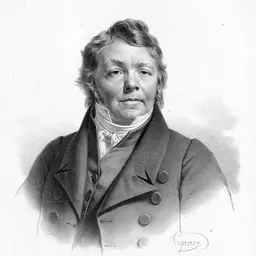


Related people
Same field, nearest in time

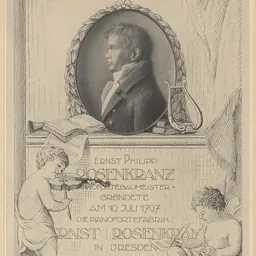
Contemporaries
People whose lives overlapped Conrad Graf's



Frequently asked questions
Who was Conrad Graf?
German-Austrian piano maker
When was Conrad Graf born?
Conrad Graf was born on 17 November 1782 in Riedlingen.
When did Conrad Graf die?
Conrad Graf died on 17 March 1851 in Vienna.
What was Conrad Graf's occupation?
Conrad Graf was a piano maker and musical instrument maker.
What nationality was Conrad Graf?
Conrad Graf was Austrian.
Sources & further reading
Cite this page
APA: Biography.guide. (2026). Conrad Graf. https://biography.guide/conrad-graf/
MLA: "Conrad Graf." Biography.guide, https://biography.guide/conrad-graf/.
Chicago: "Conrad Graf." Biography.guide. https://biography.guide/conrad-graf/.
Data last updated: 2026-09-20 · Spot an error? Report a correction.
Portrait: Wikimedia Commons · author & licence
Page generated 2026-09-27 04:58 UTC