
About Conrad Elvehjem
Lived 1901 – 1962 (aged 61). Conrad Elvehjem was an American biochemist, university teacher and chemist, known for Niacin (substance) and Nutrition.
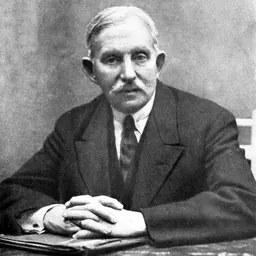
Conrad Arnold Elvehjem (May 27, 1901 – July 27, 1962) was internationally known as an American biochemist in nutrition and a university president. In 1937 he identified two vitamins, nicotinic acid, also known as niacin, and nicotinamide, which were deficient directly in human pellagra, once a major health problem in the United States. Collectively, nicotinic acid and nicotinamide are termed vitamin B3 and are now understood to be precursors of nicotinamide adenine dinucleotide. He was also president of the University of Wisconsin.
Biography Distillation column used to isolate niacin by Prof. Conrad Elvehjem, c. 1937 Conrad Elvehjem, the son of Norwegian emigrants to Wisconsin, was born in McFarland, Wisconsin. He progressed through the secondary schools and the University of Wisconsin, where he received his PhD in 1927
Picking up on the work of Joseph Goldberger, he found that nicotinic acid cured black tongue in dogs, an analogous disease to pellagra. In the previous year, Elvehjem and his colleague Carl J. Koehn had found that a filtrate factor from a liver extract could cure diet-induced pellagra in chicks. That filtrate extract was designated as the vitamin G fraction, after the late Goldberger. To confirm their findings in dogs, they induced black tongue in these animals with the Goldberger diet of yellow corn, before supplementing the diet with the vitamin G fraction. Elvehjem and his colleagues later were able to isolate and identify nicotinamide and nicotinic acid from vitamin G as the curative factors for black tongue in dogs. He also contributed greatly to the identification of vitamin B complex and was co-author of more than 780 scientific papers on biochemistry and nutrition.
Elvehjem commented frequently on nutrition as it affects both scientist and layman. "Vitamins should be obtained from natural foods if possible", he cautioned. "Generally they are cheaper, more palatable, and in better balance with other factors when taken in this form." He acknowledged the value of synthetic vitamins in treating deficiency diseases, but warned that their use should be temporary.
Elvehjem's first graduate student (in 1931) was noted nutritionist Fredrick John Stare (1910–2002) who later founded and chaired the department of nutrition at the Harvard School of Public Health, where he served until 1976.
Elvehjem met his wife Constance W. Elvehjem when she was an undergraduate at UW Madison. She died in 1999 at the age of 94 after many years supporting the museum and the Madison community. Elvehjem was stricken with a heart attack at his desk on the morning of July 27, 1962, at the age of sixty-one and died within the hour.
Awards and honors United States National Academy of Sciences, member – 1942 Willard Gibbs Medal – 1943 American Philosophical Society, member – 1947 Albert Lasker Award for clinical medical research – 1952 American Academy of Arts and Sciences, member – 1953
Legacy Elvehjem's name appears on university awards, buildings, a town park, and a local elementary school in Madison, Wisconsin, and a neighbourhood on the South-East Side of Madison nearby and its associated neighbourhood association. His name was formerly on the Elvehjem Art Center (later the Elvehjem Museum of Art), until the museum received a $20 million donation from Simona and Jerome A. Chazen (both UW–Madison alumni), and renamed itself the Chazen Museum of Art. The original building housing the museum retains the Elvehjem name.
Don’t just read it —
keep it.
Full-length biographies made to live with: read them, listen on the way to work, watch them tonight.
- E-book
- Audio
- Video
Instant download · yours to keep · every purchase keeps this site free
Important facts
People in Conrad Elvehjem's life
Named in this biography and alive at the same time


Related people
Same field, nearest in time


Contemporaries
People whose lives overlapped Conrad Elvehjem's



Frequently asked questions
Who was Conrad Elvehjem?
American biochemist (1901-1962)
When was Conrad Elvehjem born?
Conrad Elvehjem was born on 27 May 1901 in McFarland.
When did Conrad Elvehjem die?
Conrad Elvehjem died on 27 July 1962 in Madison.
What was Conrad Elvehjem's occupation?
Conrad Elvehjem was a biochemist, university teacher and chemist.
What was Conrad Elvehjem known for?
Conrad Elvehjem was known for Niacin (substance) and Nutrition.
What nationality was Conrad Elvehjem?
Conrad Elvehjem was American.
Sources & further reading
Cite this page
APA: Biography.guide. (2026). Conrad Elvehjem. https://biography.guide/conrad-elvehjem/
MLA: "Conrad Elvehjem." Biography.guide, https://biography.guide/conrad-elvehjem/.
Chicago: "Conrad Elvehjem." Biography.guide. https://biography.guide/conrad-elvehjem/.
Data last updated: 2026-09-20 · Spot an error? Report a correction.
Page generated 2026-09-27 05:17 UTC