
About Colleen McMahon
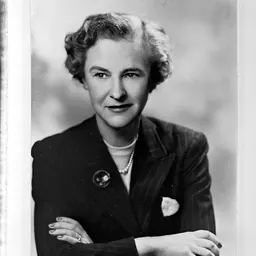
Born 1951. Colleen McMahon is an American lawyer and judge.
Colleen McMahon (born July 18, 1951) is a senior United States district judge of the United States District Court for the Southern District of New York.
Education and career
Born in Columbus, Ohio, McMahon received a Bachelor of Arts degree from Ohio State University in 1973 and a Juris Doctor from Harvard Law School in 1976. She was in private practice in New York City from 1976 to 1995, except for a period from 1979 to 1980 when she was a speechwriter and special assistant to Donald McHenry, the United States Permanent Representative to the United Nations. From 1995 to 1998, she was a judge of the New York Court of Claims, New York Supreme Court.
Federal judicial service
On May 21, 1998, President Bill Clinton nominated McMahon to a seat on the United States District Court for the Southern District of New York vacated by John F. Keenan. McMahon was confirmed by the United States Senate on October 21 and received her commission on October 22. She was the Chief Judge from June 1, 2016, to April 10, 2021.
In 2011, she was the judge in the case of the "Newburgh four", who were accused of planning a 2009 bombing in the Bronx, New York. The suspects were Onta Williams, Laguerre, David Williams, and James Cromitie. The case involved FBI agent Robert Fuller as the handler of informant Shahed Hussain. At sentencing, McMahon pointed out that the FBI played a key role in creating the crimes of which the defendants were convicted, saying it "created acts of terrorism out of his [Cromitie's] fantasies of bravado and bigotry, and then made those fantasies come true." She added: "Only the government could have made a terrorist out of Mr. Cromitie, whose buffoonery is positively Shakespearean in scope."
In 2019, McMahon rejected a bid for compassionate early release by convicted fraudster Samuel Israel III, agreeing he had serious health problems but also saying that early release would "make a mockery of the sentencing statue" given Israel's serious crimes and privileged background.
In December 2021, McMahon ruled that a bankruptcy judge lacked the authority to give the Sackler family immunity in civil liability cases related to their involvement in Purdue Pharma.
In February 2023, McMahon criticized the New York City Department of Corrections for failing to promptly provide information on the identities of staffers who may have been involved in activities described in a class action lawsuit over substandard conditions and illegal detentions at Rikers Island. "There is no agency that... has been a more troublesome litigant in terms of, and you will excuse my language, 'Fuck you, judge, I'll do what I want' in that period than DOC", she said in open court.
In March 2026, McMahon ruled against Lynne Freeman and found that young adult romantasy author Tracy Wolff had not committed plagiarism with her Crave book series. McMahon wrote, "hot, sexy, dangerous boys—central to virtually all young adult romance novels—cannot be copyrighted."
In May 2026, McMahon granted summary judgment to plaintiffs in consolidated challenges to the Trump administration's cancellation of National Endowment for the Humanities grants. The case concerned the largest mass termination of previously awarded grants in the history of the NEH, affecting more than 1,400 grants and over $100 million in congressionally appropriated funds. McMahon held that the Department of Government Efficiency lacked statutory authority to identify, select, or direct the termination of NEH grants, and that the mass termination violated the First Amendment and the equal-protection component of the Fifth Amendment. The opinion emphasized separation-of-powers limits on executive action, reasoning that Congress had vested NEH grant-making authority in the NEH chairperson, not in DOGE, and that presidential executive orders could not give DOGE authority that Congress had not conferred. McMahon concluded that DOGE had displaced the statutory grant-making process in order to advance President Donald Trump's policy objectives, exceeding constitutional limits on executive power. McMahon rejected the government's argument that any viewpoint-based classification was attributable to ChatGPT rather than the government, writing that ChatGPT was the government's chosen instrument and that its use did not excuse unconstitutional conduct. McMahon permanently enjoined the government from enforcing or giving effect to the mass termination and required the termination notices to be rescinded. In addressing Tucker Act jurisdiction arguments, she limited the relief to equitable and constitutional relief, writing that the order did not require immediate payment of grant funds or adjudicate any contractual entitlement to money.
Don’t just read it —
keep it.
Full-length biographies made to live with: read them, listen on the way to work, watch them tonight.
- E-book
- Audio
- Video
Instant download · yours to keep · every purchase keeps this site free
Important facts
People in Colleen McMahon's life
Named in this biography and alive at the same time




Related people
Same field, nearest in time


Contemporaries
People whose lives overlapped Colleen McMahon's



Frequently asked questions
Who is Colleen McMahon?
United States federal judge
When was Colleen McMahon born?
Colleen McMahon was born on 18 July 1951 in Columbus.
What is Colleen McMahon's occupation?
Colleen McMahon is a lawyer and judge.
What nationality is Colleen McMahon?
Colleen McMahon is American.
Sources & further reading
Cite this page
APA: Biography.guide. (2026). Colleen McMahon. https://biography.guide/colleen-mcmahon/
MLA: "Colleen McMahon." Biography.guide, https://biography.guide/colleen-mcmahon/.
Chicago: "Colleen McMahon." Biography.guide. https://biography.guide/colleen-mcmahon/.
Data last updated: 2026-09-20 · Spot an error? Report a correction.
Page generated 2026-09-27 05:25 UTC