
About Colin Murray Turbayne
Lived 1916 – 2006 (aged 90). Colin Murray Turbayne was an Australian philosopher and university teacher.
Colin Murray Turbayne (7 February 1916 – 16 May 2006) was an Australian philosopher and scholar of George Berkeley. He spent most of his thirty-five-year academic career at the University of Rochester and authored The Myth of Metaphor in which he explores the use and abuse of metaphors and conceptual metaphors in language.
Biography Early life Turbayne was born on February 7, 1916, in the rural town of Tannymorel in Queensland, Australia. His father, David Livingston Turbayne, was a banker and his mother, Alice Eva Rene Lahey, was descended from an early pioneer family in Queensland.
Colin received his earliest education at the Church of England Grammar School in Brisbane, where he was both a cricketer and Head Prefect. He completed his Bachelor of Arts degree at the University of Queensland in Brisbane, Australia in 1940 as well as an MA degree in 1946. During World War II he worked for Australian Intelligence in the Pacific War theatre and served as chief of staff for Australian intelligence to Douglas MacArthur in several pacific theatres.
In 1940 he married Ailsa Krimmer and subsequently raised a family of two boys: Ron and John. They remained married for fifty-one years until her death in 1992.
Academic studies After emigrating to the United States following the conclusion of World War II in 1947, he undertook graduate studies at the University of Pennsylvania. In 1950 he earned both his MA and PhD degrees in philosophy from the University of Pennsylvania.
Following the completion of his advanced studies, Turbayne acquired his first academic post as an assistant professor of philosophy at the University of Washington. He remained on the faculty from 1950 until 1955. Subsequently, he served as an assistant professor of speech at the University of California at Berkley from 1955 until 1957. Soon thereafter, he was appointed as an associate professor of philosophy at the University of Rochester in 1957. A short time later in 1962, he was promoted to professor of philosophy and continued to teach at the University of Rochester until his appointment to professor emeritus in 1981. He is best known for his book The Myth of Metaphor. Turbayne was assisted by several of his colleagues at the University of Rochester in this work including: Lewis White Beck and W. Albert Noyes, Jr.
The Myth of Metaphor In his book The Myth of Metaphor, Turbayne argues that metaphor would necessarily occur in any language that could ever claim to embody richness and depth of understanding. In addition, he provides a critical analysis of the simplistic Cartesian and Newtonian depictions of the universe as little more than a "machine", a concept that underlies much of the scientific materialism which prevails in the modern Western world.
With this in mind, Turbayne argues that one can identify at least three instances of sort-crossing in which both René Descartes and Isaac Newton became victimized by metaphors which they incorporated into their scientific methodology while attempting to explain the natural world within the context of a mechanistic philosophy. In the first example, Turbayne notes that both men rely upon the certainty of the use of deduction while demonstrating the relationship between principles and theorems in their respective methodologies. This necessary relationship is then inexplicably exported, however, from their process of explaining the natural world into the physical world itself under the guise of "active principles", which generate a necessary causal chain of events. In Turbayne's view, this confusion amounts to a '"procedure-process shift" which transpires in accordance with the linguistic Principle of Association. This principle describes an evolutionary process through which those things which are observed to "go-together" subsequently suggest each other, acquire the same names and finally are thought of as being the same or examples of the same sort. As a result of this confusion, the natural world suddenly obeys the logic of the deductive methodology utilized by both philosophers.
In his second example of sort-crossing, Turbayne clarifies the manner in which both Descartes and Newton unknowingly equate all explanation with physical explanation and ultimately with causality explanation. It is apparent from Decartes' Three Natural Laws and Newton's Three Laws of Motion, that both philosophers bifurcated the natural world into "effects" and "causes". The former consist of "bodies at rest" or "bodies in motion" while the latter consist of "resistance", "gravity" or "attraction". Turbayne argues that both philosophers mistakenly concluded that any deductive explanation of the natural world must first be founded upon a causal relationship between these different sorts. For Descartes, the explanation rests with causal laws while for Newton, the explanation rests with causal forces which are embedded within natural events. Yet investigations by both philosophers failed to uncover direct evidence of such "active forces" or "active principles" as required by their own respective scientific methodologies. Turbaye argues that by ascribing such forces to bodies in the external natural world both Descartes and Newton have fallen victim to a form of "hylopsychism" by unknowingly assigning a property which we observe only in ourselves as living beings into the external natural world.
In his final example of sort-crossing, Turbayne calls attention to the apriori identification made by both Descartes and Newton of the term deduction with the term calculation or with any other form of reckoning in general. In Turbayne's view, both philosophers are correct in asserting that one of the defining characteristics of the scientific methodology is a reliance upon the use of synthesis in demonstrations. Their error lies, however, in embracing a view of the scientific method which is far too narrow by relying exclusively upon the use of mathematical terms within the process. While mathematical computations, differential equations or the study of geometric lines may indeed prove beneficial within the scientific method, one must avoid the temptation to call upon them to serve as the sole defining featuring of the process itself to the exclusion of alternate terms of explanation.
Another central theme of The Myth of Metaphor is Turbayne's analysis of Berkelely's theory of vision and his theory of space as compared to Newtonian mechanics. Turbayne demonstrates that Berkeley's "language metaphor" provides a more convincing explanation of various natural phenomena and optical illusions including the Barrovian case, the case of the horizontal moon, and the case of the inverted retinal image.
In the final analysis, Turbayne's primary interest in The Myth of Metaphor resembles, "what Socrates did in the Phaedo in his rejoinder to the argument of Cebes...[who] was enthralled by that wisdom called Physical Science and was "completely blinded" by these studies." Like Socrates, Turbayne strives to "unmask" the metaphysics embodied within the mechanism philosophy by cautioning his readers to avoid dogmatically equating "explanation" with "mechanical explanation" or "cause" with "physical cause" in general. By recognizing the metaphorical nature of such explanations, they are more likely to attain the virtue of philosophical wisdom, which is necessary to the development of more useful metaphorical models of the natural world.
Metaphors for the Mind In his final book, Metaphors for the Mind: The Creative Mind and Its Origins (1991), Turbayne illustrates the manner in which historical traditions in philosophical thought have contributed to accepted modern theories of human thought in general and theories of language in particular. Turbayne provides a review of the early philosophical writings of both Plato and Aristotle, while illustrating the manner in which Platonic metaphors have influenced the works of both Berkeley and Immanuel Kant. In addition, he demonstrates the manner in which Plato's procreation model as outlined within his Timaeus has influenced modern theories of thought and language. He concludes by attempting to restore the original model which describes a mind in which both the female and male hemispheres function in concert to participate in the act of creation. In short, "Berkeley had a purely substantivalist conception of the mind, confirmed by his private utterances."
Berkeley Prize In the early 1990s, Colin M. Turbayne and his wife established an International Berkeley Essay Prize competition in cooperation with the Philosophy Department at the University of Rochester in order to encourage continued research into Berkeley's works by aspiring young scholars.
Notable students of Colin Murray Turbayne include Paul J. Olscamp, President Emeritus Bowling Green State University and Western Washington University. In 1959 and 1966, he was the recipient of grants from the American Council of Learned Societies for his contributions to their project on the linguistic structure of the mind. In 1979, he was honored as a senior fellow by the National Endowment for the Humanities (NEH). as well as Who was Who in America in 2010.
Turbayne's philosophical lectures at the University of Rochester were often punctuated with illustrative re-enactments of scenes from Shakespearian drama to illustrate his arguments. It was not at all unusual for him to appear before his students at lectures dressed in cloak and dagger quoting the moving scene from MacBeth: "Is this a dagger that I see before me..?" in order to illustrate the use of metaphor. He was considered a master Socratic interrogator who gently guided his students to the proper conclusion. He was also noted for his skillful use of the reductio ad absurdum in his lectures. Standing ovations from his students were commonplace throughout his long tenure at the university. Three Dialogues between Hylas and Philonous by George Berkeley, Editor Colin Murray Turbayne (1954) Works on Vision by George Berkeley, Ed. Colin Murray Turbayne (1963) Berkeley: Principles of Human Knowledge, Text and Critical Essays Ed. Colin Murray Turbayne (1970). Reviewed by G. P. Conroy. Journal of the History of Philosophy 9 (1971): 510–12; J. M. Beyssade. Études philosophiques 4 (1970):523-26. Berkeley: Critical and Interpretive Essays, Ed. Colin Murray Turbayne (1982) Metaphors for the Mind: The Creative Mind and its Origins by Colin Murray Turbayne, (1991)
Journal articles Selected peer-reviewed articles published by Colin Murray Turbayne include: "Berkeley and Russell on Space". Dialectica (1954):210-227 "Kant's Refutation of Dogmatic Idealism". The Philosophical Quarterly (1955):225-224 "The Influence of Berkeley's Science on his Metaphysics". Philosophy and Phenomenological Research (1956):476-87 "Berkeley's Two Concepts of Mind". Philosophy and Phenomenological Research(1959):85-92 In this collection of essays, Turbayne's work comprised two papers that had been published in Philosophy and Phenomenological Research: "Berkeley's Two Concepts of Mind"
"A Bibliography of George Berkeley, 1933-1962". The Journal of Philosophy (1963):93-112 "The Origin of Berkeley's Paradoxes". In Steinkraus, Warren E., ed. New Studies in Berkeley's Philosophy. New York: Holt, Rinehart and Winston, 1966. Foreword by Brand Blanshard. pp. 31–42. "Visual Language From the Verbal Model". Journal of Typographical Research (1969):345-370 "Berkeley's Metaphysical Grammar". In Turbayne, Colin Murray. Berkeley, Principles ... Text and Critical Essays(1970).pp. 3–36. "A Bibliography of George Berkeley, 1963-1974" Journal of the History of Philosophy (1977):83-95. "Lending Philonous a Hand: The Berkeley, Plato, Aristotle Connection". In Turbayne, Colin Murray, ed. Berkeley: Critical and Interpretive Essays. Minneapolis, 1982 pp. 295–310. "A Bibliography of George Berkeley 1963-1979". In Turbayne, Colin Murray, ed. Berkeley: Critical and Interpretive Essays. Manchester, 1982 pp. 313–329 "Hume's influence on Berkeley". Revue Internationale de Philosophie (1985):259-269
Professional affiliations Colin Murray Turbayne was an active member of both the American Philosophical Association as well as the American Association of University Professors.
Don’t just read it —
keep it.
Full-length biographies made to live with: read them, listen on the way to work, watch them tonight.
- E-book
- Audio
- Video
Instant download · yours to keep · every purchase keeps this site free
Important facts
People in Colin Murray Turbayne's life
Named in this biography and alive at the same time
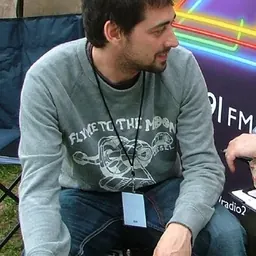






Related people
Same field, nearest in time
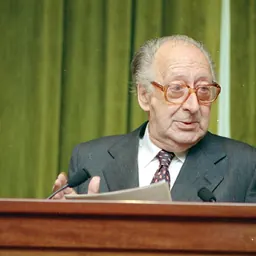

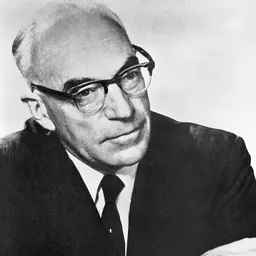

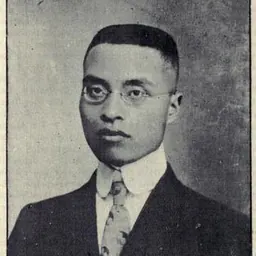
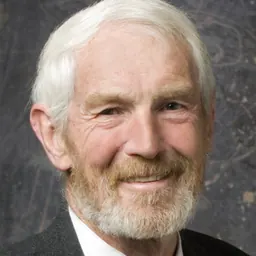
Contemporaries
People whose lives overlapped Colin Murray Turbayne's



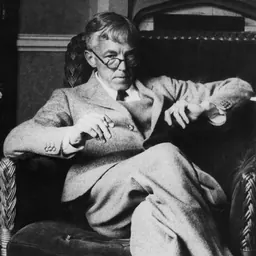
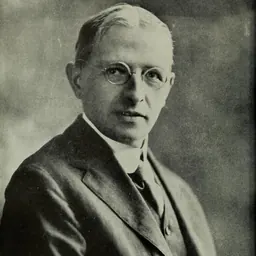
Frequently asked questions
Who was Colin Murray Turbayne?
Australian philosopher
When was Colin Murray Turbayne born?
Colin Murray Turbayne was born on 7 February 1916 in Tannymorel.
When did Colin Murray Turbayne die?
Colin Murray Turbayne died on 16 May 2006 in Queensland.
What was Colin Murray Turbayne's occupation?
Colin Murray Turbayne was a philosopher and university teacher.
What nationality was Colin Murray Turbayne?
Colin Murray Turbayne was Australian.
Sources & further reading
· Wikipedia: Colin Murray Turbayne
· DBpedia: Colin Murray Turbayne
Cite this page
APA: Biography.guide. (2026). Colin Murray Turbayne. https://biography.guide/colin-murray-turbayne/
MLA: "Colin Murray Turbayne." Biography.guide, https://biography.guide/colin-murray-turbayne/.
Chicago: "Colin Murray Turbayne." Biography.guide. https://biography.guide/colin-murray-turbayne/.
Data last updated: 2026-09-20 · Spot an error? Report a correction.
Page generated 2026-09-27 04:57 UTC