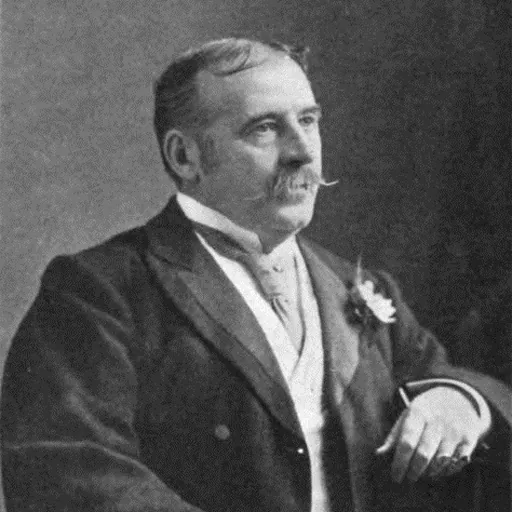
About Clement Scott
Lived 1841 – 1904 (aged 62–63). Clement Scott was a British writer, sports journalist, journalist, playwright, theatre critic and songwriter.
Clement William Scott (6 October 1841 – 25 June 1904 ) was an influential English theatre critic for The Daily Telegraph and other journals, and a playwright, lyricist, translator and travel writer, in the final decades of the 19th century. His style of criticism, acerbic, flowery and (perhaps most importantly) carried out on the first night of productions, set the standard for theatre reviewers through to today.
Scott accumulated enemies among theatre managers, actors and playwrights over the years, picking quarrels with William Archer, Ibsen, George Bernard Shaw and others. After he gave a particularly ill-considered 1898 interview, in which he attacked the morals of theatre people, especially actresses, he was forced to retire as a theatre critic, and his reputation and prospects suffered badly until, by the end of his life, he was impoverished.
Life and career Born the son of William Scott, the perpetual curate of Hoxton in Tower Division, Middlesex, Scott converted to Roman Catholicism before his 21st birthday. Educated at Marlborough College, he became a civil servant, working in the War Office beginning in 1860.
Early career Encouraged to write by the humourist Tom Hood the younger, who also was a clerk in the War Office, Scott contributed to The Era, Weekly Dispatch, and to Hood's own paper, Fun, where Scott and W. S. Gilbert were colleagues. Scott's interest in writing and the theatre led him to brief dalliance with the failed Victoria Review. It also played with success at Wallack's Theatre in New York. Scott and Stephenson also wrote an English version of Halévy and Meilhac's libretto for Lecocq's operetta Le Petit Duc (1878). Their adaptation so pleased the composer that he volunteered to write some new music for the English production. For all these, Scott adopted the pen name "Saville Rowe" (after Savile Row) to match Stephenson's pseudonym, "Bolton Rowe", another Mayfair street. The pieces with Stephenson were produced by the Bancrofts, the producers of T. W. Robertson's plays, which Scott admired. He also wrote accounts of holiday tours around the British Isles and abroad, becoming known for his florid style. Scott's travels also inspired his creative writing. Some sources say that after a tour of New Zealand, he wrote the tune to the "Swiss Cradle Song", later adapted as "Now Is the Hour" and as "Haere Ra", the Māori farewell song, which white New Zealanders "mistakenly thought [to be] an old Maori folksong". It is also used for the hymn "Search Me, O God", with lyrics by J. Edwin Orr. However, an Australian family has long claimed that the "Clement Scott" who wrote the tune is a pseudonym for a family member.
Poppyland and later years In 1883, The Daily Telegraph printed an article which Scott had written about a visit to the north Norfolk coast. He became enamoured of the district and gave it the name Poppyland. His writing was responsible for members of the London theatre set visiting and investing in homes in the area. Ironically, he was unhappy at the result of his popularisation of this previously pristine area.
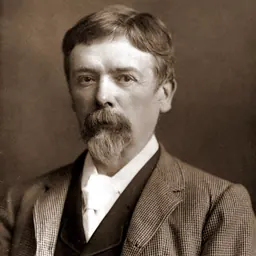
Scott married Isabel Busson du Maurier, the sister of George du Maurier, and the couple had four children. She died in 1890, and he remarried Constance Margaret Brandon, an English journalist and actress, in San Francisco. Scott's long-time wish to be elected a member of the famous literary gentlemen's club, the Garrick Club (to which Henry Irving, Gilbert and Arthur Sullivan, among many other notable men belonged), was finally realised in 1892. After an ill-considered 1898 interview in Great Thoughts, Scott was forced to retire as a theatre critic and moved to Biarritz to write The Drama of Yesterday and Today. He then worked for a couple of years at the end of the century for the New York Herald, later returning to London. In 1900, he founded The Free Lance, a Popular Society and Critical Journal, for writers who worked by the job, which he edited. Scott was buried in the crypt at the chapel attached to Nazareth House, Southend-on-Sea, a convent run by the Sisters of Nazareth.
Style, controversies and influence
Scott's position on The Daily Telegraph and the support of its proprietor, J. M. Levy, allowed him to pioneer the essay-style review of drama, which came to replace the earlier bare notices. His column of notes and reviews became very popular throughout Britain, and later his own magazine, The Theatre, achieved wide circulation. He wrote his theatre reviews immediately after he saw the opening night of a piece which, together with his short temper and his dislike of critic William Archer, the chief English supporter of Ibsen, tended to involve him often in controversies. On the other hand, Scott supported actor-managers of his time by providing them with translations of popular French plays and with his own plays.
Early in his career, he wrote approvingly of the "cup and saucer" realism movement, led by T. W. Robertson, whose plays were notable for treating contemporary British subjects in realistic settings. Later, he favoured the grand and spectacular type of London theatrical production which had developed with new types of theatre building, electric lighting and technologies allowed more and more adventurous staging. As time went on, he became strongly conservative and opposed to the new drama of Ibsen and Shaw, arguing that domestic intrigue, sexual situations and wordy philosophising were inappropriate for an evening at the theatre, and even harmful to society, especially young women. Scott especially became embroiled in legal claims through his outspoken criticism of various actors and actresses. His scathing attacks on Ibsen and Shaw became evident in their lack of journalistic neutrality.
Don’t just read it —
keep it.
Full-length biographies made to live with: read them, listen on the way to work, watch them tonight.
- E-book
- Audio
- Video
Instant download · yours to keep · every purchase keeps this site free
Important facts
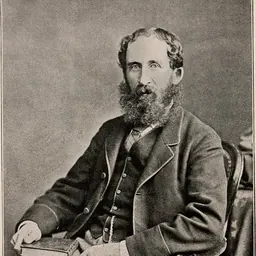
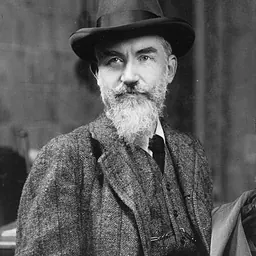
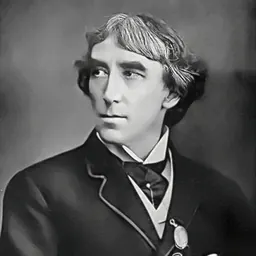
People in Clement Scott's life
Named in this biography and alive at the same time




Related people
Same field, nearest in time
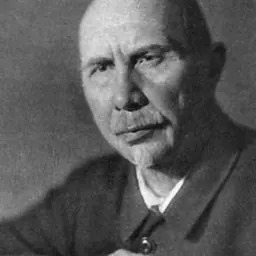
Contemporaries
People whose lives overlapped Clement Scott's
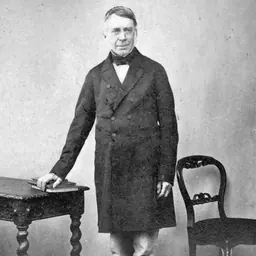
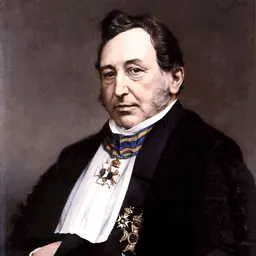

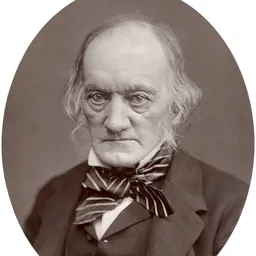
Frequently asked questions
Who was Clement Scott?
English theatre critic and writer (1841-1904)
When was Clement Scott born?
Clement Scott was born on 6 October 1841 in Hoxton.
When did Clement Scott die?
Clement Scott died in 1904 in London.
What was Clement Scott's occupation?
Clement Scott was a writer, sports journalist, journalist, playwright, theatre critic and songwriter.
What nationality was Clement Scott?
Clement Scott was British.
Sources & further reading
Cite this page
APA: Biography.guide. (2026). Clement Scott. https://biography.guide/clement-scott/
MLA: "Clement Scott." Biography.guide, https://biography.guide/clement-scott/.
Chicago: "Clement Scott." Biography.guide. https://biography.guide/clement-scott/.
Data last updated: 2026-09-22 · Spot an error? Report a correction.
Portrait: Wikimedia Commons · author & licence
Page generated 2026-09-27 05:03 UTC