
About Tom Hood
Lived 1835 – 1874 (aged 39). Tom Hood was a British poet, illustrator, novelist, writer and editor.
Thomas Hood (19 January 183520 November 1874) was an English humorist, playwright and author. He was the son of the poet and author Thomas Hood. Pen and Pencil Pictures was the first of his illustrated books. His most successful novel was Captain Master's Children (1865).
Biography
Hood was born at Lake House, Leytonstone, England, the son of the poet Thomas Hood and his wife Jane (née Reynolds) (1791–1846). His elder sister was the children's writer Frances Freeling Broderip. After attending University College School and Louth Grammar School, he entered Pembroke College, Oxford, in 1853. There he studied for the Church and passed all the examinations for the degree of BA, but did not graduate.
At Oxford, he wrote his Farewell to the Swallows (1853) and Pen and Pencil Pictures (1854). He began to write for the Liskeard Gazette in 1856, and edited that paper in 1858 and 1859. In 1861 he wrote Quips and Cranks, and Daughters of King Daher, and other Poems. The next year, he published Loves of Tom Tucker and Little Bo-Peep, a Rhyming Rigmarole, followed in 1864 by Vere Vereker's Vengeance, a Sensation, and in 1865 by Jingles and Jokes for the Little Folks. His novels included A Disputed Inheritance (1863), A Golden Heart (1867), The Lost Link (1868), Captain Masters's Children (1865), and Love and Valour (1872). In 1866 he translated Ernest L'Épine's La Légende de Croquemitaine.
He also wrote two books on English verse composition, several children's books (in conjunction with his sister, Frances Freeling Broderip), and a body of magazine and journal articles. Hood drew with considerable facility, and illustrated several of his father's comic verses, some of which were collected in his father's book Precocious Piggy.
Meanwhile, in 1860, the younger Hood obtained a position in the War Office, which he served for five years. In 1865 he left the War Office when selected as editor of Fun, a Victorian weekly magazine which became very popular under his direction. In 1867, he first issued Tom Hood's Comic Annual, not to be confused with the similarly-named Comic Annual that had been published in 1830 through 1842 by his father, the senior Thomas Hood (who, by then, had already died).
In private life, Hood's geniality and sincere friendliness secured him the affection and esteem of a wide circle of acquaintance. Some of these friends became contributors to his publications. For example, he befriended the dramatist W. S. Gilbert and the American journalist Ambrose Bierce, both frequent contributors to Fun. Hood wrote the burlesque, Robinson Crusoe; or, The Injun Bride and the Injured Wife (1867), together with Gilbert, H. J. Byron, H. S. Leigh and Arthur Sketchley. Hood's Fun gang also included playwright Thomas W. Robertson, among others.
Hood's first wife, Susan (on occasion called "Mrs Tom"), died in 1873, at the age of only thirty-seven. He married Justine Rudolphine Charotton (born 1844/5) on 15 August 1874, only a few months before his own death.
Hood died suddenly in his cottage at Peckham Rye, Surrey, on 20 November 1874 and was buried in Nunhead cemetery. that Lewis Carroll had plagiarised Hood's From Nowhere to the North Pole (1875) when writing Alice's Adventures in Wonderland:
Carroll replied a month later, in a terse letter to the editor of The Nineteenth Century:
In 1889 Carroll even inserted an announcement in the back of The Nursery "Alice", correcting his previous explanation and further denying Tom Hood's influence:
Legacy and honours British dramatist Thomas W. Robertson dedicated his play Society (1864) to Hood — "To my dear friend Tom Hood this play is dedicated." His sister, Frances Freeling Broderip, wrote a memoir of him that was published with an 1877 edition of his poems. Ambrose Bierce's short story "The Damned Thing" was inspired by an alleged encounter with Tom Hood's spirit. In 1925, Tom Hood School in Leytonstone was renamed after Hood.
Don’t just read it —
keep it.
Full-length biographies made to live with: read them, listen on the way to work, watch them tonight.
- E-book
- Audio
- Video
Instant download · yours to keep · every purchase keeps this site free
Important facts
People in Tom Hood's life
Named in this biography and alive at the same time
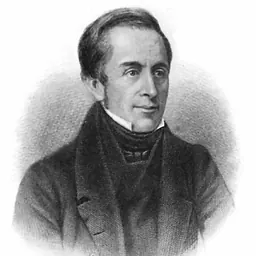


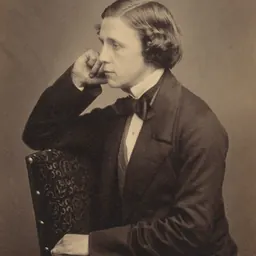
Related people
Same field, nearest in time
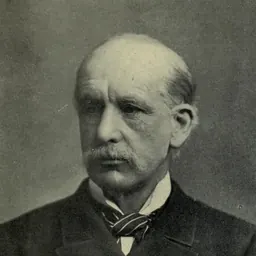
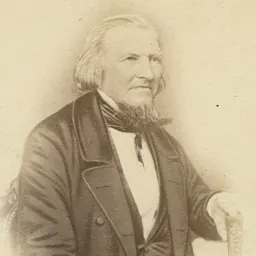
Contemporaries
People whose lives overlapped Tom Hood's




Frequently asked questions
Who was Tom Hood?
English humorist and playwright (1835–1874)
When was Tom Hood born?
Tom Hood was born on 19 January 1835 in London Borough of Waltham Forest.
When did Tom Hood die?
Tom Hood died on 20 November 1874 in Surrey.
What was Tom Hood's occupation?
Tom Hood was a poet, illustrator, novelist, writer and editor.
What nationality was Tom Hood?
Tom Hood was British.
Sources & further reading
Cite this page
APA: Biography.guide. (2026). Tom Hood. https://biography.guide/tom-hood/
MLA: "Tom Hood." Biography.guide, https://biography.guide/tom-hood/.
Chicago: "Tom Hood." Biography.guide. https://biography.guide/tom-hood/.
Data last updated: 2026-09-20 · Spot an error? Report a correction.
Page generated 2026-09-27 05:25 UTC