
About Clark Glymour
Born 1942. Clark Glymour is an American philosopher and university teacher.
Clark N. Glymour (born 1942) is an American philosopher who is the Alumni University Professor Emeritus in the Department of Philosophy at Carnegie Mellon University. He is also a senior research scientist at the Florida Institute for Human and Machine Cognition.
Work Glymour earned undergraduate degrees in chemistry and philosophy at the University of New Mexico. He did graduate work in chemical physics and obtained a Ph.D. in History and Philosophy of Science from Indiana University Bloomington in 1969.
Glymour is the founder of the Philosophy Department at Carnegie Mellon University, a Guggenheim Fellow, a Fellow of the Center for Advanced Study in Behavioral Sciences, a Phi Beta Kappa lecturer, and is a Fellow of the statistics section of the AAAS. Glymour and his collaborators created the causal interpretation of Bayes nets. His areas of interest include epistemology (particularly Android epistemology), machine learning, automated reasoning, psychology of judgment, and mathematical psychology. One of Glymour's main contributions to the philosophy of science is in the area of Bayesian probability, particularly in his analysis of the Bayesian "problem of old evidence". Glymour, in collaboration with Peter Spirtes and Richard Scheines, also developed an automated causal inference algorithm implemented as software named TETRAD. Using multivariate statistical data as input, TETRAD rapidly searches from among all possible causal relationship models and returns the most plausible causal models based on conditional dependence relationships between those variables. The algorithm is based on principles from statistics, graph theory, philosophy of science, and artificial intelligence. An algorithm used in learning the structure of Bayesian networks, the PC algorithm, is named after the inventors' first names, Peter Spirtes and Clark Glymour.
Publications Books
Theory and Evidence (Princeton, 1980) Examining Holistic Medicine (with D. Stalker), Prometheus, 1985 Foundations of Space-Time Theories (with J. Earman), University of Minnesota Press, 1986 Discovering Causal Structure (with R. Scheines, P. Spirtes and K.Kelly) Academic Press, 1987
Causation, Prediction and Search (with P.Spirtes and R. Scheines), Springer, 1993, 2nd Edition MIT Press, 2001 Thinking Things Through, MIT Press, 1994 Android Epistemology (with K. Ford and P. Hayes) MIT/AAAI Press, 1996 The Mind's Arrows: Bayes Nets and Graphical Causal Models in Psychology, MIT Press, 2001
Galileo in Pittsburgh Harvard University Press, 2010.
Journal articles
"When is a Brain Like the Planet?", Philosophy of Science, 2008. (with David Danks) "Reasons as Causes in Bayesian Epistemology", Journal of Philosophy, 2008. "Markov Properties and Quantum Experiments", in W. Demopoulos and I. Pitowsky, eds. Physical Theory and Its Interpretation: Essays in Honor of Jeffrey Bub, Springer 2006. (with Chu, T. and David Danks) "Data Driven Methods for Granger Causality and Contemporaneous Causality with Non-Linear Corrections: Climate Teleconnection Mechanisms", 2004. "Review of Phil Dowe and Paul Nordhoff: Cause and Chance: Causation in an Indeterministic World", Mind, 2005. (with Eberhardt, Frederick, and Richard Scheines). "N-1 Experiments Suffice to Determine the Causal Relations Among N Variables", 2004. (with F. Eberhardt and R. Scheines), "Log2(N) Experiments are Sufficient, and in the Worst Case Necessary, for Identifying Causal Structure", UAI Proceedings, 2005 (with Handley, Daniel, Nicoleta Serban, David Peters, Robert O'Doherty, Melvin Field, Larry Wasserman, Peter Spirtes, and Richard Scheines), "Evidence of systematic expressed sequence tag IMAGE clone cross-hybridization on cDNA microarrays", Genomics, Volume 83, Issue 6 (June, 2004), pages 1169–1175. (with Handley, Daniel, Nicoleta Serban, and David G. Peters). "Concerns About Unreliable Data from Spotted cDNA Microarrays Due to Cross-Hybridization and Sequence Errors", Statistical Applications in Genetics and Molecular Biology, Volume 3, Issue 1 (October 6, 2004), Article 25. "Comment on D. Lerner", "The Illusion of Conscious Will", Behavioral and Brain Sciences, in press. "Review of Joseph E. Early, Sr. (Ed.): Chemical Explanation: Characteristics, Development, Autonomy", Philosophy of Science, Volume 71, Number 3 (July, 2004), pages 415–418. (with Spirtes, and Peter Glymour). "Causal Inference", Encyclopedia of Social Science, in press "We believe in freedom of the will so that we can learn", Behavioral and Brain Sciences, Volume 27, Number 5 (2004), pages 661–662. "The Automation of Discovery", Daedelus, Volume Winter (2004), pages 69–77. (with Serban, Nicoleta, Larry Wasserman, David Peters, Peter Spirtes, Robert O'Doherty, Dan Handley, and Richard Scheines). "Analysis of microarray data for treated fat cells", (2003). (with Danks, David, and Peter Spirtes). "The Computational and Experimental Complexity of Gene Perturbations for Regulatory Network Search", (2003). (with Silva, Ricardo, Richard Scheines, and Peter Spirtes). "Learning Measurement Models for Unobserved Variables", UAI '03, Proceedings of the 19th Conference in Uncertainty in Artificial Intelligence, August 7–10, 2003, Acapulco, Mexico (2003), pages 543–550. (with Danks, David and Peter Spirtes). "The Computational and Experimental Complexity of Gene Perturbations for Regulatory Network Search", Proceedings of IJCAI-2003 Workshop on Learning Graphical Models for Computational Genomics, (2003), pages 22–31. (with Frank Wimberly, Thomas Heiman, and Joseph Ramsey). "Experiments on the Accuracy of Algorithms for Inferring the Structure of Genetic Regulatory Networks from Microarray Expression Levels", International Joint Conference on Artificial Intelligence Workshop, 2003 "A Semantics and Methodology for Ceteris Paribus Hypotheses", Erkenntnis, Volume 57 (2002), pages 395–405. "Review of James Woodward, Making Things Happen: A Theory of Causal Explanation", British Journal for Philosophy of Science, Volume 55 (2004), pages 779–790. (with Fienberg, Stephen, and Richard Scheines). "Expert statistical testimony and epidemiological evidence: the toxic effects of lead exposure on children", Journal of Econometrics, Volume 113 (2003), pages 33–48. "Learning, prediction and causal Bayes Nets", Trends in Cognitive Sciences, Volume 7, Number 1 (2003), pages 43–47. (with Alison Gopnik, David M. Sobel, Laura E. Schulz, Tamar Kushnir, and David Danks). "A theory of causal learning in children: Causal maps and Bayes nets", Psychological Review, Volume 111, Number 1 (2004). "Freud, Kepler, and the clinical evidence", in R. Wollheim and J. Hopkins, eds. Philosophical Essays on Freud, Cambridge University Press 1982. and many others dating back to 1970.
Don’t just read it —
keep it.
Full-length biographies made to live with: read them, listen on the way to work, watch them tonight.
- E-book
- Audio
- Video
Instant download · yours to keep · every purchase keeps this site free
Important facts
People in Clark Glymour's life
Named in this biography and alive at the same time
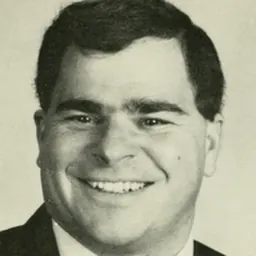
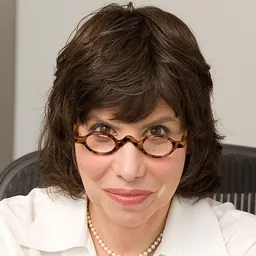


Related people
Same field, nearest in time
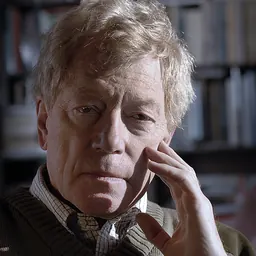
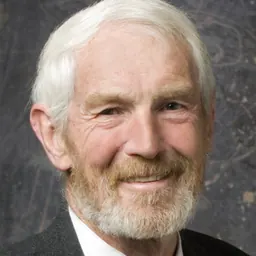


Contemporaries
People whose lives overlapped Clark Glymour's



Frequently asked questions
Who is Clark Glymour?
American logician
When was Clark Glymour born?
Clark Glymour was born on 27 August 1942.
What is Clark Glymour's occupation?
Clark Glymour is a philosopher and university teacher.
What nationality is Clark Glymour?
Clark Glymour is American.
Sources & further reading
Cite this page
APA: Biography.guide. (2026). Clark Glymour. https://biography.guide/clark-glymour/
MLA: "Clark Glymour." Biography.guide, https://biography.guide/clark-glymour/.
Chicago: "Clark Glymour." Biography.guide. https://biography.guide/clark-glymour/.
Data last updated: 2026-09-20 · Spot an error? Report a correction.
Page generated 2026-09-27 05:14 UTC