
About Clarence Lushbaugh
Lived 1916 – 2000 (aged 84). Clarence Lushbaugh was an American radiologist and pathologist.
Clarence Chancelum Lushbaugh Jr. (March 15, 1916 – October 13, 2000) was an American physician and pathologist. He was considered an expert in radiological accidents and injuries, as well as a pioneer in radiation safety research, and he is known for his controversial research involving human subjects.
Lushbaugh started his career in 1939 as a professor in the Department of Pathology at the University of Chicago, while he was working towards his Ph.D. His early medical research was directed by the onset of World War II, and resulted in the discovery of the chemotherapeutic potential of compounds being tested as chemical weapons. After completing his medical degree from the school in 1948, he joined the Los Alamos National Laboratory as a pathologist, and began to develop expertise applying the science to victims of radiological accidents.
What became known as the Los Alamos Human Tissue Analysis Program began in 1958 after Lushbaugh performed an autopsy on the body of Cecil Kelley, who died of radiation-induced heart failure following a criticality accident at Los Alamos. Lushbaugh identified an opportunity to analyze Kelley's remains to confirm or improve Los Alamos safety procedures concerning radiation exposure. To this end, Lushbaugh extracted some of the irradiated organs and tissues from Kelley for analysis, eventuating the development of safer radiation exposure limits. Lushbaugh had taken these organs and tissues from Kelley without permission from Kelley's nearest of kin. The propriety of the removal of Kelley's organs was eventually called into question, and his daughter filed a successful lawsuit against Lushbaugh and Los Alamos in 1996.
Lushbaugh's career continued at the Medical and Health Sciences Division of Oak Ridge Associated Universities, where he was brought on to lead several scientific endeavors, most notably the Total Body Irradiation Program, an experimental program designed to determine the limits at which exposure to radiation would begin to cause radiation sickness. Though the goals of the program were to improve radiation safety protocols, they became controversial because the test subjects did not know they were being subjected to the radiation, which was administered in specialized chambers disguised as waiting rooms. Lushbaugh became Chairman of the Division and helped found the Radiation Emergency Assistance Center/Training Site (REAC/TS), an organization that serves as a major emergency response consultant for the Department of Energy.
Early life and education Clarence Chancelum Lushbaugh Jr. was born on March 15, 1916, in Covington, Kentucky. His father, Clarence Lushbaugh Sr., was a railroad freight worker who died after contracting the Spanish flu in 1918. It was eventually republished as such in the Journal of the American Medical Association.
Lushbaugh completed his doctoral program in 1942. His thesis, titled The Effect of Alcoholic Intoxication Upon Acquired Resistance to Pneumococcal Infection in Rabbits, was published the following year in the Journal of Immunology. Following this, he joined the faculty of the university as a pathologist and pathology professor. After his death, his body was sent to Lushbaugh at the Los Alamos Medical Center for autopsy. Lushbaugh had worked with radiological injuries in the past, but Kelley's autopsy presented an opportunity that none before it had. Previously, safety assessments regarding radiation exposure had been reached based on predictive interpretations of urine tests. As an employee of Los Alamos directly involved in the handling of radioactive materials, Kelley had given urine samples before he died, and now with his autopsy and the circumstances that preceded it, Lushbaugh identified a unique opportunity to confirm the validity of those tests and associated exposure limits, as well as ascertain the distribution of plutonium throughout the organs and skeleton. Though it was considered acceptable to take samples during an autopsy to confirm diagnoses or cause of death, Lushbaugh proceeded during the Kelley autopsy to remove more than of organs from the body, including the brain and spinal cord, which he placed into empty glass mayonnaise jars for transport back to the biomedical lab.
The results of the examination of Kelley's tissue proved to be fruitful; while the urine tests were found to be accurate in their prediction of whole-body plutonium content, analysis of the organs found that the conventional models of where in the body the element would settle and accumulate were inaccurate. High concentrations of plutonium were found in Kelley's lungs and lymph nodes, and less in his liver and bone marrow. The program would last until 1978 – the first twelve years operating entirely from the Los Alamos Medical Center under Lushbaugh's purview.
Oak Ridge National Laboratory In 1963, shortly after his divorce from his first wife, Lushbaugh left the Los Alamos Laboratory to move to Oak Ridge, Tennessee, to join the Oak Ridge Institute of Nuclear Studies as the Chief Scientist of the Medical and Health Sciences Division. He would cite his divorce as part of the reason for the move, but the largest influence was the opportunity to continue his work with living subjects, whereas in Los Alamos he was limited to working with the deceased. The facility became a major resource for education and emergency response coordination concerning radiological accidents, and is a key consulting body for the National Nuclear Security Administration, part of the Department of Energy.
Lushbaugh left Oak Ridge National Laboratory in 1984. Additionally, he was a founding member of and served on the Plutonium Registry Advisory Committee from 1968 to 1982.
Lushbaugh returned to academia in 1980, joining the faculty of the School of Public Health at the University of North Carolina at Chapel Hill as an adjunct professor of epidemiology. He would jokingly describe himself as a "cantankerous bastard",
Lushbaugh's first marriage to Mary Helen Chisolm in 1942 produced three children – William, who was a professor at the University of Mississippi, and Bob and Nancy, both of whom worked at Oak Ridge National Laboratory. They remained married until his death; she died on December 10, 2000.
Lushbaugh died on Friday, October 13, 2000, from complications related to Alzheimer's disease.
Don’t just read it —
keep it.
Full-length biographies made to live with: read them, listen on the way to work, watch them tonight.
- E-book
- Audio
- Video
Instant download · yours to keep · every purchase keeps this site free
Important facts
People in Clarence Lushbaugh's life
Named in this biography and alive at the same time

Related people
Same field, nearest in time

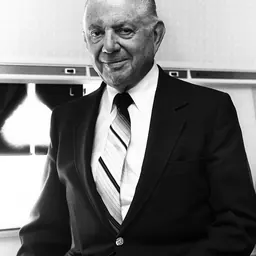




Contemporaries
People whose lives overlapped Clarence Lushbaugh's




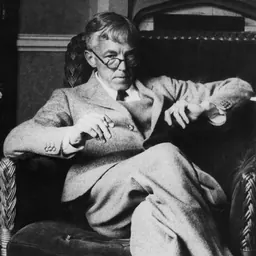
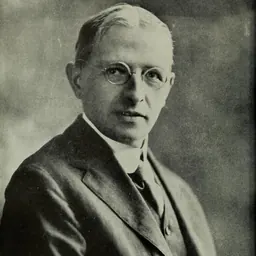
Frequently asked questions
Who was Clarence Lushbaugh?
American radiologist and pathologist (1916–2000)
When was Clarence Lushbaugh born?
Clarence Lushbaugh was born on 15 March 1916 in Covington.
When did Clarence Lushbaugh die?
Clarence Lushbaugh died on 13 October 2000 in Oak Ridge.
What was Clarence Lushbaugh's occupation?
Clarence Lushbaugh was a radiologist and pathologist.
What nationality was Clarence Lushbaugh?
Clarence Lushbaugh was American.
Sources & further reading
· Wikipedia: Clarence Lushbaugh
Cite this page
APA: Biography.guide. (2026). Clarence Lushbaugh. https://biography.guide/clarence-lushbaugh/
MLA: "Clarence Lushbaugh." Biography.guide, https://biography.guide/clarence-lushbaugh/.
Chicago: "Clarence Lushbaugh." Biography.guide. https://biography.guide/clarence-lushbaugh/.
Data last updated: 2026-09-20 · Spot an error? Report a correction.
Page generated 2026-09-27 05:05 UTC