
About Claire McCardell
Lived 1905 – 1958 (aged 52–53). Claire McCardell was an American designer and fashion designer.
Claire McCardell (May 24, 1905 – March 22, 1958) was an American fashion designer of ready-to-wear clothing in the twentieth century. She has been credited with the creation of American sportswear.
Early life
McCardell was the eldest of four children born to Eleanor and A. LeRoy McCardell in Frederick, Maryland. Her father was a Maryland state senator and president of the Frederick County National Bank. As a child, McCardell earned the nickname "Kick" for her ability to keep the boys from pushing her around.
Fascinated by fashion from a young age, McCardell wanted to move to New York City to study fashion design at age 16. Unwilling to send a teenager so far away, McCardell's father convinced her to enroll in the home economics program at Hood College instead. After two years of study in Maryland, McCardell moved to New York and enrolled in Parsons (then known as the New York School of Fine and Applied Art). In 1927, McCardell went to Paris, continuing her studies at the Parsons branch school at the Place des Vosges.
McCardell graduated from Parsons with a certificate in costume design in 1923. After graduation, she worked odd jobs sketching at a fashionable dress shop,
In 1938, McCardell introduced the Monastic Dress, a bias-cut tentlike dress. It had no seamed waist and hung loosely, but with a versatile belt it could be adapted to hug a woman's curves gracefully. Best & Co. exclusively sold the dress for $29.95 and it sold out in a day. While working for Hattie Carnegie, McCardell met Diana Vreeland (then at Harper's Bazaar). She would become McCardell's lifelong friend and champion.
Townley Frocks reopened in 1940 under new management and McCardell returned to the brand. The company's labels then read, "Claire McCardell Clothes by Townley", making her one of the first American designers to have name recognition. When the government announced a surplus of weather balloon cotton materials in 1944, McCardell quickly bought them up, using them to design clothes that patriotic American women wore with pride.
In 1942, McCardell created her famed "Popover Dress". It was a response to a Harper's Bazaar challenge to create something fashionable one could wear to clean the house and then, wear to a cocktail party. The simple grey dress came with a matching potholder that fit into the dress pocket. In 1946, McCardell won the Best Sportswear Designer Award and in 1948 she won the Neiman-Marcus Award. This was the award McCardell cherished most.
Also in 1952, McCardell and American Optical released their own version of cat eye glasses, the first eyewear line by a fashion designer.
In April 1953, the Frank Perls Gallery in Beverly Hills launched a retrospective exhibition of twenty years of McCardell's garments. The exhibit included the "Monastic Dress", the "Diaper Bathing Suit", Capezio ballet flats, and work-wear-inspired pieces with rivets. In his introduction to the exhibit, retailer Stanley Marcus wrote, "...she is one of the truly creative designers this country has produced... She is to America what Vionnet was to France."
A book entitled What Shall I Wear? The What, Where, When, and How Much of Fashion was published in 1957
After her death, McCardell's family decided to close the label. Her brother explained, "It wasn't that difficult [to close the label]. Claire's ideas were always her own." Versions of the "Popover Dress" are held by the Metropolitan Museum of Art, the Rhode Island School of Design, and the Museum at F.I.T. Versions of the "Monastic Dress" are held by the Metropolitan Museum of Art and LACMA.
In 1990, Life named McCardell one of the 100 most important Americans of the twentieth century.
Elizabeth Evitts Dickinson published the first biography of McCardell in 2025, Claire McCardell: The Designer Who Set Women Free.
Characteristics of McCardell designs 1938 Monastic dress – a bias-cut, tent-shaped garment with dolman sleeves, belted with spaghetti ties that wrap multiple times around the waist to create shape 1942 Popover dress – versatile wrap dress with patch pockets and wide dolman sleeves that could be "popped" over other clothes and used as a housedress; also worn as a dressing gown or party dress Streamlined wool bathing suits Pockets in everything from capris to evening gowns Ballet slippers as everyday footwear Fabric draping and gathering to accentuate the natural shape of the body Use of common, natural-fiber fabrics such as cotton, twill, gingham, denim, and jersey in a variety of garments, not just as day wear Elimination of highly structured undergarments such as corsets, crinolines, and girdles Use of rivets and other work clothes fasteners
Don’t just read it —
keep it.
Full-length biographies made to live with: read them, listen on the way to work, watch them tonight.
- E-book
- Audio
- Video
Instant download · yours to keep · every purchase keeps this site free
Important facts
People in Claire McCardell's life
Named in this biography and alive at the same time
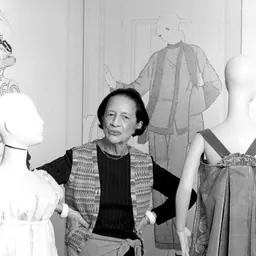
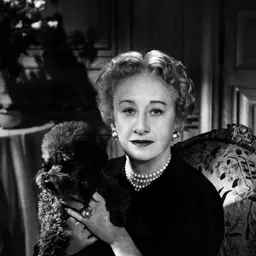


Related people
Same field, nearest in time

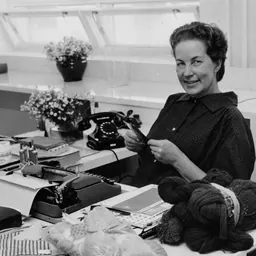


Contemporaries
People whose lives overlapped Claire McCardell's



Frequently asked questions
Who was Claire McCardell?
American fashion designer (1905-1958)
When was Claire McCardell born?
Claire McCardell was born in 1905.
When did Claire McCardell die?
Claire McCardell died in 1958.
What was Claire McCardell's occupation?
Claire McCardell was a designer and fashion designer.
What nationality was Claire McCardell?
Claire McCardell was American.
Sources & further reading
Cite this page
APA: Biography.guide. (2026). Claire McCardell. https://biography.guide/claire-mccardell/
MLA: "Claire McCardell." Biography.guide, https://biography.guide/claire-mccardell/.
Chicago: "Claire McCardell." Biography.guide. https://biography.guide/claire-mccardell/.
Data last updated: 2026-09-20 · Spot an error? Report a correction.
Portrait: Wikimedia Commons · author & licence
Page generated 2026-09-27 04:57 UTC