
About Claes Gerritszoon Compaen
Lived 1587 – 1660 (aged 72–73). Claes Gerritszoon Compaen was a Dutch merchant, privateer and pirate.
Claes Gerritszoon Compaen (1587, Oostzaan, North Holland - 25 February 1660, Oostzaan), also called Claas Compaan or Klaas Kompaan, was a 17th-century Dutch corsair and merchant. Dissatisfied as a privateer for the Dutch Republic, he turned to piracy and captured hundreds of ships operating in Europe, the Mediterranean and West Africa during the 1620s.
Biography Early life Born in Oostzaan, his father was an alleged member of the Geuzen of Dirck Duyvel housed in Zaanstreek allied other nobleman in opposition of Spanish rule. Compaen went to sea at an early age and eventually became a successful merchant as a trader along the coast of Guinea. He later used the profits from these voyages to refit his ships for privateering activities against the Spanish. Based from Oostende and Duinkerken, he was initially successful capturing several Spanish prizes within a short period of time, however, several of the ships were later released by Dutch authorities. One of these captured ships was over 200 tons, fitted with 17 guns and manned by a crew of 80 men.
Piratical career
Sometime around 1621, he left port with a letter of marque from the Dutch Admiralty leaving them to pay his debt of 8,000 gilders to the widow of Medemblik ship owner Captain Pieter Gerritszoon, from whom he had purchased his ship. He soon stopped a fishing boat, taking its cargo of herring and salted fish, and used letter of credit issued by Dutch authorities although the Admiralty refused to compensate the fishermen. He seized the cargo of another ship before taking shelter in Vlissingen from an approaching storm. While in port, he took on 50 additional crew members. Shortly after leaving Vlissingen, he resorted to open and indiscriminate piracy selling his cargo in England and the Barbary coast.
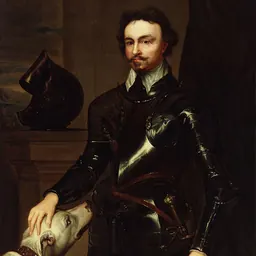
In 1625, he began operating from the Duchy of Clare. He was a close friend of the local governor as well as the Thomas Wentworth, 1st Earl of Strafford and freely operated in the Irish Sea and the English Channel under their protection for some time. Compaen later turned up in the Mediterranean, selling captured ships and their cargo at the Moroccan ports of Saffi, Mogador and Salé.
While at Salé, he sold most of his prizes (over 300 ships in his career) to Simon the Dancer, Jr., son of the famed Dutch privateer Simon the Dancer who had been active in the area during the previous decade. The heavy costs of dealing with him eventually caused Compaen to do business with his chief rival Jan Janszoon. This caused a major disagreement, with Simon sending a fleet to attack him while at port. Compaen was warned of the attack ahead of time and was able to successfully defeat the attackers as well as capture one of Simon's ships. During the raid, Simon's flagship was reportedly so badly damaged it was forced to retreat from the battle. Following this defeat, Simon was forced to leave Salé seeking asylum in the Dutch Republic. Receiving a pardon from the Netherlands, he eventually became a corsair himself.
Battle with the Hollandia In 1626 Compaen began looking to request a pardon from the Dutch so as to return to his homeland. On 5 July two ships belonging to the Dutch East India Company were sighted. These ships, the Hollandia and the smaller yacht Grootenbroek, had been separate from the main fleet which had gone ahead to the Verdian Isles without them while the Hollandia was escorted to Sierra Leone to repair a leak (another account claims it stopped to stock up on limes for its crew suffering from scurvy). Compaen ordered his four ships to attack the stragglers although he was forced to withdraw after his flagship suffered severe damage from the Hollandia under Captain Wybrant Schram. Seventy of his men had also been killed in battle. When Schram's logbook was later published, Compaen gained particular notoriety from the battle whose reputation was established as "the most notorious Dutch pirate".
A biography on his piratical career, The Life of Claes G. Compaen, was published in Amsterdam by De Groot in 1715.
Don’t just read it —
keep it.
Full-length biographies made to live with: read them, listen on the way to work, watch them tonight.
- E-book
- Audio
- Video
Instant download · yours to keep · every purchase keeps this site free
Important facts
People in Claes Gerritszoon Compaen's life
Named in this biography and alive at the same time
Related people
Same field, nearest in time



Contemporaries
People whose lives overlapped Claes Gerritszoon Compaen's



Frequently asked questions
Who was Claes Gerritszoon Compaen?
privateer and pirate
When was Claes Gerritszoon Compaen born?
Claes Gerritszoon Compaen was born in 1587 in Oostzaan.
When did Claes Gerritszoon Compaen die?
Claes Gerritszoon Compaen died on 25 February 1660 in Oostzaan.
What was Claes Gerritszoon Compaen's occupation?
Claes Gerritszoon Compaen was a merchant, privateer and pirate.
What nationality was Claes Gerritszoon Compaen?
Claes Gerritszoon Compaen was Dutch.
Sources & further reading
· Wikipedia: Claes Gerritszoon Compaen
· DBpedia: Claes Gerritszoon Compaen
Cite this page
APA: Biography.guide. (2026). Claes Gerritszoon Compaen. https://biography.guide/claes-gerritszoon-compaen/
MLA: "Claes Gerritszoon Compaen." Biography.guide, https://biography.guide/claes-gerritszoon-compaen/.
Chicago: "Claes Gerritszoon Compaen." Biography.guide. https://biography.guide/claes-gerritszoon-compaen/.
Data last updated: 2026-09-20 · Spot an error? Report a correction.
Page generated 2026-09-27 05:32 UTC