
About Stephen Hopkins
Lived 1580 – 1644 (aged 63–64). Stephen Hopkins was a merchant and explorer.
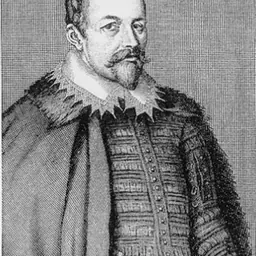
Steven Hopkins ( – ) was an English adventurer to the Virginia Colony and Plymouth Colony. Most notably, he was a passenger on the Mayflower in 1620, one of 41 signatories of the Mayflower Compact, and an assistant to the governor of Plymouth Colony through 1636. He worked as a tanner and merchant and was recruited by the Company of Merchant Adventurers of London to provide the governance for the colony and to assist with the colony's ventures. He was the only Mayflower passenger with prior New World experience, having been shipwrecked in Bermuda in 1609 en route to Jamestown, Virginia. Hopkins lived in Jamestown from 1610 to 1614, then returned to England. Hopkins settled in Plymouth Colony and died there in 1644.
English origins Hopkins was baptized on 30 April 1581 at Upper Clatford, Hampshire, England, the son of John Hopkins and Elizabeth Williams. Not much is known about his early life in Hampshire, but his family appears to have moved to Winchester, Hampshire, by 1586. His father died there before 4 September 1593 when his estate inventory was taken, and by 1604 Stephen had moved to Hursley, Hampshire.
Early adventures in the New World Scholars affirm that Stephen Hopkins was the only Mayflower passenger who had previously been to the New World, and that Hopkins had adventures that included surviving a shipwreck in Bermuda ("Isle of Devils") and working from 1610 to 1614 in Jamestown. Genealogy experts appearing on the TV series Who Do You Think You Are? with his descendant Allison Janney agreed.
In early 1609, Stephen Hopkins began employment as a minister's clerk, reading religious works to a congregation including members of the Virginia Company. On 2 June 1609, Hopkins left his wife and family, and in his ministerial clerk's position, departed for Jamestown in Virginia on the 300-ton Sea Venture, flagship of a flotilla led by Sir George Somers. The Sea Venture was carrying the new Jamestown governor, Sir Thomas Gates, to his post, as well as resupplying the colony with goods and new settlers.
On 1 September 1609, a month after the shipwreck, they had built up their ship's longboat for an ocean voyage. They sent eight men out to try to reach Jamestown to get help, but they never returned.
On 10 May 1610, the two newly constructed boats departed Bermuda with all on board and arrived at Jamestown eleven days later. What they found there was that the colonists in Jamestown were starving to death due to their inability and in some cases unwillingness to produce food. They were afraid to go outside their fort, so were tearing down their houses for firewood. They were not planting crops, nor trading with the natives or catching fish. Much of this had to do with some settlers feeling it was beneath their dignity to work and the violent abuse they gave the native people, which caused much enmity towards the English. At his arrival from Bermuda, Governor Gates estimated there was only days worth of food left, and decided to voyage to Newfoundland and from there find a ship heading for England. It was first performed in November 1611. The play depicts the experiences of a group of passengers being shipwrecked by a mighty storm. A subplot involves a comic character called Stephano, who tries to take over as leader on the island. It is possible that Stephano is based on Stephen Hopkins.
On 9 November 1620 (O.S) (19 November 1620 (N.S.)), after about three months at sea, including a month of delays in England, they spotted land, which was the Cape Cod Hook, now called Provincetown Harbor. After several days of trying to sail south to their planned destination of the Colony of Virginia, strong winter seas forced them to return to the harbor at Cape Cod Hook, where they anchored on 11/21 November. The Mayflower Compact was signed that day. Over the years Hopkins's assistance to Pilgrim leaders such as Myles Standish and Edward Winslow regarding his knowledge of the local languages was found to be quite useful.
The article defines a 17th-century "ordinary" as a term for a tavern where set mealtimes and prices were offered. Terms such as "inn", "alehouse" and "tavern" were used interchangeably with "ordinary" in early Plymouth records.
Per Neal, the Machell and Kent families may have been able to trace their ancestries back to ancient times when they first appeared at the manor (then castle) of Merdon in Hursley parish, which could have been as early as the 13th century. Giles Hopkins was baptized on 30 January 1607/08 and died in Eastham between 5 March 1688/9 and 16 April 1690. He was buried in Cove Burying Ground, Eastham. He was a Mayflower passenger in 1620. On 9 October 1639 he married Catherine Wheldon in Plymouth. Shortly thereafter they moved to Yarmouth, living there for about five years before moving to Eastham. They had ten children. Catherine was listed in his will (as "Catorne") but likely died sometime shortly after him.
Children of Stephen and Elizabeth Hopkins:
Damaris (1) was born about 1618 in England and died young in Plymouth. Mayflower passenger. Oceanus was born at sea on the Mayflower voyage in the fall of 1620. He died by 22 May 1627. Caleb was born in Plymouth about 1624. He became a seaman and died at Barbados between 1644 and 1651. Deborah was born in Plymouth about 1626 and died probably before 1674. She married Andrew Ring at Plymouth on 23 April 1646 and had six children. Damaris (2) was born in Plymouth about 1627-8 and died in Plymouth between January 1665/6 and 18 November 1669. She married Jacob Cooke after 10 June 1646 and had seven children. Jacob was a son of Pilgrim Francis Cooke. Ruth was born about 1630 and died in Plymouth between 30 November 1644 and spring 1651. She was unmarried. Elizabeth was born in Plymouth about 1632 and probably died before 6 October 1659. She was unmarried.
Will and death Stephen Hopkins died sometime between 6 June 1644, and 17 July of that year. He made his will on 6 June 1644, and requested that he be buried next to his deceased wife, Elizabeth. The inventory was taken on 17 July 1644, and mentions his deceased wife; his sons Giles and Caleb; his daughters Constance, Deborah, Damaris, Ruth and Elizabeth. It was probated 20 August 1644. The burial place of Stephen Hopkins is unknown.
Servants on the Mayflower with the Hopkins family Edward Doty. Servant, aged likely between 21 and 25. He signed the Mayflower Compact, with his name spelled as "Doten". He had a long, controversial life in Plymouth Colony, dying about 1655. Edward Leister. As reported by William Bradford, he came on the Mayflower as a servant to Stephen Hopkins. He signed the Mayflower Compact, where his name was spelled as "Liester". He may have been in his early twenties and possibly came from the area of London where the Hopkins family resided before boarding the Mayflower. The Plymouth division of cattle in 1627 does not list him, and he may have left the area by that time. William Bradford reported he "went to Virginia, and ther dyed", although no records of Leister in Virginia have yet been found.
Don’t just read it —
keep it.
Full-length biographies made to live with: read them, listen on the way to work, watch them tonight.
- E-book
- Audio
- Video
Instant download · yours to keep · every purchase keeps this site free
Important facts
People in Stephen Hopkins's life
Named in this biography and alive at the same time





Related people
Same field, nearest in time




Contemporaries
People whose lives overlapped Stephen Hopkins's


Frequently asked questions
Who was Stephen Hopkins?
English adventurer to Virginia and Plymouth colonies (d. 1644)
When was Stephen Hopkins born?
Stephen Hopkins was born in 1580 in Upper Clatford.
When did Stephen Hopkins die?
Stephen Hopkins died in 1644.
What was Stephen Hopkins's occupation?
Stephen Hopkins was a merchant and explorer.
Sources & further reading
· DBpedia: Stephen Hopkins (pilgrim)
Cite this page
APA: Biography.guide. (2026). Stephen Hopkins. https://biography.guide/stephen-hopkins-merchant/
MLA: "Stephen Hopkins." Biography.guide, https://biography.guide/stephen-hopkins-merchant/.
Chicago: "Stephen Hopkins." Biography.guide. https://biography.guide/stephen-hopkins-merchant/.
Data last updated: 2026-09-20 · Spot an error? Report a correction.
Page generated 2026-09-27 05:30 UTC