
About Cindy Shatto
Lived 1957 – 2011 (aged 54). Cindy Shatto was a Canadian competitive diver.
Cynthia "Cindy" Shatto (June 19, 1957 – October 3, 2011) was a Canadian diver. She won a gold medal in the 1974 British Commonwealth Games 3 metre springboard event and competed in the women's 10 metre platform event at the 1976 Summer Olympics, where she finished fifth following controversy over the judges' scoring.
Shatto began competitive diving when she was 8 years old and won nearly all diving events of her age group. To further develop her skills, in 1970 she and fellow diver Linda Cuthbert moved into the family home of her coach Don Webb, where she would train for up to five hours a day, six days a week, only taking rest on Sunday. Around the age of 14, she was admitted to hospital in the early 1970s and needed her gall bladder removed due to eating too much greasy food, leaving her weak and unable to train during the winter of 1971–1972. During the mid-1970s in-between competing at the 1974 Commonwealth Games and the 1976 Olympics, she lost interest in the sport and her attitude changed when she compared her lifestyle to that of others who did not have the pressures of international competitions, but was encouraged by fellow diver Beverly Boys to reflect positively on the sport and thereafter began serious practising again from around August 1975.
Shatto retired from competitive diving in 1978 after growing tired of a nomadic lifestyle and in summer 1990 moved with her family to Binghamton, New York, where she became a diving coach at Binghamton University. She died of lung cancer in October 2011 at the age of 54.
Career Childhood and early development Born in June 1957, Shatto began roller skating at the age of 2 and later took up acrobatics, modern dance and learnt to play the violin. She started competitive diving at the age of 8 in her family's backyard pool in Willowdale, Toronto. Her father would play diving games with her, using a long garbage sweeping pole for her to run and leap over "like a porpoise". Under the early coaching of John Dickinson, Shatto won "just about every age-group meet she entered". At the age of 9, she practised platform diving at the open-air pool in Summerville, occasionally being blown by wind from the tower due to its location near the edge of Lake Ontario. Despite the extreme cold weather conditions, she persevered. and followed it up by becoming the United States diving champion in her age group.
By the age of 10, she had experience with playing the violin, acrobatics, contemporary dancing and baton twirling. Her mother described her as persistent, saying that "if she discovered something she couldn't master, she'd get mad, sulk, but stick it out until she got better." Shortly before her 12th birthday, she finished runner-up in the 1969 Ontario open 3-metre diving championships in the girls' under-15 category. At the age of 13, she was invited to train with national coach Don Webb, requiring her to live with Webb's family for around three years, the first two years being in Winnipeg.
During her earlier years, she frequently ate excessive amounts of chips and gravy, with other children using it as her nickname. Having been admitted to hospital with constant stomach pains due to excessive greasy food, her gallbladder was removed which left her weak and unable to train during the winter of 1971–1972. In the same year, she represented her country at the world championships held in Yugoslavia. establishing herself as the likeliest contender in Canada to win a gold medal at the 1976 Summer Olympics. According to Webb, Shatto was a natural diver with class, possessing the style and determination that other divers had to learn.
Depression Prior to the 1976 Olympics, Shatto went through a depressive period around 1974 and 1975, losing her motivation for competitive diving and developing a poor attitude. Her performances during this time barely reflected her talent as a top three diver in Canada. She even considered retiring from the sport to live a more traditional lifestyle, like her sister Becky, who was recognized as a "female athlete of the year" in high school. She started comparing her life to her sister's and felt envy. Shatto's father, a perfectionist, couldn't understand her change in attitude or lack of interest in diving. After reflecting on the positive aspects of diving, including international travel and the people she had met, Shatto was offered advice by fellow diver Beverly Boys, which helped her regain her motivation and confidence. She began serious practicing again around August 1975 and accepted that if she performed poorly, it would be due to lack of practice, not attitude.
Olympics and beyond She had taken a year out of high school in 1976 to train for the Olympics full time. Shortly after turning 19, Shatto competed in the 1976 Olympics and was in second place in the women's 10 metre platform after five of eight dives, but dropped to fifth position following a sixth dive that was scored controversially. The Montreal Gazette at the time suggested that she had been "cheated out of at least a bronze," alleging bias from the Soviet and Swedish judges, although Shatto felt that finishing fifth in the world was still an accomplishment.
Retirement On the eve of the 1978 Commonwealth Games, Shatto announced her retirement from competitive diving at the age of 21, citing the "nomadic life of a world-class athlete" as being the primary factor in her loss of interest. She admitted that her Olympic controversy two years prior was a contributing factor
Later life
In later life, she was an executive secretary with Xerox around 1987 which her husband later noted had a positive effect on her. her father, Dick Shatto, was a professional Canadian football player and member of the Canadian Football Hall of Fame. ). Cindy was the third of five children and attended Rideau High School. During her diving career, Shatto measured tall and weighed around . having first met in 1979 when she entered a restaurant in Tarpon Springs that Weingartner managed, in search of a job following her retirement from diving. He recalled that he "instantly fell in love", at the time unaware of her sporting achievements until their relationship developed. They had two sons born in the 1980s, Richard who also took up diving and Christopher.
She died of lung cancer in October 2011 at the age of 54, following a two-year battle.
Don’t just read it —
keep it.
Full-length biographies made to live with: read them, listen on the way to work, watch them tonight.
- E-book
- Audio
- Video
Instant download · yours to keep · every purchase keeps this site free
Important facts
People in Cindy Shatto's life
Named in this biography and alive at the same time





Related people
Same field, nearest in time


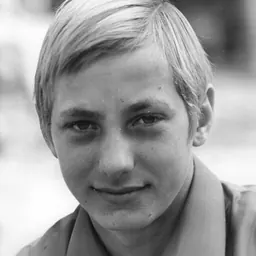

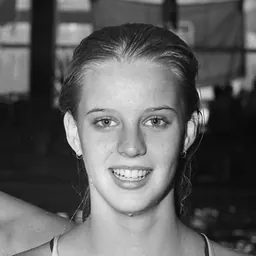
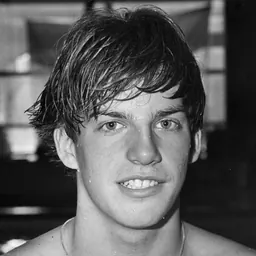
Contemporaries
People whose lives overlapped Cindy Shatto's
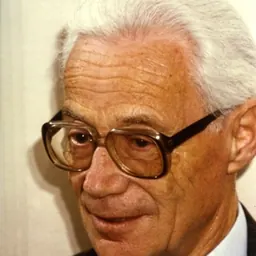

Frequently asked questions
Who was Cindy Shatto?
diver
When was Cindy Shatto born?
Cindy Shatto was born on 16 June 1957 in Toronto.
When did Cindy Shatto die?
Cindy Shatto died on 2 October 2011 in Miramar.
What was Cindy Shatto's occupation?
Cindy Shatto was a competitive diver.
What nationality was Cindy Shatto?
Cindy Shatto was Canadian.
Sources & further reading
Cite this page
APA: Biography.guide. (2026). Cindy Shatto. https://biography.guide/cindy-shatto/
MLA: "Cindy Shatto." Biography.guide, https://biography.guide/cindy-shatto/.
Chicago: "Cindy Shatto." Biography.guide. https://biography.guide/cindy-shatto/.
Data last updated: 2026-09-20 · Spot an error? Report a correction.
Page generated 2026-09-27 05:09 UTC