
About Ciaran Carson
Lived 1948 – 2019 (aged 70). Ciaran Carson was a British poet, novelist, translator, writer and university teacher.
Ciaran Gerard Carson (Irish: Ciarán Gearóid Mac Carráin; 9 October 1948 – 6 October 2019) was a Northern Ireland-born poet and novelist.
Early life and education Ciaran Carson was born on 9 October 1948 in Belfast into an Irish-speaking family. His father, William, was a postman and his mother, Mary, worked in the linen mills. He spent his early years in the lower Falls Road where he attended Slate Street School and then St Gall's Primary School, both of which subsequently closed. He then attended St Mary's Christian Brothers' Grammar School before proceeding to Queen's University Belfast (QUB) to read for a degree in English. He died in Belfast on 6 October 2019.
Career After graduation, he worked for over twenty years as the Traditional Arts Officer of the Arts Council of Northern Ireland.
He retired in 2016 but remained attached to the organisation on a part-time basis.
Work His collections of poetry include The Irish for No (1987), winner of the Alice Hunt Bartlett Prize; Belfast Confetti (1990), which won the Irish Times Irish Literature Prize for Poetry; and First Language: Poems (1993), winner of the T. S. Eliot Prize. His prose includes The Star Factory (1997) and Fishing for Amber (1999). His novel Shamrock Tea (2001), explores themes present in Jan van Eyck's painting The Arnolfini Marriage. His translation of Dante's Inferno was published in November 2002. Breaking News, (2003), won the Forward Poetry Prize (Best Poetry Collection of the Year) and a Cholmondeley Award.
He was also an accomplished musician, and the author of Last Night's Fun: About Time, Food and Music (1996), a study of Irish traditional music.
Two months before he died he published Claude Monet, "The Artist’s Garden at Vétheuil", 1880 in The New Yorker. Its last lines were: It’s beautiful weather, the 30th of March, and tomorrow the clocks go forward. How strange it is to be lying here listening to whatever it is going on. The days are getting longer now, however many of them I have left. And the pencil I am writing this with, old as it is, will easily outlast their end.
Critical perspective Carson managed an unusual marriage in his work between the Irish vernacular story-telling tradition and the witty elusive mock-pedantic scholarship of Paul Muldoon In the ten years before The Irish for No (1987) he perfected a new style which effected a unique fusion of traditional storytelling with postmodernist devices. The first poem in The Irish for No, the tour-de-force 'Dresden' parades his new technique. Free-ranging allusion is the key. The poem begins in shabby bucolic:
'And as you entered in, a bell would tinkle in the empty shop, a musk Of soap and turf and sweets would hit you from the gloom.'
It takes five pages to get to Dresden, the protagonist having joined the RAF as an escape from rural and then urban poverty. In Carson everything is rooted in the everyday, so the destruction of Dresden evokes memories of a particular Dresden shepherdess he had on the mantelpiece as a child and the destruction is described in terms of 'an avalanche of porcelain, sluicing and cascading'.
Like Muldoon's, Carson's work was intensely allusive. In much of his poetry, he had a project of sociological scope: to evoke Belfast in encyclopaedic detail. Part Two of The Irish for No was called 'Belfast Confetti' and this idea expanded to become his next book. The Belfast of the Troubles is mapped with obsessive precision and the language of the Troubles is as powerful a presence as the Troubles themselves. The poem "Belfast Confetti" signals this:
'Suddenly as the riot squad moved in, it was raining exclamation marks, Nuts, bolts, nails, car-keys. A fount of broken type...'
In First Language (1993), which won the T. S. Eliot Prize, language has become the subject. There are translations of Ovid, Rimbaud and Baudelaire. Carson was deeply influenced by Louis MacNeice and he included a poem called 'Bagpipe Music'. What it owes to the original is its rhythmic verve. With his love of dense long lines, it is not surprising he was drawn to classical poetry and Baudelaire. In fact, the rhythm of 'Bagpipe Music' seems to be that of an Irish jig, on which subject he was an expert (his book about Irish music Last Night's Fun (1996) is regarded as a classic). To be precise, the rhythm is that of a "single jig" or "slide."):
'blah dithery dump a doodle scattery idle fortunoodle.'
Carson then entered a prolific phase in which the concern for language liberated him into a new creativity. Opera Etcetera (1996) had a set of poems on letters of the alphabet and another series on Latin tags such as 'Solvitur Ambulando' and 'Quod Erat Demonstrandum' and another series of translations from the Romanian poet Ștefan Augustin Doinaș. Translation became a key concern, The Alexandrine Plan (1998) featured sonnets by Baudelaire, Rimbaud and Mallarmé rendered into Alexandrines. Carson's penchant for the long line found a perfect focus in the 12-syllable alexandrine line. He also published The Twelfth of Never (1999), sonnets on fanciful themes:
'This is the land of the green rose and the lion lily, / Ruled by Zeno's eternal tortoises and hares, / where everything is metaphor and simile'.
The Ballad of HMS Belfast (1999) collected his Belfast poems.
Awards 1978: Eric Gregory Award 1987: Alice Hunt Bartlett Prize for The Irish for No 1990: Irish Times Irish Literature Prize for Poetry for Belfast Confetti 1993: T. S. Eliot Prize for First Language: Poems 1997: Yorkshire Post Book Award (Book of the Year) for The Star Factory 2003: Cholmondeley Award for Breaking News 2003: Forward Poetry Prize (Best Poetry Collection of the Year) for Breaking News
Death and legacy Carson died of lung cancer on 6 October 2019 at the age of 70.
In 2020, the Seamus Heaney Centre established two annual fellowships in memory of its first director, Ciaran Carson, and inspired by his writing about the city of Belfast in prose as well as poetry.
Don’t just read it —
keep it.
Full-length biographies made to live with: read them, listen on the way to work, watch them tonight.
- E-book
- Audio
- Video
Instant download · yours to keep · every purchase keeps this site free
Important facts
People in Ciaran Carson's life
Named in this biography and alive at the same time




Related people
Same field, nearest in time

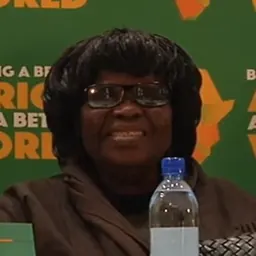
Contemporaries
People whose lives overlapped Ciaran Carson's
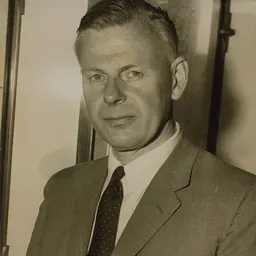

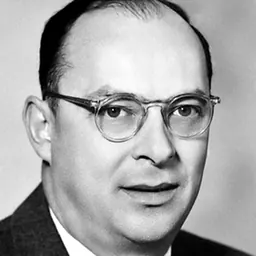
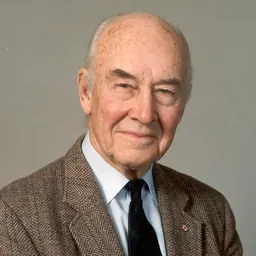

Frequently asked questions
Who was Ciaran Carson?
Irish poet (1948-2019)
When was Ciaran Carson born?
Ciaran Carson was born on 9 October 1948 in Belfast.
When did Ciaran Carson die?
Ciaran Carson died on 6 October 2019 in Belfast.
What was Ciaran Carson's occupation?
Ciaran Carson was a poet, novelist, translator, writer and university teacher.
What nationality was Ciaran Carson?
Ciaran Carson was British.
Sources & further reading
Cite this page
APA: Biography.guide. (2026). Ciaran Carson. https://biography.guide/ciaran-carson/
MLA: "Ciaran Carson." Biography.guide, https://biography.guide/ciaran-carson/.
Chicago: "Ciaran Carson." Biography.guide. https://biography.guide/ciaran-carson/.
Data last updated: 2026-09-20 · Spot an error? Report a correction.
Page generated 2026-09-27 05:03 UTC