
About Louis MacNeice
Lived 1907 – 1963 (aged 55). Louis MacNeice was a British poet, writer and playwright.
Frederick Louis MacNeice (12 September 1907 – 3 September 1963) was an Irish poet, playwright and producer for the BBC. Known for its exploration of introspection, empiricism, and belonging, his poetic work is now considered among the twentieth century's greatest. Despite being renowned as a member of the Auden Group, he was also an independently successful (albeit occasionally overlooked) poet with an influential body of work, which is replete with themes ranging from faith to mortality. His body of work was appreciated by the public during his lifetime, due in part to his relaxed but socially and emotionally aware style. Never as overtly or simplistically political as some of his contemporaries, he expressed a humane opposition to totalitarianism as well as an acute awareness of his roots.
MacNeice was awarded the CBE in the 1958 New Year Honours list.
Life Ireland, 1907–1917
Louis MacNeice (known as Freddie until his teens, when he adopted his middle name) was born in Belfast, the youngest son of Rev. John Frederick and Elizabeth Margaret ("Lily") MacNeice. Both were originally from the west of Ireland. MacNeice's father, an Anglican clergyman, would go on to become a bishop in the Church of Ireland and his mother Elizabeth née Cleshan, from Ballymaconry, Connemara, County Galway, had been a schoolmistress. The family moved to Carrickfergus, County Antrim, soon after MacNeice's birth. where he was a contemporary of John Betjeman and Anthony Blunt, forming a lifelong friendship with the latter. He also wrote poetry and essays for the school magazines. By the end of his time at the school, MacNeice was sharing a study with Blunt and also sharing his aesthetic tastes, though not his sexual ones; Blunt said MacNeice was "totally, irredeemably heterosexual". In November 1925, MacNeice was awarded a postmastership to Merton College, Oxford, and he left Marlborough in the summer of the following year. He left behind his birth name of Frederick, his accent and his father's faith, although he never lost a sense of his Irishness;
Oxford, 1926–1930 It was during his first year as a student at Oxford that MacNeice first met W. H. Auden, who had gained a reputation as the university's foremost poet during the preceding year. Stephen Spender and Cecil Day-Lewis were already part of Auden's circle, but MacNeice's closest Oxford friends were John Hilton, Christopher Holme and Graham Shepard, who had been with him at Marlborough. MacNeice threw himself into the aesthetic culture, publishing poetry in literary magazines The Cherwell and Sir Galahad, organising candle-lit readings of Shelley and Marlowe, and visiting Paris with Hilton. Auden would become a lifelong friend who inspired MacNeice to take up poetry seriously. and had already gained an appointment as Assistant Lecturer in Classics at the University of Birmingham. In the book, MacNeice is set in amongst others of the new Auden Group, presenting a version of modernism in which Eliot is the star. MacNeice and his group were also featured in Oxford Book of Modern Verse 1892–1935, edited by Yeats. This collection generally excluded American poets and was less well received critically, but instantaneously became a best-seller. Nancy had painted a portrait of MacNeice.
August 1937 saw the appearance of Letters from Iceland (which had been finished by the two authors in MacNeice's London home the previous year), and towards the end of the year a play called Out of the Picture was published and produced by the Group Theatre. Music was written for the production by Benjamin Britten, as he had done previously for Agamemnon. MacNeice worked as a freelance journalist (he had resigned from his lecturing position at Bedford College while in America) and was awaiting the publication of Plant and Phantom, which was dedicated to Clark (the previous year, the Cuala Press had published The Last Ditch, a limited edition containing some poems that would appear in the new volume). In early 1941, MacNeice was employed by the BBC.
War and after, 1941–1963 MacNeice's work for the BBC initially involved writing and producing radio programmes intended to build support for the US, and later Russia – cultural programmes emphasising links between the countries rather than outright propaganda. A critical work on W. B. Yeats (on which he had been working since the poet's death in 1939) was published early in 1941, as were Plant and Phantom and Poems 1925–1940 (an American anthology). At the end of the year, MacNeice started a relationship with Hedli Anderson and they were married in July 1942, three months after the death of his father. He has inspired many poets since his death, particularly those from Northern Ireland such as Paul Muldoon and Michael Longley. There has been a movement to reclaim him as an Irish writer rather than a satellite of Auden. Longley has edited two selections of his work, and Muldoon gives more space to MacNeice than to any other author in his Faber Book of Contemporary Irish Poetry, which covers the period from the death of W. B. Yeats until 1986. Muldoon and Derek Mahon have both written elegies for MacNeice, Mahon's coming after a pilgrimage to the poet's grave in the company of Longley and Seamus Heaney in 1965. At the time of MacNeice's death, John Berryman described him as "one of my best friends", and wrote an elegy in Dream Song #267.
Archive Louis MacNeice's archive was established at the Harry Ransom Center at the University of Texas at Austin in 1964, a year after MacNeice's death. The collection, largely coming from MacNeice's sister Elizabeth Nicholson, includes manuscripts of poetic and dramatic works, a large number of books, correspondence, and books from MacNeice's library.
Works Poetry collections Blind Fireworks (1929, mainly considered by MacNeice to be juvenilia and excluded from the 1949 Collected Poems) Poems (1935) Letters from Iceland (1937, with W. H. Auden, poetry and prose) The Earth Compels (1938) Autumn Journal (1939) The Last Ditch (1940) Selected Poems (1940) Plant and Phantom (1941) Springboard (1944) Prayer Before Birth (1944) Holes in the Sky (1948) Collected Poems, 1925–1948 (1949) Ten Burnt Offerings (1952) Autumn Sequel (1954) Visitations (1957) Solstices (1961) The Burning Perch (1963) Star-gazer (1963) Selected Poems (1964, edited by W. H. Auden) Collected Poems (1966, edited by E. R. Dodds) Selected Poems (1988, edited by Michael Longley, redesigned and republished by Wake Forest University Press, 2009) Collected Poems (2007, edited by Peter McDonald)
Plays The Agamemnon of Aeschylus (1936, translation) Out of the Picture (1937) Christopher Columbus (1944, radio) & performed, Brighton Dome (2002) He Had a Date (1944, radio, not published separately) The Dark Tower and other radio scripts (1947) Goethe's Faust (1949, published 1951, a translation) Prisoner's Progress (radio play, broadcast on 27 April 1954, winner of the RAI Prize for Dramatic Works at the Prix Italia in Florence in 1954. ) The Mad Islands and The Administrator (1964, radio) Persons from Porlock and other plays for radio (1969) One for the Grave: a modern morality play (1968) Selected Plays of Louis MacNeice, ed. Alan Heuser and Peter McDonald (1993) MacNeice also wrote several plays which were never produced, and many for the BBC which were never published.
Books (fiction) Roundabout Way (1932, as "Louis Malone") The Sixpence That Rolled Away (1956, for children)
Books (non-fiction)
I Crossed the Minch (1938, travel, prose and verse) Modern Poetry: A Personal Essay (1938, criticism) Zoo (1938) The Poetry of W. B. Yeats (1941) The Strings Are False (1941, published 1965, autobiography) Meet the US Army (1943) Astrology (1964) Varieties of Parable (1965, criticism) Selected Prose of Louis MacNeice, ed. Alan Heuser (1990)
Don’t just read it —
keep it.
Full-length biographies made to live with: read them, listen on the way to work, watch them tonight.
- E-book
- Audio
- Video
Instant download · yours to keep · every purchase keeps this site free
Important facts
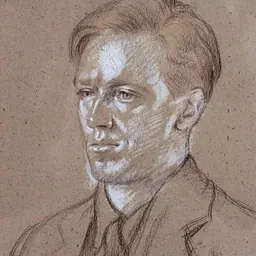
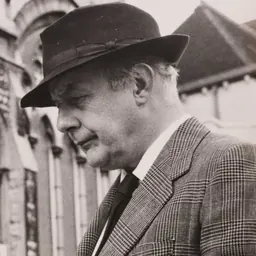
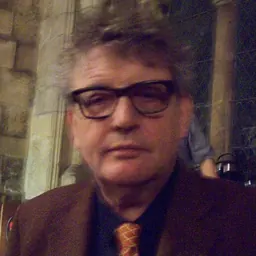
People in Louis MacNeice's life
Named in this biography and alive at the same time





Related people
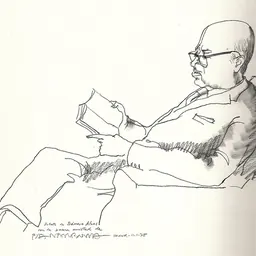
Same field, nearest in time


Contemporaries
People whose lives overlapped Louis MacNeice's


Frequently asked questions
Who was Louis MacNeice?
Irish poet and playwright (1907–1963)
When was Louis MacNeice born?
Louis MacNeice was born on 12 September 1907 in Belfast.
When did Louis MacNeice die?
Louis MacNeice died on 3 September 1963 in London.
What was Louis MacNeice's occupation?
Louis MacNeice was a poet, writer and playwright.
What nationality was Louis MacNeice?
Louis MacNeice was British.
Sources & further reading
Cite this page
APA: Biography.guide. (2026). Louis MacNeice. https://biography.guide/louis-macneice/
MLA: "Louis MacNeice." Biography.guide, https://biography.guide/louis-macneice/.
Chicago: "Louis MacNeice." Biography.guide. https://biography.guide/louis-macneice/.
Data last updated: 2026-09-22 · Spot an error? Report a correction.
Page generated 2026-09-27 05:03 UTC