
About Chucho el Roto
Lived 1858 – 1894 (aged 35–36). Chucho el Roto was a Mexican criminal and outlaw.
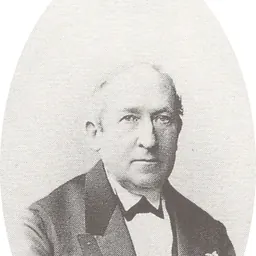
Jesús Arriaga Zamora, better known as Chucho el Roto (1858–1885), was a Mexican bandit active in the late 19th century, whose life story has been the basis of number of books, plays and other media since before his death. His real name was Jesús Arriaga; the nickname Chucho (literally "mutt") is a common diminutive of Jesús in Spanish, and roto (literally, "broken") can be translated as "discarded" or "ragged".
Arriaga was born in the state of Tlaxcala in 1858. After being forced to abandon his family, Chucho became a bandit, becoming famous in the late 1870s and the first half of the 1880s. His fame came from his ability to cross Mexico's strong socioeconomic circles and use this ability to rob from the wealthy. His legend also includes the love of fine clothes and the theater despite his humble birth and the sharing of at least some of his gains with the poor. The last aspect has prompted comparisons between him and Robin Hood. Chucho was last arrested in 1884 and died in the prison of San Juan de Ulúa in Veracruz in 1885.
Arriaga's fame and legend began with newspaper accounts of him from the time, with the first fictional story based on him appearing three months before his death. Early works did not give a uniform significance to the legend, but during the epoch of Porfirio Díaz and the Mexican Revolution, his modern persona emerged. His story continues to be told in films, television, novels and other media.
Early life Arriaga was born in the village of Santa Ana Chiautempan, Tlaxcala, in 1858. He was a good student, but after the death of his father, he was obliged to quit school to work to support his mother and sister. Eventually he lived in Mexico City, where he was hired to do some carpentry work at the house of a wealthy family. Here met and fell in love with one of the young women there named Matilde. She was an orphan living with aunt and uncle at the house. He got her pregnant but never married her since he was poor. The family left to hide the pregnancy, stating that they would go on vacation to Europe. They returned two years later with a little girl named Dolores who they claimed they adopted in France. Chucho kidnapped the girl and took her to his sister’s house. However, the police went after him, and he was forced to abandon his family.
Career The beginning of Chucho’s career is unknown but from the 1870s to his death in 1885, he became an urban bandit whose escapades with the law triggered intense reactions from both lower and privileged classes. He was dedicated to robbing jewelry stores, pawnshops and homes of the wealthy and reputed to be a seducer of rich, lonely women, with a gift for small talk and friendliness. He is distinguished from most other bandits at the time for his ability to cross socioeconomic lines. A middle class carpenter by birth, he found ways to integrate himself into upper social circles, often using these contacts to carry out his crimes. He was also mobile and active along the railroad lines connecting the cities of Veracruz, Puebla, Mexico City and Querétaro, which were the epitome of modernization as well as law and order at the time. He had also befriended the owner of a jewelry shop, but he did not have reference as to his identity of “José Vega” or his business. Chucho el Roto, and even the television series El Tesoro de Chucho el Roto. The figure has evolved as a literate and skilled carpenter who lived, worked and stole in the social sphere of Mexico's high society. This figure fuses the romantic rural bandit with urban criminality and urban working classes. Investigations into Mexican banditry have repeatedly invoked Chucho's public image to debate the impact of banditry in late-nineteenth century Mexico. Studies in the last 20th century, revolve around whether famous bandits such as Chucho serve as a political or cultural model for popular dissent especially since stories about them continue to be popular.
Works inspired by Chucho's story Chucho el Roto (1934 film), directed by Gabriel Soria Chucho el roto (TV series), a 1968 Mexican telenovela Chucho el Roto (film), a 1960 film
Don’t just read it —
keep it.
Full-length biographies made to live with: read them, listen on the way to work, watch them tonight.
- E-book
- Audio
- Video
Instant download · yours to keep · every purchase keeps this site free
Important facts
People in Chucho el Roto's life
Named in this biography and alive at the same time
Related people
Same field, nearest in time

Contemporaries
People whose lives overlapped Chucho el Roto's


Frequently asked questions
Who was Chucho el Roto?
Mexican outlaw
When was Chucho el Roto born?
Chucho el Roto was born in 1858 in Tlaxcala.
When did Chucho el Roto die?
Chucho el Roto died on 25 March 1894 in Veracruz.
What was Chucho el Roto's occupation?
Chucho el Roto was a criminal and outlaw.
What nationality was Chucho el Roto?
Chucho el Roto was Mexican.
Sources & further reading
Cite this page
APA: Biography.guide. (2026). Chucho el Roto. https://biography.guide/chucho-el-roto/
MLA: "Chucho el Roto." Biography.guide, https://biography.guide/chucho-el-roto/.
Chicago: "Chucho el Roto." Biography.guide. https://biography.guide/chucho-el-roto/.
Data last updated: 2026-09-20 · Spot an error? Report a correction.
Page generated 2026-09-27 05:10 UTC