
Christopher I. Beckwith
American linguist
About Christopher I. Beckwith
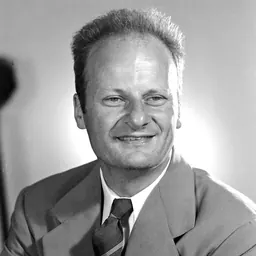
Born 1945. Christopher I. Beckwith is an American linguist, university teacher, cultural anthropologist, tibetologist, sinologist and turkologist.
Christopher I. Beckwith (born October 23, 1945) is an American philologist and distinguished professor in the Department of Central Eurasian Studies at Indiana University Bloomington, Indiana.
He has a Bachelor of Arts in Chinese from Ohio State University (1968), a Master of Arts in Tibetan from Indiana University Bloomington (1974) and a Doctor of Philosophy in Inner Asian Studies from Indiana University (1977).
Beckwith, a MacArthur Fellow, is a researcher in the field of Central Eurasian studies. He researches the history and cultures of ancient and medieval Central Asia. Concomitantly he specializes in Asian language studies and linguistics, and in the history of Central Eurasia. He teaches Old Tibetan, Central Eurasian languages, and Central Eurasian history and researches the linguistics of Aramaic, Chinese, Japanese, Koguryo, Old Tibetan, Tokharian, Old Turkic, Uzbek, and other languages. Empires of the Silk Road is a rethinking of the origins, history, and significance of Central Eurasia. Beckwith's methodologies and interpretations concerning early Buddhism, inscriptions, and archaeological sites have been criticized by other scholars, such as Johannes Bronkhorst, Osmund Bopearachchi, Stephen Batchelor and Charles Goodman. He claims that the Buddha, Laozi, Zoroaster and Anacharsis were Scythians through primarily linguistic reasoning. He rejects the authenticity of historical evidence to the contrary, including the entire Pali Canon and the Avesta, the latter of which he regards as a later interpolation written in an Indic language, questioning the entire field of Iranian historical linguistics. He also disregards archaeological evidence proving that the Buddha was a Shakya from the Himalayan foothills, including a 6th century BC shrine at the birthplace of the Buddha in Lumbini and the Lumbini pillar inscription, instead proposing that he was from Central Asia.
Alexander Vovin, a researcher on East Asian philology, regards Beckwith's proposals on Japanese etymology as "science fiction' Beckwith uses claims of Scythian origin to make the hyperdiffusionist assertion that "Central Eurasia is our homeland, the place where our civilization started", responsible for "founding the Classical civilizations of the Greeks and Romans, Iranians, Indians, and Chinese". Beckwith rejects universally held support for the genetic relationship between Sinitic and Tibeto-Burman languages, instead supporting a link between Indo-European and Sinitic languages In Empires of the Silk Road, Beckwith criticizes Modernism, stating that it has "has eliminated all hierarchies and replaced them with the idea of “equality,” has given birth to an age of “unartists” with the inability to understand the concept of Beauty and the inability to judge between Art and trash." He views Modernism as an opposition to the traditional feudal, heroic culture of the so-called Central Eurasian Cultural Complex. According to Patrick Olivelle, Beckwith's theory about Ashoka is "an outlier and no mainstream Ashokan scholar would subscribe to that view.
Publications The Tibetan Empire in Central Asia (1987) Medieval Tibeto-Burman Languages Vols I-III, editor (2002, 2006, 2008) Koguryo, the Language of Japan's Continental Relatives (2004) Phoronyms: Classifiers, Class Nouns, and the Pseudopartitive Construction (2007) Warriors of the Cloisters: The Central Asian Origins of Science in the Medieval World (2012) Empires of the Silk Road: A History of Central Eurasia from the Bronze Age to the Present (2011) Greek Buddha: Pyrrho's Encounter with Early Buddhism in Central Asia (2015) The Scythian Empire: Central Eurasia and the Birth of the Classical Age from Persia to China (2023)
Don’t just read it —
keep it.
Full-length biographies made to live with: read them, listen on the way to work, watch them tonight.
- E-book
- Audio
- Video
Instant download · yours to keep · every purchase keeps this site free
Important facts
People in Christopher I. Beckwith's life
Named in this biography and alive at the same time



Related people
Same field, nearest in time




Contemporaries
People whose lives overlapped Christopher I. Beckwith's



Frequently asked questions
Who is Christopher I. Beckwith?
American linguist
When was Christopher I. Beckwith born?
Christopher I. Beckwith was born on 23 October 1945 in United States.
What is Christopher I. Beckwith's occupation?
Christopher I. Beckwith is a linguist, university teacher, cultural anthropologist, tibetologist, sinologist and turkologist.
What nationality is Christopher I. Beckwith?
Christopher I. Beckwith is American.
Sources & further reading
· Wikipedia: Christopher I. Beckwith
· DBpedia: Christopher I. Beckwith
Cite this page
APA: Biography.guide. (2026). Christopher I. Beckwith. https://biography.guide/christopher-i-beckwith/
MLA: "Christopher I. Beckwith." Biography.guide, https://biography.guide/christopher-i-beckwith/.
Chicago: "Christopher I. Beckwith." Biography.guide. https://biography.guide/christopher-i-beckwith/.
Data last updated: 2026-09-20 · Spot an error? Report a correction.
Page generated 2026-09-27 05:12 UTC