
About Christoph Wilhelm Hufeland
Lived 1762 – 1836 (aged 74). Christoph Wilhelm Hufeland was a German physician, university teacher, chief physician, personal physician, therapist and pathologist.
Christoph Wilhelm Friedrich Hufeland (12 August 1762 – 25 August 1836) was a German medical doctor, naturopath and writer. Considered one of the most eminent practical physicians of his time in Germany, he authored numerous works displaying extensive reading and a cultivated critical faculty.
Biography Hufeland was born at Langensalza, Saxony (now Thuringia) and educated at Weimar, where his father held the office of court physician to the grand duchess. In 1780 he entered the University of Jena, and in the following year went on to Göttingen, where in 1783 he graduated in medicine.
After assisting his father for some years at Weimar, he was called in 1793 to the chair of medicine at Jena, receiving at the same time the positions of court physician and professor of pathology at Weimar. During this time, he began a substantive correspondence with Immanuel Kant. In 1798 Frederick William III of Prussia granted him the position director of the medical college and generally of state medical affairs at the Charité, in Berlin. He filled the chair of pathology and therapeutics in the University of Berlin, founded in 1809, and in 1810 became councillor of state. In 1823, he was elected a member of the Royal Swedish Academy of Sciences.
In time he became as famous as Goethe, Herder, Schiller, and Wieland in his homeland.
Hufeland was a close friend of Samuel Hahnemann and published his original writings in his journal in 1796. He also "joined the Illuminati order at this time, having been introduced to freemasonry in Göttingen in 1783." He also seems to have professed an interest in Chinese Alchemy and methods of extending longevity.
The most widely known of his many writings is the treatise entitled Makrobiotik oder Die Kunst, das menschliche Leben zu verlängern (1796), which was translated into many languages, including in Serbian by Jovan Stejić in Vienna in 1828. Of his practical works, the System of Practical Medicine (System der praktischen Heilkunde, 1818–1828) is the most elaborate. From 1795 to 1835, he published a Journal der praktischen Arznei und Wundarzneikunde. His autobiography was published in 1863.
Hufeland died on 25 August 1836, in Berlin.
Naturopathy
Hufeland was an early supporter of naturopathic medicine who posited the existence of a vitalistic "life force", which he believed could be maintained through behavioral and dietary practices. Hufeland was influenced by Hippocrates and promoted what he termed "natural therapeutics" (naturtherapeutik). He supported the use of homeopathy. The book endorsed a program for good health and prolonging life. Hufeland recommended a vegetarian diet. Goethe and his wife took interest in the book.
George Ohsawa, founder of the macrobiotic diet based on yin and yang foods, was influenced by Hufeland.
Marriage and issue He first married Juliane Amelung (1771–1845) and married for the second time to Elisabeth Helene Troschel (1777–1862). From his first marriage he had: Elwira Laura (born in 1799), married to Karl Wilhelm von Becherer Rosalia (born in 1801), married her cousin August Wilhelm Adolph Hufeland Elisabeth, married Prince Alexandru Sturdza, scion of the reigning Princes of Moldavia. Through their son Prince Nicolae Sturdza (died in 1832) Christoph Wilhelm Hufeland is great-great-grandfather of Queen Natalie of Serbia and great-great-great-grandfather of King Alexander I of Serbia.
Don’t just read it —
keep it.
Full-length biographies made to live with: read them, listen on the way to work, watch them tonight.
- E-book
- Audio
- Video
Instant download · yours to keep · every purchase keeps this site free
Important facts
People in Christoph Wilhelm Hufeland's life
Named in this biography and alive at the same time
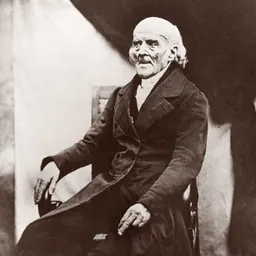
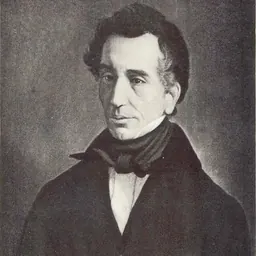


Related people
Same field, nearest in time


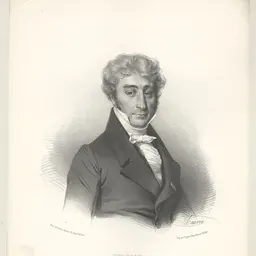


Contemporaries
People whose lives overlapped Christoph Wilhelm Hufeland's





Frequently asked questions
Who was Christoph Wilhelm Hufeland?
German physician (1762–1836)
When was Christoph Wilhelm Hufeland born?
Christoph Wilhelm Hufeland was born on 12 August 1762 in Bad Langensalza.
When did Christoph Wilhelm Hufeland die?
Christoph Wilhelm Hufeland died on 25 August 1836 in Berlin.
What was Christoph Wilhelm Hufeland's occupation?
Christoph Wilhelm Hufeland was a physician, university teacher, chief physician, personal physician, therapist and pathologist.
What nationality was Christoph Wilhelm Hufeland?
Christoph Wilhelm Hufeland was German.
Sources & further reading
· Wikipedia: Christoph Wilhelm Hufeland
· DBpedia: Christoph Wilhelm Hufeland
Cite this page
APA: Biography.guide. (2026). Christoph Wilhelm Hufeland. https://biography.guide/christoph-wilhelm-hufeland/
MLA: "Christoph Wilhelm Hufeland." Biography.guide, https://biography.guide/christoph-wilhelm-hufeland/.
Chicago: "Christoph Wilhelm Hufeland." Biography.guide. https://biography.guide/christoph-wilhelm-hufeland/.
Data last updated: 2026-09-20 · Spot an error? Report a correction.
Page generated 2026-09-27 05:33 UTC