
About Christian Davenport
Born 1965. Christian Davenport is a political scientist and university teacher.
Christian Davenport is an American political scientist, sociologist, writer and professor at the University of Michigan. His fields of research include state repression, human rights violations, political violence, and social movements.
Education and career
Davenport received a Bachelor of Arts with a major in political science from Clark University in Worcester, Massachusetts, in 1987. He received a Masters of Arts in 1990 and a Doctor of Philosophy in 1992, both in political science and from the State University of New York at Binghamton.
He began his academic career at the University of Houston in 1992. He subsequently held positions at the University of Colorado Boulder, the University of Maryland, College Park, and the University of Notre Dame. Between 2007 and 2025, he held a research appointment at the Peace Research Institute Oslo.
Research Davenport studies the use of coercion or force by governments, interactions between states and political challengers (e.g., protest and the policing of protest, insurgency and counter-insurgency as well as terrorism and counterterrorism). His work uses quantitative as well as qualitative methods. Media Bias, Perspective and State Repression: The Black Panther Party (2010) compared differing documentary sources concerning government action against the Black Panther Party and discussed how source selection affects the measurement of repression. The book received the 2011 best-book award from the Race, Ethnicity, and Politics section of the American Political Science Association.
His 2015 book How Social Movements Die used the Republic of New Afrika as a case study of repression, internal organization, and movement demobilization. Davenport has also published research on racial differences in the policing of protest in the United States and on the measurement of civilian casualties during armed conflict. explores repressive life/death-cycles (i.e., the onset, escalation, termination and recurrence of large-scale state coercion/force).
Debate over Rwandan casualty estimates Davenport and political scientist Allan Stam conducted research on deaths associated with the Rwandan genocide and other violence in Rwanda in 1994. Their work received wider public attention after it was featured in the 2014 BBC Two documentary Rwanda's Untold Story. The documentary presented a lower-end estimate of approximately 200,000 Tutsi deaths and questioned commonly cited accounts of the number and ethnic composition of the victims. Other estimates placed the number much higher.
The Rwandan government and parliament accused the documentary of minimizing or denying the genocide and called for action against the BBC. The BBC rejected that characterization, stating that the documentary examined disputed aspects of Rwanda's recent history and contributed to public understanding of the subject. Legal scholar Roland Moerland argued that the documentary did not adequately distinguish the genocide against the Tutsi from killings committed in other contexts and by different actors.
In a 2020 peer-reviewed analysis, political scientist Omar Shahabudin McDoom estimated that between 491,000 and 522,000 Tutsi were killed. He argued that the lower estimates associated with Davenport and Stam were sensitive to their estimate of Rwanda's pre-genocide Tutsi population, which he considered insufficiently supported.
In a response published in the same journal issue, David Armstrong, Davenport, and Stam stated that the available sources were incomplete, inconsistent, and affected by substantial uncertainty. They distinguished their attempt to estimate total deaths from all forms of violence in Rwanda in 1994 from an estimate limited to genocide victims classified by ethnicity. Depending on how the sources were weighted, their model produced central estimates of approximately 580,000 or 730,000 total deaths, with broad uncertainty intervals. Similar estimates were also provided in the earlier work despite the fact that individuals only tended to discuss the lower-end. Davenport et al. argued that most data available on political violence did not permit a single precise and defensible casualty figure and that a range of values from lower to higher were always the most prudent way to proceed.
Discussions and reflections about the field as well as archival work undertaken in Rwanda were provided in a series of comics called RW-94: Reflections on Rwanda.
Podcasts and public engagement
In 2012, Davenport and Will Moore along with Professors Jaqueline Demeritt, Ragnhild Nordas and Ernesto Verdeja created "Mindfields". The interviewees in this show reflect on the trajectory of their research agendas during the arc of their careers, discussing conflict and peace research.
In 2013/2014, Davenport and Will Moore created the "Conflict Consortium Virtual Workshop". It inspired the Online Peace Science Colloquium created by Emily Ritter and others.
Professional recognition
Davenport was elected to the American Academy of Arts and Sciences in 2018. In 2019, he was elected president of the Peace Science Society (International).
Selected works
Don’t just read it —
keep it.
Full-length biographies made to live with: read them, listen on the way to work, watch them tonight.
- E-book
- Audio
- Video
Instant download · yours to keep · every purchase keeps this site free
Important facts
People in Christian Davenport's life
Named in this biography and alive at the same time




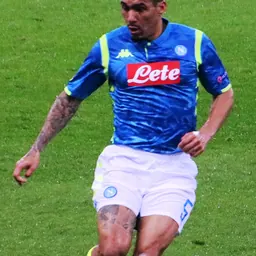

Related people
Same field, nearest in time
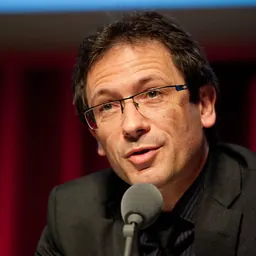



Contemporaries
People whose lives overlapped Christian Davenport's
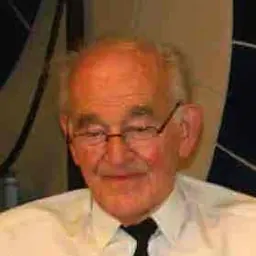
Frequently asked questions
Who is Christian Davenport?
American political scientist
When was Christian Davenport born?
Christian Davenport was born on 4 June 1965.
What is Christian Davenport's occupation?
Christian Davenport is a political scientist and university teacher.
Sources & further reading
· Wikipedia: Christian Davenport
· DBpedia: Christian Davenport
Cite this page
APA: Biography.guide. (2026). Christian Davenport. https://biography.guide/christian-davenport/
MLA: "Christian Davenport." Biography.guide, https://biography.guide/christian-davenport/.
Chicago: "Christian Davenport." Biography.guide. https://biography.guide/christian-davenport/.
Data last updated: 2026-09-20 · Spot an error? Report a correction.
Page generated 2026-09-27 04:57 UTC