
About Chris Phelan
Born 1963. Chris Phelan is an economist.
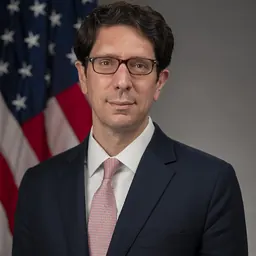
Christopher James Phelan (born February 1963) is an American economist, academic, and U.S. government official whose research focuses on macroeconomic theory, monetary economics, limited government commitment, and reputation. He is a professor in the Department of Economics at the University of Minnesota, where he served as department chair from 2012 to 2021. Phelan serves as Chairman of the Council of Economic Advisers (CEA) in the Executive Office of the President of the United States, succeeding Acting Chairman Pierre Yared.
Prior to his nomination for the Council's chairmanship by President Donald Trump in April 2026, Phelan served at the Federal Reserve Bank of Minneapolis in various capacities, including as a senior economist and most recently as a consultant to the Research Department. He is a research associate at the National Bureau of Economic Research (NBER), and elected fellow of the Econometric Society and the Society of the Advancement of Economic Theory.
Early life and education Phelan was born in February 1963, the youngest of six children. He received a Bachelor of Arts (B.A.) in economics and computer science from Duke University and earned a Master of Arts (A.M.) in economics and a Ph.D. in economics from the University of Chicago, working under the supervision of economist Robert Townsend for his doctoral dissertation. He was named a full professor in 2007 and served as department chair from 2012 to 2021. He was also interim director of the Heller-Hurwicz Economics Institute (HHEI) in 2024–2025.
Phelan joined the Federal Reserve Bank of Minneapolis as a staff economist in 1998.
Research focus Phelan's research focuses on dynamic macroeconomic theory, particularly the role of private information, incentives, government commitment, and financial institutions in shaping economic outcomes. His research can be broadly divided into three areas: incentive theory and dynamic contracting, government commitment and reputation, and banking and monetary policy. Subsequent work analyzed repeated moral hazard, limited commitment, and environments with history-dependent private information, extending recursive techniques to a broader class of contracting problems, demonstrating that some dynamic incentive problems require additional state variables and "threat-keeping" constraints to sustain incentive-compatible contracts. Phelan has also studied inequality and intergenerational mobility, analyzing how incentive constraints within dynamic economies can generate persistent differences in income and wealth across generations.
Government commitment and reputation Another major area of Phelan’s research examines the credibility of government policy when governments cannot fully commit to future actions and how reputation can influence taxation, public trust, and sovereign borrowing over time. His work with Ennio Stacchetti characterized self-enforcing Ramsey taxation under limited commitment, while later research analyzed how governments establish and maintain reputations for honoring policies despite incentives to renege. Subsequent work with Manuel Amador extended these ideas to sovereign borrowing, studying how default affects a government's reputation and future access to credit markets.
Banking and monetary policy Phelan has also conducted research on banking and monetary economics, examining the role of financial institutions, regulation, and monetary policy in promoting financial stability. His work has analyzed the economic role of fractional-reserve banking, arguing that while private deposit systems can improve risk sharing, they may also generate socially costly externalities through bank runs and price-level effects. He has also studied the design of monetary policy frameworks, showing how central bank commitments to exchange government liabilities for money can create self-fulfilling speculative runs and inflationary pressures, particularly in the presence of large excess reserves. His 2026 work on central bank reputation with Manuel Amador examined how central banks with uncertain inflation preferences can credibly signal their type when actions are only imperfectly reflected in observed outcomes.
Government service On April 21, 2026, Phelan was nominated by President Donald Trump to serve as Chairman of the Council of Economic Advisers (CEA), succeeding Acting Chairman Pierre Yared. Phelan served as Vice Chairman of the Council from July 2026 until he was confirmed by the United States Senate for chairmanship on August 7, 2026.
Phelan described the role of the Council as “a voice of sober facts and economic analysis,” stating that any administration should maintain a source of nonpartisan and apolitical economic analysis.
Don’t just read it —
keep it.
Full-length biographies made to live with: read them, listen on the way to work, watch them tonight.
- E-book
- Audio
- Video
Instant download · yours to keep · every purchase keeps this site free
Important facts
People in Chris Phelan's life
Named in this biography and alive at the same time




Related people
Same field, nearest in time




Contemporaries
People whose lives overlapped Chris Phelan's



Frequently asked questions
Who is Chris Phelan?
American economist (born 1963)
When was Chris Phelan born?
Chris Phelan was born in 1963.
What is Chris Phelan's occupation?
Chris Phelan is an economist.
Sources & further reading
Cite this page
APA: Biography.guide. (2026). Chris Phelan. https://biography.guide/chris-phelan/
MLA: "Chris Phelan." Biography.guide, https://biography.guide/chris-phelan/.
Chicago: "Chris Phelan." Biography.guide. https://biography.guide/chris-phelan/.
Data last updated: 2026-09-20 · Spot an error? Report a correction.
Page generated 2026-09-27 05:29 UTC