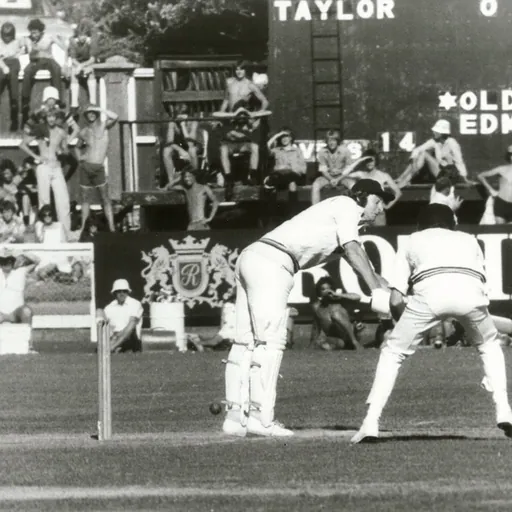
About Chris Old
Born 1948. Chris Old is a British cricketer.
Chris Old (born Christopher Middleton Old, 22 December 1948) is a former English cricketer, who played 46 Tests and 32 ODIs from 1972 to 1981. A right-arm fast-medium bowler and lower order left-handed batsman, Old was a key feature of the Yorkshire side between 1969 and 1983, before finishing his career at Warwickshire in 1985. As a Test bowler for England he took 143 wickets, and scored useful runs in the famous 1981 Ashes series' Headingley victory. He was a part of the English squad which finished as runners-up at the 1979 Cricket World Cup.
Early life The youngest of three brothers, Chris Old first made his mark in school cricket as a left-handed batsman playing for schools in Durham, Middlesbrough and other parts of England. In 1962 he was recommended to Yorkshire, following in the footsteps of his older brothers Alan and Malcolm, who had already preceded him. He made his debut, aged 15, for Yorkshire 2nd XI against Lincolnshire at Grimsby in August 1964 as a batsman, scoring 26 in the first innings and 8 not out in the second, but he was subsequently encouraged by resident coach Arthur Mitchell to develop his bowling. He was still predominantly a batsman when he made his debut for the Yorkshire first team as a 17-year-old against Hampshire in 1966, scoring 3 runs and conceding 8 runs from 3 overs without taking a wicket. That was the start of a first-class cricket career lasting 20 years from 1966 to 1986.
First-class career He was mentored by the resident Yorkshire opening bowlers, Fred Trueman and Tony Nicholson, who took over 2800 wickets between them for the county and following Fred Truemans retirement in 1968 he became Nicholsons opening new ball bowling partner. He won his Yorkshire cap in 1969, and was named as the Cricket Writer's Club Young Cricketer of the Year in 1970. Old hit the 3rd fastest century of all time at Edgbaston in 1977, with 100 runs from 72 balls in 37 minutes, with the second 50 taking just 9 minutes. Bowling at pace from the City End, the second ball of his nineteenth over was edged by Wasim Raja to wicket-keeper Bob Taylor before his third ball nipped back through the gate to remove Wasim Bari's off stump. Old's fourth ball, the no-ball, was edged by Iqbal Qasim into the ground but Qasim nicked a late outswinger to the keeper off the next legitimate delivery, before Sikander Bakht found the safe hands of Graham Roope at second slip. Old thus equalled the record of four wickets in five balls set by Maurice Allom on his Test debut at Lancaster Park, Christchurch in 1929–30, a feat which has since been repeated by Pakistan's Wasim Akram.
When India under A. Wadekar toured England in 1974, England swept the series 3–0. In the 2nd test, England batted first and made 629, India were then bowled out for 302 and followed on, and in the Indian second innings Chris Old took 5-21 and Arnold took 4–19, and together they bowled India out for 42, their lowest-ever test score.
However, he is probably best remembered for one of the key second-innings batting partnerships with Ian Botham during the famous Headingley Ashes game of 1981, where they put on 67 crucial runs for the 9th wicket. He followed this up by taking the key wicket of Allan Border who he clean bowled for a duck in the Australian second innings. He was the only England cricketer to play in both Centenary Test Matches against Australia in 1977 at Melbourne and 1980 at Lord's, alongside Greg Chappell, Dennis Lillee and Rodney Marsh for Australia. Old turned down an invitation from Tony Greig to play in Kerry Packer's rebel World Series Cricket, fearing the withdrawal of the traditional benefit season offered by Yorkshire. He subsequently joined the rebel South African Breweries English touring side in South Africa during 1982 effectively ending his Test career with the resulting 3-year ban from international cricket.
He subsequently went to Australia to play in a veterans three-match series, Old Australia XI v Old England XI in 1988, and five years later made a final appearance for an England XI v an Australian XI in a 36 over per side game for Derek Randall's Testimonial at Trent Bridge in June 1993. None of these later matches had first-class status.
One-day international cricketer Old was the most successful bowler in the early days of one-day international cricket, and by the end of the first decade of the format had taken more wickets than any other bowler in the world in the format (assisted by the fact that England had played more matches than any other team to that point). He also played for England in two world cups, making his highest ODI score in the first tournament in 1975 (51 against India), and taking his best ODI bowling figures, 4 wickets for 8 runs, in the second tournament in 1979 in a match against Canada. In the latter tournament he appeared in the final, where England were beaten by the West Indies.
Injury problems There is little doubt that he would have played more Test cricket had he not been so prone to injuries. He already had surgery on both of his knees during 1970 and 1971 before making his England debut in 1972. He became a regular member of the England squad for almost a decade. A skilful and accurate right-arm swing bowler and powerful late order left-handed hitter, he was once described by his England captain Mike Brearley as a talent to rival Ian Botham. Despite being a fine natural athlete, and possessing a natural sideways on action, he was continually hampered by regular injury problems and had a tendency to fall prey to 'niggles' in his back and legs, to such an extent that the first bowling machine installed at Lord's was nicknamed Chris Old, due to a propensity for breaking down so often. His departure from the field later in his career to the physiotherapist's table became part of cricket folklore. He still coaches a local cricket club in Falmouth and tutors cricket coaching courses.
His brother, Alan Old, is a former England rugby union international, who played one first-class match for Warwickshire against Cambridge University in 1969, and also played Minor Counties cricket for Durham in the 1970s.
Don’t just read it —
keep it.
Full-length biographies made to live with: read them, listen on the way to work, watch them tonight.
- E-book
- Audio
- Video
Instant download · yours to keep · every purchase keeps this site free
Important facts
People in Chris Old's life
Named in this biography and alive at the same time


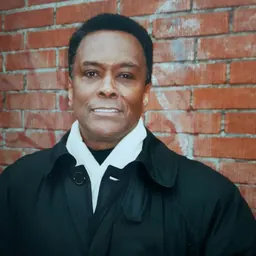




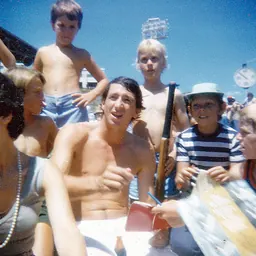
Related people
Same field, nearest in time

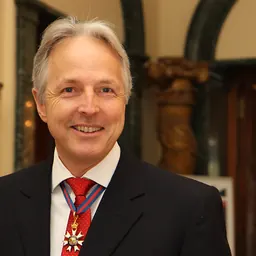

Contemporaries
People whose lives overlapped Chris Old's

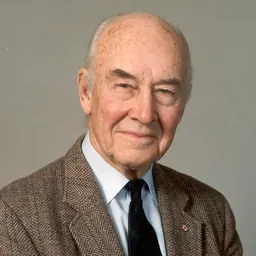

Frequently asked questions
Who is Chris Old?
Cricket player of England. (born 1948)
When was Chris Old born?
Chris Old was born on 22 December 1948 in Middlesbrough.
What is Chris Old's occupation?
Chris Old is a cricketer.
What nationality is Chris Old?
Chris Old is British.
Sources & further reading
Cite this page
APA: Biography.guide. (2026). Chris Old. https://biography.guide/chris-old/
MLA: "Chris Old." Biography.guide, https://biography.guide/chris-old/.
Chicago: "Chris Old." Biography.guide. https://biography.guide/chris-old/.
Data last updated: 2026-09-21 · Spot an error? Report a correction.
Portrait: Wikimedia Commons · author & licence
Page generated 2026-09-27 04:59 UTC