
About Chris Marker
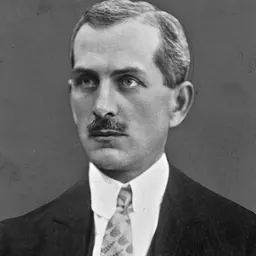
Lived 1921 – 2012 (aged 91). Chris Marker was a French film producer, film critic, film director, photographer, screenwriter and film editor.
Chris Marker (; born Christian-François Bouche-Villeneuve; 29 July 1921 – 29 July 2012) was a French writer, photographer, documentary film director, multimedia artist and film essayist. His best known films are La Jetée, A Grin Without a Cat (1977) and Sans Soleil (1983). Marker is usually associated with the Left Bank subset of the French New Wave that occurred in the late 1950s and 1960s, and included such other filmmakers as Alain Resnais, Agnès Varda and Jacques Demy.
His friend and sometime collaborator Alain Resnais called him "the prototype of the twenty-first-century man." Film theorist Roy Armes has said of him: "Marker is unclassifiable because he is unique... French Cinema has its dramatists and its poets, its technicians, and its autobiographers, but only has one true essayist: Chris Marker." He was always elusive about his past and known to refuse interviews and not allow photographs to be taken of him; his place of birth is highly disputed. Other sources say he was born in Belleville, Paris, and others, in Neuilly-sur-Seine. When asked about his secretive nature, Marker said, "My films are enough for them [the audience]." After the war, he began a career as a journalist, first writing for the journal Esprit, a neo-Catholic, Marxist magazine where he met fellow journalist André Bazin. For Esprit, Marker wrote political commentaries, poems, short stories, and film reviews.
During this period, Marker began to travel around the world as a journalist and photographer, a vocation he pursued for the rest of his life. The French publishing company Éditions du Seuil hired him as editor of the series Petite Planète ("Small World"). That collection devoted one edition to each country and included information and photographs, In 1949 Marker published his first novel, Le Coeur net (The Forthright Spirit), which was about aviation. In 1952 Marker published an illustrated essay on French writer Jean Giraudoux, Giraudoux Par Lui-Même. who described them as having "fondness for a kind of Bohemian life and an impatience with the conformity of the Right Bank, a high degree of involvement in literature and the plastic arts, and a consequent interest in experimental filmmaking", as well as an identification with the political left. An essay film on the narrativization of Siberia, it contains Marker's signature commentary, which takes the form of a letter from the director, in the long tradition of epistolary treatments by French explorers of the "undeveloped" world. Letter looks at Siberia's movement into the 20th century and at some of the tribal cultural practices receding into the past. It combines footage Marker shot in Siberia with old newsreel footage, cartoon sequences, stills, and even an illustration of Alfred E. Neuman from Mad Magazine as well as a fake TV commercial as part of a humorous attack on Western mass culture. In producing a meta-commentary on narrativity and film, Marker uses the same brief filmic sequence three times but with different commentary—the first praising the Soviet Union, the second denouncing it, and the third taking an apparently neutral or "objective" stance.
In January 1961, Marker travelled to Cuba and shot the film ¡Cuba Sí! The film promotes and defends Fidel Castro and includes two interviews with him. It ends with an anti-American epilogue in which the United States is embarrassed by the Bay of Pigs Invasion fiasco, and was subsequently banned. The banned essay was included in Marker's first volume of collected film commentaries, Commentaires I, published in 1961. The following year Marker published Coréennes, a collection of photographs and essays on conditions in Korea. It tells of a post-nuclear war experiment in time travel by using a series of filmed photographs developed as a photomontage of varying pace, with limited narration and sound effects. In the film, a survivor of a futuristic third World War is obsessed with distant and disconnected memories of a pier at the Orly Airport, the image of a mysterious woman, and a man's death. Scientists experimenting in time travel choose him for their studies, and the man travels back in time to contact the mysterious woman, and discovers that the man's death at the Orly Airport was his own. Except for one shot of the woman mentioned above sleeping and suddenly waking up, the film is composed entirely of photographs by Jean Chiabaud and stars Davos Hanich as the man, Hélène Châtelain as the woman and photographer-film director William Klein as a man from the future.
While making La Jetée, Marker was simultaneously making the 150-minute documentary essay-film Le joli mai, released in 1963. Beginning in the spring of 1962, Marker and his camera operator Pierre Lhomme shot 55 hours of footage interviewing random people on the streets of Paris. The questions, asked by the unseen Marker, range from their personal lives, as well as social and political issues of relevance at that time. As he had with montages of landscapes and indigenous art, Marker created a film essay that contrasted and juxtaposed a variety of lives with his signature commentary (spoken by Marker's friends, singer-actor Yves Montand in the French version and Simone Signoret in the English version). The film has been compared to the Cinéma vérité films of Jean Rouch, and criticized by its practitioners at the time. It was shown in competition at the 1963 Venice Film Festival, where it won the award for Best First Work. It also won the Golden Dove Award at the Leipzig DOK Festival.
After the documentary Le Mystère Koumiko in 1965, Marker made Si j'avais quatre dromadaires, an essay-film that, like La Jetée, is a photomontage of over 800 photographs Marker had taken over the previous 10 years in 26 countries. The commentary involves a conversation between a fictitious photographer and two friends, who discuss the photos. The film's title is an allusion to a poem by Guillaume Apollinaire. It was the last film in which Marker included "travel footage" for many years. SLON was a film collective whose objectives were to make films and to encourage industrial workers to create film collectives of their own. Its members included Valerie Mayoux, Jean-Claude Lerner, Alain Adair and John Tooker. Marker is usually credited as director or co-director of all of the films made by SLON.
The film was intended to be an all-encompassing portrait of political movements since May 1968, a summation of the work which he had taken part in for ten years. The film is divided into two parts: the first half focuses on the hopes and idealism before May 1968, and the second half on the disillusion and disappointments since those events. Marker begins the film with the Odessa Steps sequence from Sergei Eisenstein's film The Battleship Potemkin, which Marker points out is a fictitious creation of Eisenstein which has still influenced the image of the historical event. Marker used very little commentary in this film, but the film's montage structure and preoccupation with memory make it a Marker film. Upon release, the film was criticized for not addressing many current issues of the New Left such as the woman's movement, sexual liberation and worker self-management. The film was screened in the Un Certain Regard section at the 1985 Cannes Film Festival, before Ran itself had been released.
In 1985, Marker's long-time friend and neighbor Simone Signoret died of cancer. Marker then made the one-hour TV documentary Mémoires pour Simone as a tribute to her in 1986.
His interests in digital technology also led to his film Level Five (1996) and Immemory (1998, 2008), an interactive multimedia CD-ROM, produced for the Centre Pompidou (French language version) and from Exact Change (English version). Marker created a 19-minute multimedia piece in 2005 for the Museum of Modern Art in New York City titled Owls at Noon Prelude: The Hollow Men which was influenced by T. S. Eliot's poem.
Marker lived in Paris, and very rarely granted interviews. One exception was a lengthy interview with Libération in 2003 in which he explained his approach to filmmaking. When asked for a picture of himself, he usually offered a photograph of a cat instead. (Marker was represented in Agnes Varda's 2008 documentary The Beaches of Agnes by a cartoon drawing of a cat, speaking in a technologically altered voice.) Marker's own cat was named Guillaume-en-égypte. In 2009, Marker commissioned an Avatar of Guillaume-en-Egypte to represent him in machinima works. The avatar was created by Exosius Woolley and first appeared in the short film / machinima, Ouvroir the Movie by Chris Marker.
In the 2007 Criterion Collection release of La Jetée and Sans Soleil, Marker included a short essay, "Working on a Shoestring Budget". He confessed to shooting all of Sans Soleil with a silent film camera, and recording all the audio on a primitive audio cassette recorder. Marker also reminds the reader that only one short scene in La Jetée is of a moving image, as Marker could only borrow a movie camera for one afternoon while working on the film.
From 2007 through 2011 Marker collaborated with the art dealer and publisher Peter Blum on a variety of projects that were exhibited at the Peter Blum galleries in New York City's Soho and Chelsea neighborhoods. Marker's works were also exhibited at the Peter Blum Gallery on 57th Street in 2014. These projects include several series of printed photographs titled PASSENGERS, Koreans, Crush Art, Quelle heure est-elle?, and Staring Back; a set of photogravures titled After Dürer; a book, PASSENGERS; and digital prints of movie posters, whose titles were often appropriated, including Breathless, Hiroshima Mon Amour, Owl People, and Rin Tin Tin. The video installations Silent Movie and Owls at Noon Prelude: The Hollow Men were exhibited at Peter Blum in 2009. These works were also exhibited at the 2014 & 2015 Venice Biennale, Whitechapel Gallery in London, the MIT List Visual Arts Center in Cambridge, Massachusetts, the Carpenter Center for the Visual Arts at Harvard University, the Moscow Photobiennale, Les Recontres d'Arles de la Photographie in Arles, France, the Centre de la Photographie in Geneva, Switzerland, the Walker Art Center in Minneapolis, Minnesota, the Wexner Center for the Arts in Columbus, Ohio, The Museum of Modern Art in New York, and the Pacific Film Archive in Berkeley, California. Since 2014 the artworks of the Estate of Chris Marker are represented by Peter Blum Gallery, New York.
Marker died on 29 July 2012, his 91st birthday.
Legacy La Jetée was the inspiration for Mamoru Oshii's 1987 debut live action feature The Red Spectacles (and later for parts of Oshii's 2001 film Avalon) and also inspired Terry Gilliam's 12 Monkeys (1995), Christopher Nolan's Memento (2000) and Jonás Cuarón's Year of the Nail (2007) as well as many of Mira Nair's shots in her 2006 film The Namesake.
Works
Filmography Olympia 52 (1952) Statues Also Die (1953 with Alain Resnais) Sunday in Peking (1956) Lettre de Sibérie (1957) Les Astronautes (1959 with Walerian Borowczyk) Description d'un combat (1960) ¡Cuba Sí! (1961) La Jetée (1962) Le Joli Mai (1963, 2006 re-cut) Le Mystère Koumiko (1965) Si j'avais quatre dromadaires (1966) Loin du Vietnam (1967) Rhodiacéta (1967) La Sixième face du Pentagone (1968) Cinétracts (1968) À bientôt, j'espère (1968 with Marret) On vous parle du Brésil: Tortures (1969) Jour de tournage (1969) Classe de lutte (1969) On vous parle de Paris: Maspero, les mots ont un sens (1970) On vous parle du Brésil: Carlos Marighela (1970) La Bataille des dix millions (1971) Le Train en marche (1971) On vous parle de Prague: le deuxième procès d'Artur London (1971) Vive la baleine (1972) L'Ambassade (1973) On vous parle du Chili: ce que disait Allende (1973 with Miguel Littín) Puisqu'on vous dit que c'est possible (1974) La Solitude du chanteur de fond (1974) La Spirale (1975) A Grin Without a Cat (1977) Quand le siècle a pris formes (1978) Junkopia (1981) Sans Soleil (1983) 2084 (1984) From Chris to Christo (1985) Matta (1985) A.K. (1985) Eclats (1986) Tokyo Days (1988) Spectre (1988) The Owl's Legacy (L'héritage de la chouette) (1989) Bestiaire 1. Chat écoutant la musique Bestiaire 2. An owl is An owl is an owl Bestiaire 3. Zoo Piece Getting Away with It (1990) Berlin 1990 (1990) Détour Ceausescu (1991) Théorie des ensembles (1991) Coin fenêtre (1992) Le Tombeau d'Alexandre a.k.a. The Last Bolshevik (1992) Prime Time in the Camps (1993) SLON Tango (1993) Bullfight in Okinawa (1994) Eclipse (1994) Haiku (1994) Haiku 1. Petite Ceinture Silent Movie (1995) Level Five (1997) Un maire au Kosovo (2000) Le Facteur sonne toujours cheval (2001) Avril inquiet (2001) a documentary about M. Chat street art Leila Attacks (2006) Stopover in Dubai (2011)
Film collaborations Nuit et Brouillard (Resnais 1955) Note: In a 1995 interview Resnais states that the final version of the commentary was a collaboration between Marker and Jean Cayrol (source: Film Comment). Toute la mémoire du monde (Resnais 1956) Note: Credited as "Chris and Magic Marker." Les hommes de la baleine (Ruspoli 1956) Note: under the pseudonym "Jacopo Berenizi" Marker wrote the commentary for this short about whale hunters in the Azores. The two would return to this topic in 1972's Vive la Baleine (Film Comment). Broadway by Light (Klein 1957) Note: Marker wrote the introductory text to this film. Kashima Paradise (Le Masson et Deswarte 1974) Note: Marker collaborated on the commentary on this documentary about the destruction of Kashima and Narita (Film Comment). La Batalla de Chile (Guzman, 1975–1976) Note: Marker helped produce and contributed to the screenplay for this, perhaps the greatest of all documentary films (Film Comment). One Sister and Many Brothers (Makavejev 1994) Note: Marker tapes Makavejev circulating among the guests of a party in his honor as much jovial backslapping abounds (Film comment).
Photographic series Koreans (1957, printed in 2009) Crush Art (2003–2008) "Quelle heure est-elle?" (2004–2008) PASSENGERS (2008–2010) Staring Back (varying years)
Digital prints Breathless (1995, printed 2009) Hiroshima Mon Amour (1995, printed 2009) Owl People (1995, printed 2009) Rin Tin Tin (1995, printed 2009)
Photogravures After Dürer (2005–07, printed in 2009)
Video installations Silent Movie (1995) Owls at Noon Prelude: The Hollow Men (2005)
Bibliography (self-contained works by Marker) Le Cœur Net (1949, Editions du Seuil, Paris) Giraudoux Par Lui-Même (1952, Editions du Seuil, Paris) Commentaires I (1961, Editions du Seuil, Paris) Coréennes (1962, Editions du Seuil, Paris) Commentaires II (1967, Editions du Seuil, Paris) Le Dépays (1982, Editions Herscher, Paris) Silent Movie (1995, Ohio State University Press) La Jetée ciné-roman (1996 / 2nd printing 2008, MIT Press, Cambridge; designed by Bruce Mau) Staring Back (2007, MIT Press, Cambridge) Immemory (CDROM) (1997 / 2nd printing 2008, Exact Change, Cambridge) Inner Time of Television (2010, The Otolith Group, London)
Don’t just read it —
keep it.
Full-length biographies made to live with: read them, listen on the way to work, watch them tonight.
- E-book
- Audio
- Video
Instant download · yours to keep · every purchase keeps this site free
Important facts
People in Chris Marker's life
Named in this biography and alive at the same time




Related people
Same field, nearest in time



Contemporaries
People whose lives overlapped Chris Marker's



Frequently asked questions
Who was Chris Marker?
French filmmaker (1921–2012)
When was Chris Marker born?
Chris Marker was born on 29 July 1921 in Neuilly-sur-Seine.
When did Chris Marker die?
Chris Marker died on 29 July 2012 in 20th arrondissement of Paris.
What was Chris Marker's occupation?
Chris Marker was a film producer, film critic, film director, photographer, screenwriter and film editor.
What nationality was Chris Marker?
Chris Marker was French.
Sources & further reading
Cite this page
APA: Biography.guide. (2026). Chris Marker. https://biography.guide/chris-marker/
MLA: "Chris Marker." Biography.guide, https://biography.guide/chris-marker/.
Chicago: "Chris Marker." Biography.guide. https://biography.guide/chris-marker/.
Data last updated: 2026-09-20 · Spot an error? Report a correction.
Page generated 2026-09-27 05:14 UTC