
About Chico O'Farrill
Lived 1921 – 2001 (aged 79). Chico O'Farrill was an American and Cuban bandleader, composer, conductor, jazz musician, film score composer and musician.
Arturo "Chico" O'Farrill (October 28, 1921 – June 27, 2001) was a Cuban composer, arranger, and conductor, best known for his work in the Latin idiom, specifically Afro-Cuban jazz or "Cubop", although he also composed traditional jazz pieces and even symphonic works.
Born to an aristocratic Cuban family, he played the trumpet early in his career. He composed works for Machito (Afro-Cuban suite with Charlie Parker, 1950) and Benny Goodman's Bebop Orchestra ("Undercurrent Blues"), and arranged for Dizzy Gillespie and Stan Kenton, among others.
In the 1990s, O'Farrill led a big band that took up residence at New York's Birdland nightclub. Chico's son, pianist Arturo O'Farrill, eventually took over the band.
Biography O'Farrill was born in Havana, Cuba. though before he could, he became enamored with jazz music and pursued that instead. He discovered big band jazz when he attended military boarding school in Florida, where he first learned to play the trumpet, and after returning to Havana began studying classical music under Felix Guerrero at the Havana Conservatory and playing in local nightclubs alongside figures like Isidro Perez and Armando Romeu. In 1948, he relocated to New York City, where he continued his classical music studies under Stefan Wolpe, Bernard Wagenaar, and others at the Juilliard School, and began to pursue the jazz scene in his free time.
Soon after moving to New York City, he began working as an arranger for Benny Goodman, and wrote "Undercurrent Blues". It was at this point his nickname was born: Goodman had trouble pronouncing his name, and began referring to him as "Chico" instead. This is indicative of O'Farrill's general compositional style: he is heavily associated with the Latin idiom in jazz, but his works are typically closer to more mainstream American big band jazz in melody and harmony, and mostly incorporate Cuban music in the rhythms. In fact, it is Chico O'Farrill who is credited with first introducing the clave to jazz band rhythm sections.
Owing to his strict conservatory education, first at the Havana Conservatory and then the Juilliard School, O'Farrill composed in a highly strict, tightly-organized fashion. His pieces are constructed down to minute details, and while improvisation is a hallmark of many jazz styles, his works use a minimum of it; Ben Ratliff, writing for The New York Times, describes his work as "cinematic", saying that the music is "complicated and leaves little to chance."
O'Farrill's style is best described as a fusion of the Cuban music he heard growing up, the jazz music that he became enamored with in school, and the European classical music he studied in conservatories, and it is best summarized in his Afro-Cuban Jazz Suite. Even just the title alludes to the inclusion of these three elements, and several movements are inspired by music of a Latin idiom (Canción, Mambo, Rhumba Abierta), while others are more jazz-inspired (6/8, Jazz), and all are brought together under the orderly form of a European suite. O'Farrill states about this piece, "I was never an expert on Cuban music. What I did, for example, in that suite was purely instinctive [...] They asked me, 'write a suite, Chico,' [so] I just wrote according to my best understanding, letting my jazz sensibility to [sic] guide me most of the time."
Critical reception Todd Barkan, O'Farrill's manager and record producer from his 90s comeback on, notes in his obituary that O'Farrill "felt a good measure of appreciation for his contributions. The interest that surrounded his work when he returned to recording in the '90s exceeded everything that he had experienced up until that point."
Few glowing records exist of O'Farrill's works from before the 1990s, but Peter Watrous, writing a review of a 1998 Afro-Cuban jazz concert featuring O'Farrill's older work (specifically, the Manteca Suite composed for Dizzy Gillespie and the Afro-Cuban Jazz Suite) for The New York Times, calls O'Farrill "a gifted musician who stands as one of jazz's great cultural translators", lauding the concert as "[making] the case for [his] brilliance."
Discography Jazz (Clef, 1953) Afro-Cuban (Clef, 1953) 2nd Afro Cuban Suite (Norgran, 1954) Mambo Dance Session (Norgran, 1954) Latino Dance Session (Norgran, 1954) Chico's Cha Cha Cha (Panart, 1956) Music from South America (Verve, 1956) Mambo Latino Dances (Verve, 1958) Nine Flags (Impulse!, 1966) Spanish Rice with Clark Terry (Impulse!, 1966) Married Well (Verve, 1967) Cuban Jazz King (Eco 1973) Latin Roots (Philips, 1976) Super Chops (Versatile, 1977) Guaguasi (Kim, 1984) Pure Emotion (Milestone, 1995) Heart of a Legend (Milestone, 1999) Carambola (Milestone, 2000) The Complete Norman Granz Recordings (Malanga Music, 2016) Chico O'Farrill (Calle Mayor, 2017)
Don’t just read it —
keep it.
Full-length biographies made to live with: read them, listen on the way to work, watch them tonight.
- E-book
- Audio
- Video
Instant download · yours to keep · every purchase keeps this site free
Important facts
People in Chico O'Farrill's life
Named in this biography and alive at the same time
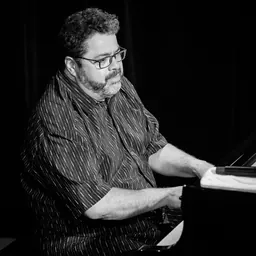

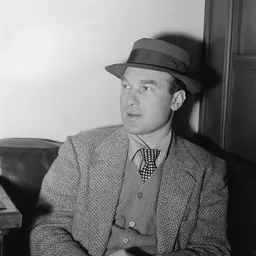
Related people
Same field, nearest in time

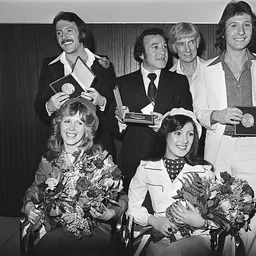
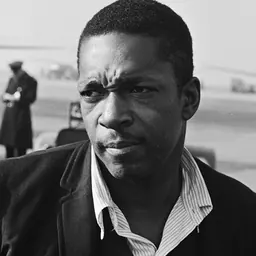


Contemporaries
People whose lives overlapped Chico O'Farrill's

Frequently asked questions
Who was Chico O'Farrill?
Cuban composer and musician
When was Chico O'Farrill born?
Chico O'Farrill was born on 28 October 1921 in Havana.
When did Chico O'Farrill die?
Chico O'Farrill died on 27 June 2001 in New York City.
What was Chico O'Farrill's occupation?
Chico O'Farrill was a bandleader, composer, conductor, jazz musician, film score composer and musician.
What nationality was Chico O'Farrill?
Chico O'Farrill was American and Cuban.
Sources & further reading
Cite this page
APA: Biography.guide. (2026). Chico O'Farrill. https://biography.guide/chico-o-farrill/
MLA: "Chico O'Farrill." Biography.guide, https://biography.guide/chico-o-farrill/.
Chicago: "Chico O'Farrill." Biography.guide. https://biography.guide/chico-o-farrill/.
Data last updated: 2026-09-20 · Spot an error? Report a correction.
Page generated 2026-09-27 05:16 UTC