
About Chen Jintao
Lived 1871 – 1939 (aged 67). Chen Jintao was a Chinese economist, known for Bank of China.
Chen Jintao (; 1870–1939) was a Chinese technocrat who founded the Bank of China. He was chief financial officer and head of currency reform in the Republic of China (1912–1949) and served as finance minister for warlords in Beijing, Nationalists in Nanjing, and the Nanjing Regime. Chen was responsible for innovations and improvements in printing and engraving, as well as for various currency reforms.
He graduated from Columbia University and Yale University and served as an economics professor of Tsinghua University. He is regarded as one of China's most skilled economists and bankers in the 20th century.
He graduated from Queens College in Hong Kong. He received a master's degree in math from Columbia University in 1902. He received a doctorate in political economy from Yale University in 1906.
When he returned to China, he received the highest score in an imperial exam for students returning from abroad. For this reason, he is sometimes referred to as China’s “first foreign scholar.”
Financial reforms and founding Bank of China In 1908, Chen was appointed deputy director of the bureau of printing and engraving and sent on a mission overseas to investigate methods of postage stamp production. Chen concluded that American printing techniques were the best at preventing counterfeiting. He hired two American experts, William A. Grant and Lorenzo J. Hatch, to upgrade China’s postage stamp manufacturing.
When he returned to China, Chen was appointed head of a currency reform board. Following the 1911 Revolution, President Sun Yat-sen, who at this time headed a southern government based in Nanjing, named Chen minister of finance. Chen did not take up the post as he was abroad attending currency-related conferences. When he returned to China in September 1912, Chen was appointed the chief financial officer and head of the central audit office in Beijing.
In 1912, he also helped turn the Da-Qing Bank into the Bank of China.
In 1916, Chen was promoted to finance minister by Prime Minister Duan Qirui. When Duan was dismissed in May 1917, Chen was arrested for embezzlement. The Communications Clique was blamed for the arrest. Chen was exonerated in February 1918.
Chen returned to public service when Duan was restored as premier in November 1924. In 1926-1927, the Nationalists in the South advanced north and defeated the Beiyang government based in Beijing. In the spring of 1927, the Nationalists arrested Chen in Hangzhou and accused him of collusion with the leftist Wuhan government, a charge that was later dropped.
With the Nationalists in power, in 1929, Chen became professor of economics at Tsinghua University in Beijing. In the early 1930s, Chen briefly retired to Tianjin. In early 1935, he was appointed as an adviser on currency matters to H. H. Kung, the Nationalist finance minister.
World War 2 In 1937, the Japanese occupied Nanjing, the Nationalist capital. While Kung and other officials fled to Chongqing, Chen remained at his post. In March 1938, he was appointed minister of finance in the collaborationist regime of Liang Hongzhi. The Liang regime had jurisdiction in the provinces of Jiangsu, Zhejiang, and Anhui. Chen retained this post until he died in June 1939.
Contributions and reform Before 1928, Chen was one of the few Chinese officials considered expert or competent by China’s foreign diplomats. He was responsible for significant improvements in printing and engraving, as well as founding the Bank of China. The currency reforms of the early Republican period may be credited to Chen.
He was a technocrat who diligently served China. He was apparently indifferent as to whether the government was imperialist, militarist, Nationalist, or collaborationist. Other than for the sake of running China's banks, his views and motives remain elusive.
Publications He is known for writing Junfu《均富》(meaning roughly 'Equal Wealth'), a treatise on capital and banking.
Don’t just read it —
keep it.
Full-length biographies made to live with: read them, listen on the way to work, watch them tonight.
- E-book
- Audio
- Video
Instant download · yours to keep · every purchase keeps this site free
Important facts
People in Chen Jintao's life
Named in this biography and alive at the same time

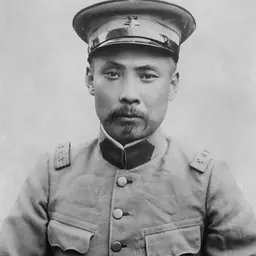
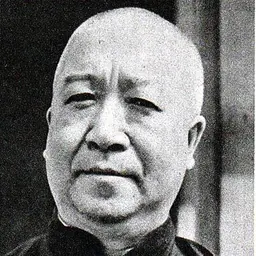
Related people
Same field, nearest in time


Contemporaries
People whose lives overlapped Chen Jintao's



Frequently asked questions
Who was Chen Jintao?
Chinese technocrat
When was Chen Jintao born?
Chen Jintao was born on 20 June 1871 in Nanhai District.
When did Chen Jintao die?
Chen Jintao died on 12 June 1939 in Shanghai.
What was Chen Jintao's occupation?
Chen Jintao was an economist.
What was Chen Jintao known for?
Chen Jintao was known for Bank of China.
What nationality was Chen Jintao?
Chen Jintao was Chinese.
Sources & further reading
Cite this page
APA: Biography.guide. (2026). Chen Jintao. https://biography.guide/chen-jintao/
MLA: "Chen Jintao." Biography.guide, https://biography.guide/chen-jintao/.
Chicago: "Chen Jintao." Biography.guide. https://biography.guide/chen-jintao/.
Data last updated: 2026-09-22 · Spot an error? Report a correction.
Page generated 2026-09-27 05:23 UTC