
Chase Nielsen
US Air Force officer
About Chase Nielsen
Lived 1917 – 2007 (aged 90). Chase Nielsen was an American.
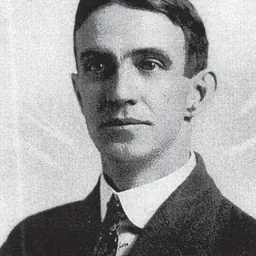
Chase Jay Nielsen (January 14, 1917 – March 23, 2007) was a career officer in the U.S. Air Force. He participated in the Doolittle Raid in 1942 and was one of the four surviving prisoners of war from that raid.
Early life Born in Hyrum, Utah to Floyd Nielsen and Carrie Miller Nielsen, who were of Danish, Swedish, Prussian, and Welsh descent. He was one of six children born to the family and was a member of the Church of Jesus Christ of Latter-day Saints. In 1935, he graduated from South Cache High School in Hyrum, Utah and then attended Utah State University, where he graduated in 1939 with a Bachelor of Science degree in civil engineering.
Doolittle Raid
Nielsen (left) stands with his fellow crewmen before the Doolittle Raid. In February 1942, Nielsen volunteered for a "secret mission", even though he did not know what duties were involved or any other details. This mission ended up being the critical Doolittle Raid, which was led by Lieutenant Colonel Jimmy Doolittle. The raid was daring not only because of the intended targets, the Japanese homeland, but because the pilots trained to take-off in a B-25 bomber from the deck of an aircraft carrier, something neither the designers of the B-25, nor the aircraft carrier, ever envisioned.
Nielsen was the navigator for sixth bomber, plane# 40-2298 nicknamed "The Green Hornet", to depart the deck of the during the mission. On April 18, 1942, Nielsen and his B-25's four crewmembers, took off from the Hornet and reached Tokyo, Japan. They bombed their target; a steel mill in the northern part of the city. They then headed for their recovery airfield in China. Running low on fuel due to the early launch of the raid, the B-25s failed to reach any of the designated safety zones in China. The pilot of Meder's bomber, First Lieutenant Dean E. Hallmark, was forced to ditch at sea off the coast of Wenzhou, China. Second Lieutenant William J. Dieter (bombardier) and Sergeant Donald E. Fitzmaurice (gunner) drowned when the aircraft ditched into the sea, while Nielsen, Hallmark and co-pilot Robert J. Meder managed to swim ashore. The next day, they buried the bodies of Fitzmaurice and Dieter.
Nielsen and other prisoners of the raid were placed in solitary confinement and on the anniversary of the Doolittle Raid in 1943, the prisoners were transferred to a military prison at Nanking, where Meder died in December 1943, due to malnutrition and beri-beri. Meder's death resulted in the improvement of conditions for Nielsen and the remaining prisoners of the raid. On August 20, 1945, Nielsen and other prisoners were rescued at the end of the war by an Office of Strategic Services para-rescue team and brought back to the U.S. He returned to Shanghai in January 1946 to testify in the trials against his former captors, who had tortured him with waterboarding, then called the "water cure." Extracts from his testimony were later presented at the Tokyo Trial.
Post war
Nielsen became a member of Strategic Air Command (SAC) in March 1949 at Roswell AFB in New Mexico, where he was assigned to the 509th Bombardment Group, the first group to be organized, equipped and trained for nuclear warfare. Enola Gay, the B-29 that dropped the Little Boy atomic bomb on Hiroshima in the first ever use of a nuclear weapon, was assigned to the 509th.
During his decade with SAC, Colonel Nielsen helped the command develop key operational innovations, including radar navigation bombardment, air refueling employing the flying boom, and electronic countermeasures. He helped integrate "fail safe" and other emergency war order procedures into SAC's unique set of flight profiles.
Awards and honors
U.S. Air Force Master Navigator/Observer Badge Distinguished Flying Cross Purple Heartwith bronze oak leaf cluster Air Medal Air Force Commendation Medalwith bronze oak leaf cluster Air Force Presidential Unit Citationwith bronze oak leaf cluster Air Force Outstanding Unit Award Prisoner of War Medal American Defense Service Medal American Campaign Medalwith service star Asiatic–Pacific Campaign Medalwith bronze campaign starWorld War II Victory Medal National Defense Service Medalwith service star Air Force Longevity Service Awardwith four bronze oak leaf clusters Armed Forces Reserve Medal Republic of China Medal of the Armed ForcesA-1 Republic of China Order of the Sacred Tripod Republic of China War Memorial Medal In 2002, he was inducted into the Utah Aviation Hall of Fame.
Don’t just read it —
keep it.
Full-length biographies made to live with: read them, listen on the way to work, watch them tonight.
- E-book
- Audio
- Video
Instant download · yours to keep · every purchase keeps this site free
Important facts
People in Chase Nielsen's life
Named in this biography and alive at the same time

Contemporaries
People whose lives overlapped Chase Nielsen's

Frequently asked questions
Who was Chase Nielsen?
US Air Force officer
When was Chase Nielsen born?
Chase Nielsen was born on 14 January 1917.
When did Chase Nielsen die?
Chase Nielsen died on 23 March 2007.
What nationality was Chase Nielsen?
Chase Nielsen was American.
Sources & further reading
Cite this page
APA: Biography.guide. (2026). Chase Nielsen. https://biography.guide/chase-nielsen/
MLA: "Chase Nielsen." Biography.guide, https://biography.guide/chase-nielsen/.
Chicago: "Chase Nielsen." Biography.guide. https://biography.guide/chase-nielsen/.
Data last updated: 2026-09-26 · Spot an error? Report a correction.
Page generated 2026-09-27 05:13 UTC