
About Charlotte Auerbach
Lived 1899 – 1994 (aged 94). Charlotte Auerbach was a British and German biologist, geneticist, university teacher, zoologist and writer, known for Mutagenesis.
Charlotte "Lotte" Auerbach FRS FRSE (14 May 1899 – 17 March 1994) was a German geneticist who contributed to founding the science of mutagenesis. She became well known after 1942 when she discovered, with A. J. Clark and J. M. Robson, that mustard gas could cause mutations in fruit flies. She wrote 91 scientific papers, and was a Fellow of the Royal Society of Edinburgh and of the Royal Society of London.
In 1976, she was awarded the Royal Society's Darwin Medal. Aside her scientific contributions and love of science, she was remarkable in many other ways, including her wide interests, independence, modesty, and transparent honesty.
Early life and education Charlotte Auerbach was born in Krefeld in Germany, the daughter of Selma Sachs and Friedrich Auerbach. She may have been influenced by the scientists in her family: her father Friedrich Auerbach (1870–1925) was a chemist, her uncle a physicist, and her grandfather, the anatomist Leopold Auerbach.
She studied biology and chemistry at the universities of Würzburg, Freiburg and Berlin. She was taught and inspired by Karl Michael Haider and Max Hartmann in Berlin, and later in Würzburg by Hans Kniep. After very good examinations in biology, chemistry, and physics, she initially decided to become a secondary-school teacher of science, passing the exams for that, with distinction in 1924. Following her mother's advice, she left the country in 1933 and fled to Edinburgh where she got her PhD in 1935 at the Institute of Animal Genetics in the University of Edinburgh. She would stay affiliated to this institute throughout her whole career.
Research career: Edinburgh Auerbach's PhD dissertation was on the development of legs in Drosophila.
Auerbach's genetic mutation research remained unpublished for many years because the work with mustard gas was considered classified by the government. She was finally able to publish in 1947.
Positions She supported the Campaign for Nuclear Disarmament (CND), was a fierce opponent of apartheid, and a confirmed liberal.
Personal life Charlotte was an only child, born into a third-generation Jewish family who had lived for several generations in Breslau. Having fled Nazi Germany in 1933, she became a naturalised British citizen in 1939.
Auerbach never married and had no children of her own. She unofficially 'adopted' two boys. One, Michael Avern, was the child of a German-speaking companion to her own elderly mother, who had escaped to Britain as well. She helped to raise Michael. The other, Angelo Alecci, came from a poor Sicilian family and the Save the Children Fund connected Charlotte with him.
Later life and death In 1989, aged 90, she gave her house in Edinburgh to Michael Avern and moved into the Abbeyfield Home in Polwarth Terrace, Edinburgh, which was operated by the church. She died there five years later, in 1994. She was cremated at Mortonhall Crematorium.
Awards, honors, and distinctions
Keith Prize, Royal Society of Edinburgh (1947) Fellow of Royal Society of Edinburgh (1949) Fellow of the Royal Society (1957) Foreign Member, Danish Academy of Science (1968) Foreign Member, National Academy of Sciences (1970) Honorary degrees, Leiden University (1975), Trinity College, Dublin (1976), University of Cambridge (1976), Indiana University (1984) Darwin Medal, Royal Society (1976) Fellow, United Kingdom Environmental Mutagen Society (1978) Prix de d'Institut de la Vie (Fond, Electricité de France) (1982) Gregor Mendel Preis, German Genetical Society (1984)
The greatest reward for herself however was the telegram her hero Hermann Joseph Muller sent after their first striking mutant results in June 1941, which read: "We are thrilled by your major discovery opening great theoretical and practical field. Congratulations."
A room in the Royal Society of Edinburgh's building on George Street, Edinburgh is named for her.
There is a street named Charlotte-Auerbach-Straße in Stuhr-Brinkum. One of the streets in the Kings Buildings university complex in Edinburgh is named Charlotte Auerbach Road in her honour.
Works
Books
Auerbach C., 1956. Genetics in the Atomic Age. Oliver and Boyd. Auerbach C., 1961, 1964. The Science of Genetics. New Yoerk, Harper & Row. Auerbach C., 1965. Notes for Introductory Courses in Genetics. Edinburgh: Kallman. Auerbach C., 1976. Mutation Research: Problems, Results and Perspectives. London: Chapman & Hall.
Selected publications
Auerbach C., 1961. Chemicals and their effects. In: Symposium on Mutation and Plant Breeding, National Research Council Publication 891, 120–144. Washington DC: National Academy of Sciences. Auerbach C., 1962. Mutation: An introduction to research on Mutagenesis. Part I. Methods. Edinburgh: Oliver & Boyd.
Auerbach C., 1963. Stages in the cell cycle and germ cell development. In: Radiation effects in Physics, Chemistry and Biology, edited by Ebert, M. & A. Howard, 152–168. Chicago Year Book Medical.
Don’t just read it —
keep it.
Full-length biographies made to live with: read them, listen on the way to work, watch them tonight.
- E-book
- Audio
- Video
Instant download · yours to keep · every purchase keeps this site free
Important facts
People in Charlotte Auerbach's life
Named in this biography and alive at the same time
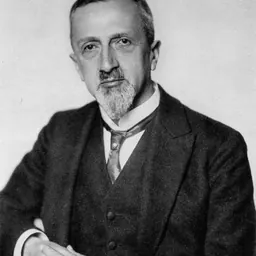




Related people
Same field, nearest in time



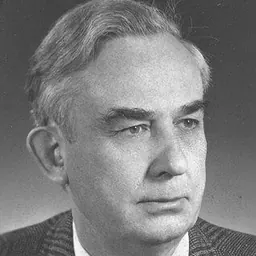
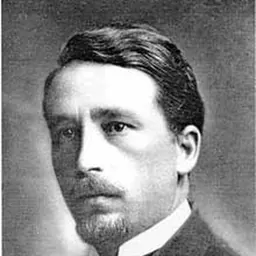

Contemporaries
People whose lives overlapped Charlotte Auerbach's



Frequently asked questions
Who was Charlotte Auerbach?
Geneticist, author (1899–1994)
When was Charlotte Auerbach born?
Charlotte Auerbach was born on 14 May 1899 in Krefeld.
When did Charlotte Auerbach die?
Charlotte Auerbach died on 17 March 1994 in Edinburgh.
What was Charlotte Auerbach's occupation?
Charlotte Auerbach was a biologist, geneticist, university teacher, zoologist and writer.
What was Charlotte Auerbach known for?
Charlotte Auerbach was known for Mutagenesis.
What nationality was Charlotte Auerbach?
Charlotte Auerbach was British and German.
Sources & further reading
· Wikipedia: Charlotte Auerbach
Cite this page
APA: Biography.guide. (2026). Charlotte Auerbach. https://biography.guide/charlotte-auerbach/
MLA: "Charlotte Auerbach." Biography.guide, https://biography.guide/charlotte-auerbach/.
Chicago: "Charlotte Auerbach." Biography.guide. https://biography.guide/charlotte-auerbach/.
Data last updated: 2026-09-20 · Spot an error? Report a correction.
Page generated 2026-09-27 05:12 UTC