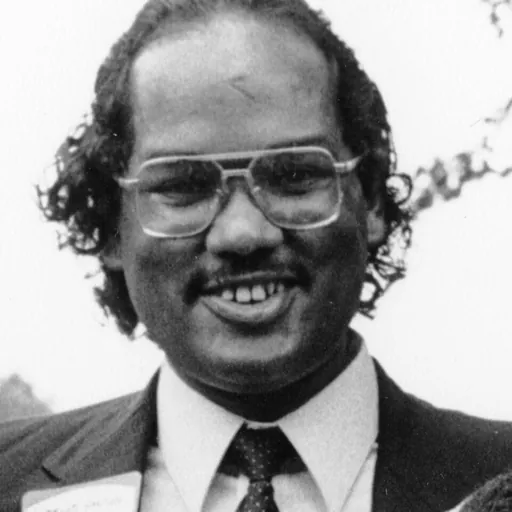
About Charles Yancey
Born 1948. Charles Yancey is an American politician.
Charles Calvin Yancey (born December 28, 1948) is a former member of the Boston City Council. Yancey served sixteen consecutive two-year terms, with a service totaling 32 years. He represented areas of Mattapan and Dorchester as the district councilor from the 4th district. He was City Council President in 2001, and unsuccessfully ran for mayor in 2013. His council tenure ended after he lost re-election in 2015 to Andrea Campbell.
Yancey was a frequent dissenter on the council, often casting lone votes in opposition to measures. He was a frequent, and often lone, voice of council opposition to the city's mayors; being the council's chief critic of all three mayors that his council service overlapped with: Raymond Flynn, Thomas Menino, and Marty Walsh. Yancey was a chief proponent of Boston's disinvestment from South Africa (in opposition to apartheid). A pet issue Yancey long advocated unsuccessfully for was a proposal to establish a new high school in Mattapan.
While on the council, Yancey several times ran unsuccessfully for higher office. He lost campaigns for United States House of Representatives in 1992 and 1998; state auditor in 1986; lieutenant governor in 1994; and mayor in 2013.
Early life, family, education, and early career Yancey was born at Massachusetts Memorial Hospital in Boston on December 28, 1948, to Howell Yancey Sr. and Alice W. Yancey.
Yancey attended the Philip Brooks Elementary School, the Patrick T. Campbell Junior High School, and Boston Technical High School. Yancey moved to the Dorchester neighborhood of Boston in 1975.
In 1978 and 1979, Yancey served as director of administration for the Massachusetts Office of Communities and Development. He would years later recount that this role gave him fiscal control over $260 million. His early work also included serving as director of economic development for Circle Venture Capital Fund Inc., which built an office building in the Dudley Square neighborhood of Boston and a industrial park in Durham, North Carolina.
Yancey served as a frequent lone dissenting vote, regularly being the sole councilor to vote in a given direction. This tendency led to him finding few strong allies on the council, In a 1992 interview, Yancey remarked "everyone knows by now I'm not a rubber stamp councilor, but I don't consider myself a Lone Ranger." During the later the mayoralty of Thomas Menino (1993–2014), Yancey continued to often be a lone vote of dissent towards the city's mayor. When Menino had previously served alongside Yancey on the council, he had voiced his dislike for Yancey's confrontational and contrarian approach.
First term (1984–85)
Yancey opposed South African Apartheid. In 1984, he was a chief champion of an adopted ordinance that divested $12.5 million of city assets from companies which did business in South Africa. Due to his work on this ordinance, he received an invitation to speak at the United Nations. Boston was one of the first United States cities to pass such legislation.
In October 1984, Yancey was one of five councilors to vote against James M. Kelly's package of amendments for a pending housing ordinance. The majority of councilors, however, voted in support of Kelly's package in the 8–5 vote. Kelly's package most notably removed Mayor Flynn's plan to expand the number of rent controlled apartments in the city. After this, at the same council meeting, Yancey was one of six councilors to vote in support of a proposal put forth by Councilor Scondras to substitute Kelly's package with an amended version of Flynn's proposed housing package that retained more of Flynn's proposals. This proposal failed in a 6–7 vote, and the council voted to adopt a final version of Kelly's package in another 8–5 vote, in which Yancey again dissented.
Second term (1986–87)
Yancey was re-elected to a second term in 1985.
1986 Massachusetts Auditor campaign
In 1986, Yancey unsuccessfully sought the Democratic nomination for Massachusetts state auditor. His opponents were state senator A. Joseph DeNucci, fellow Boston city councilor Maura Hennigan, and state representative Richard T. Moore. The four contenders launched their campaigns after the incumbent auditor, John J. Finnegan, made the surprise announcement in March that he would not seek another term. Yancey was the only black candidate seeking statewide office in Massachusetts that year.
Yancey placed third in the Democratic primary, behind DeNucci and Hennigan. Yancey received 11.3% of the vote, Hennigan received 34.7% of the vote, and DeNucci received 54.0% of the vote.
Third term (1988–89) Yancey was re-elected to a third term in 1987.
In 1989, Yancey introduced a proposal to direct two-thirds of money seized in drug raids to neighborhood anti-crime organizations. At the time, the (on average $240,000) seized in drug raids was evenly divided between the Boston Police Department (BPD) and the district attorneys office to fund their anti-drug efforts. Yancey proposed a home rule petition that, if passed, would eliminate the money received by the district attorneys office and decrease the share received by the police department by 20%, instead directing that money to community organizations. The BPD (including Superintendent Francis Roache), the district attorney, and police unions such as the Boston Police Patrolmen's Association opposed the proposal. Peter J. Howe of The Boston Globe described the proposal as "refueling the nasty, years-old feud between and the Boston Police Department".
As part of his opposition to South African Apartheid, Yancey served as Vice President of the United States Conference on Apartheid.
In 1989, Yancey proposed an ordinance to mandate that 65% of money seized in drug raids by the city's police be directed to community youth groups, drug treatment facilities, and neighborhood crime watch groups. This would have been a shift from the existing model of splitting it evenly between the police department and local district attorney's office to fund drug investigations.
Fourth term (1990–91) In 1989, Yancey won re-election without any opposition.
At a May 1991 council meeting related to matters of the city's police department, an expletive-laden argument arose between Yancey and Councilors Dapper O'Neil and James M. Kelly. Kelly and Yancey had numerous heated exchanges publicly and privately, but the 1991 exchange and another in 1993 (during Yancey's fifth term) stood out as particularly heated.
Yancey and several other Boston politicians, including City Councilor Thomas Menino and School Committee member Juanita Wade, publicly took issue with Mayor Flynn's refusal to allow high schools to distribute condoms for HIV/AIDS prevention.
Fifth term (1992–93) Yancey and Boston officials with U.S. Congressman Joseph Moakley, circa 1984–93; L–R: Clr. McLaughlin, Rep. Mokley, Mayor Flynn, Clr. Yancey, and Clr. Menino
Yancey was re-elected to a fifth term in 1991.
Yancey began his fifth term by riffling some feathers during the first vote: the election of a council president. Prior to this vote, it had been widely expected that incumbent Christopher A. Iannella would go unanimously supported for another term. Yancey, cast his vote instead for Rosaria Salerno.
With Bruce Bolling's brief interregnum from council service after losing in 1991, Yancey became the council's senior (longest tenured incumbent) black member.
1992 congressional and party committee campaigns
In 1992, Yancey challenged U.S. Rep. Joseph P. Kennedy II for the 8th Congressional District seat and received 11,005 votes or 19.3 percent of the vote. Yancey and Bolling, both African Americans, had differed on the council in their approaches to government. Yancey had been critical of Bolling's style, which focused on deal brokering. Yancey argued that there was a need for more aggressive leadership in the state party, and argued framed ousting Bolling (an 8 year incumbent on the state party committee) as a means of shaking up its leadership. Bolling ultimately fended-off Yancey's challenge.
1994 lieutenant gubernatorial campaign
Yancey campaigned for Democratic nomination for lieutenant governor of Massachusetts in 1994.
Seventh term (1996–97) Yancey was re-elected to a seventh term in 1995.
In 1996, Council President James M. Kelley blocked a resolution co-sponsored by Yancey which would have condemned the burning of black churches in the American South and urged that the federal government assist in reconstruction of damaged churches.
Yancey supported unsuccessful 1996 efforts to pass a state assault weapons ban.
Eighth term (1998–99) Yancey was re-elected to an eighth term in 1997.
In 1999, Yancey proposed an ordinance to provide funding for a state-of-the-art high school to be built on the land of the former Boston State Hospital. A 1996 blue-ribbon commission had recommended building a school there. After introducing his 1999 ordinance, Yancey would advocate for this proposal frequently for many years. Yancey was elected president an 8–5 vote of the council.
Tenth term (2002–03) Yancey was re-elected to a tenth term in 2001.
Eleventh term (2004–05) Yancey was re-elected to an eleventh term in 2003, fending off a challenge from Ego Ezedi, a former aide to Congressman Michael Capuano. The race between Yancey and Ezedi was very closely contested. The race was heated, with Ezedi accusing Yancey of failing the district, and Yancey accusing Ezedi (who like Yancey and most voters of the district, was African-American) of being the favored candidate of the city's white politicians.
Twelfth term (2006–07) Yancey was re-elected to a twelfth term in 2005.
Thirteenth term (2008–09)
Yancey was re-elected to a thirteenth term in 2007.
During the 2008 Democratic Party presidential primaries, Yancey endorsed the candidacy of Barack Obama.
In 2009 Yancey criticized the lack of public input in government decisions of where to permit the construction of cell phone towers.
Fourteenth term (2010–11) Yancey was re-elected to a fourteenth term in 2009.
In the 2010s, a pet project of Yancey's continued to be advocating for the creation of a "first class" high school in Mattapan. He voted against the creation of a downtown school in 2013, which was seen as being in protest of the Council's failure to vote approve his proposed Mattapan high school. In 2011, Yancey raised objections to the new headquarters office for the school department receiving funding while funding was not being provided for high school students in Mattapan. He argued that the school district administrators would be seeing an improvement of facilities, while Mattapan high school students were still being refused an improvement of their facilities. Yancey argued that money could be found for the new school if those in the city government cared to find funding, exclaiming, "I know if there was a priority, we can make it happen". He pointed to how the city managed to find funding for such projects as the Boston Convention and Exhibition Center.
In 2011, Yancey was the only member of the Boston City Council to vote against an ordinance requiring fingerprints and criminal records to be provided by individuals applying for certain licenses. One of the most contentious aspects of the 2010s districting process was debates surrounding had been the boundaries of Yancey's own district (district 4). Yancey opposed the removal of any portions of Mattapan from his own district's boundaries. The map used for the previous decade had split Mattapan before district 4 and district. Yancey considers it a top priority to unite Mattapan into a single district within his own district. Mayor Menino had vetoed the first two council maps sent to him by the council (before Jackson's compromise) because he believed that the percent of district 4's population under those maps that was black would be a problematic "packing" populace, and Menino demanded that new maps be drawn that "unpacked" district 4 and diversified the racial composition of other districts.
In 2013, Yancey again proposed an ordinance for his proposed high school on the land of the former Boston State Hospital. His ordinance proposed a $115 loan be taken to fund the school. The council defeated this ordinance 8–5 in July. In a candidate survey for the mayoral race, Yancey announced positions on issues including keeping a cap on the number of charter schools in Boston, allowing for a citywide vote on a potential casino bid, and increasing the number of street workers in Boston to curb youth violence. He finished 9th in a field of 12 candidates in the preliminary election, earning 2.1% of the total vote.
Yancey's campaign, which an article published in The Boston Globe described as "unconventional", operated with very little money.
Sixteenth term (2014–15) While he lost his mayoral campaign, Yancey (by 2013, the longest-serving incumbent on the council)
In January 2014, Yancey joined most of the members of the council's de facto progressive wing in siding against Bill Linehan's bid for council president. Linehan, however, prevailed in the vote for council president. Having also supported earlier abandoned bids for the council presidency by Matt O'Malley and Tito Jackson, Yancey voted for Ayanna Pressley against Linehan.
Yancey opposed plans to conduct research on Biosafety Level-4 pathogens at the National Biocontainment Laboratory operated at the Boston University Medical Center by the National Emerging Infectious Diseases Laboratories. At the time, the facility was only permitted to be used for research on pathogens categorized Biosafety Level-3 and below. Yancey joined with community groups, including the Union Park Neighborhood Association. In early 2014, he proposed an ordinance that would have instated a city prohibition on the research, and held hearings in early 2014 regarding community public safety concerns about the prospect of such being conducted at a lab in the city (such fears of the threat posed in the instance of a lab biosecurity breach). Yancey's proposed ban was defeated in March 2014 in an 8–5 vote of the council.
Defeat in 2015 council election In November 2015, Yancey was unseated from the council by newcomer Andrea Campbell. Yancey received 38.4% of the vote, compared to Campbell's 61.3%.
By the time of the 2015, election, Yancey had out-tenured all incumbent councilors by more than 13 years.
Campbell out-fundraised Yancey and built a far more significant ground operation than he had fielded for the election. Campbell was privately favored by many of the city's politicians, and also garnered enthusiastic support of many activists.
Later politics In 2016, Yancey expressed his interest in potentially running as a candidate for the Suffolk County register of probate election, an election which was an open race. There was speculation in 2017 that Yancey was exploring a run for his former council seat in that year's election after a letter circulated from Yancey's campaign committee criticizing Campbell's support for charter schools.
Yancey endorsed Acting Mayor Kim Janey's candidacy in first round of the 2021 Boston mayoral election. Janey is a relative of Yancey's own longtime campaign manager, Daniel Janey.
Votes % Votes % Lawrence DiCara (incumbent)
Christopher A. Iannella (incumbent)
Raymond Flynn (incumbent)
Frederick C. Langone (incumbent)
Dapper O'Neil (incumbent)
Joseph M. Tierney (incumbent)
John W. Sears
Rosmarie E. Sansone (incumbent)
Patrick F. McDonough (incumbent)
Louise Day Hicks (incumbent)
James T. Brett
Terence P. McDermott
Barbara A. Ware
Stephen C. Farrell
Charles Yancey
Edward Brooks
Richard M. Lane
David Joseph McKay
Jeannette L. Tracy
Phyllis Igoe
Stephen Michael Cidlevich
Eugene A. Cavicchi
Peter K. Hadley
1981 Boston City Council election (district 4)CandidatesPreliminary election General election Votes%Votes% Raymond Flynn (incumbent) 31,898 7.77 53,136 9.54 Christopher A. Iannella (incumbent) 25,462 6.20 44,621 8.01 Dapper O'Neil (incumbent) 24,240 5.91 40,474 7.27 Frederick C. Langone (incumbent) 23,000 5.60 39,780 7.14 Joseph M. Tierney (incumbent) 17,649 4.30 35,185 6.32 Michael J. McCormack 14,178 3.45 33,861 6.08 Terence P. McDermott 11,981 2.92 31,707 5.69 Maura Hennigan 14,325 3.49 31,637 5.68 Bruce Bolling 15,273 3.72 30,672 5.51 James M. Kelly 14,941 3.64 30,079 5.40 Patrick F. McDonough (incumbent) 17,165 4.18 29,591 5.31 Edmund McNamara 12,007 2.93 29,301 5.26 David Scondras 11,616 2.83 28,571 5.13 Charles Yancey 12,378 3.02 27,007 4.85 Francis X. Coppinger 11,034 2.69 21,675 3.89 Craig Lankhorst 10,301 2.51 20,769 3.73 Pamela J. Gilman 10,070 2.45 14,776 2.65 Gerard P. McHale 10,407 2.54 14,173 2.54 Joseph W. Casper 9,906 2.41 Frederick T. Scopa 9,444 2.30 John F. Melia 8,788 2.14 Stephen G. Michaels 8,325 2.03 Brian Hickey 8,222 2.00 John P. Grady 7,855 1.91 Richard B. Hogan 7,794 1.90 Edward M. McCormack 7,610 1.85 William G. Broderick 7,134 1.74 Joseph E. Maher 6,269 1.53 Maureen Craven Slade 5,759 1.40 Althea Garrison 5,442 1.33 Joseph T. Fitzpatrick 3,947 0.96 David F. Burnes 3,784 0.92 David Alan Mittell Jr. 3,660 0.89 Francis X. Goode 3,227 0.79 Thomas P. Casserly 3,005 0.73 Warren I. Brown 3,001 0.73 John S. MacDonald 2,881 0.70 Edward J. DeSantis 2,688 0.65 John B’Smith III 1,936 0.47 John K. Rees 1,791 0.44
1983 Boston City Council election (district 4)Candidates Preliminary election General election Votes%Votes% Charles Yancey 4,239 18.47 7,898 51.7 Bill Owens Jr. 4,405 17.21 7,364 48.07 Gerald Anderson 1,889 14.4 Locksley H. Bryan 980 7.5 Benjamin F. Thompson 601 4.6 Carter D. Kimbrel 469 3.6 Bobby J. Wallace 254 1.9 Arthur Williams 241 1.8
1985 Boston City Council election (district 4) Candidates Votes % Charles Yancey (incumbent) 1,934 100
1987 Boston City Council election (district 4) Candidates Votes % Charles Yancey (incumbent) 4,828 80.1 Arthur Williams 1,196 19.9
1989 Boston City Council election (district 4) Candidates Votes % Charles Yancey (incumbent) 3,215 87.9 J. R. Rucker 442 12.1
1991 Boston City Council election (district 4) Candidates Votes % Charles Yancey (incumbent) 4,742 89.5 J. R. Rucker 558 10.5
1993 Boston City Council election (district 4) Candidates Votes % Charles Yancey (incumbent) 5,302 87.6 J. R. Rucker 753 12.4
1995 Boston City Council election (district 4)Candidates Preliminary election General election Votes%Votes% Charles Yancey (incumbent) 1,189 65.5 2,646 65.1 Vikki Middleton 564 31.1 1,419 34.9 J. R. Rucker 63 3.5
1997 Boston City Council election (district 4)Candidates Preliminary election General election Votes%Votes% Charles Yancey (incumbent) 1,166 52.5 2,781 64.2 Bill Owens 632 28.5 1,552 35.8 Vikki Middleton 374 16.9 J. R. Rucker 47 2.1
1999 Boston City Council election (district 4) Candidates Preliminary election Votes%Votes% Charles Yancey (incumbent) 1,166 79.0 2,243 82.4 Vikki Middleton 247 16.7 479 17.6 J. R. Rucker 63 4.3
2001 Boston City Council election (district 4) CandidatesVotes% Charles Yancey (incumbent) 6,164 86.7 Vikki Middleton 943 13.13
2003 Boston City Council election (district 4) Candidates General election Votes%Votes% Charles Yancey (incumbent) 1,901 54.36 3,679 55.17% Ego E. Ezedi Jr. 1,544 44.15% 2,990 44.83% Arthur L. Sutton 52 1.49%
2005 Boston City Council election (district 4) CandidatesVotes % Charles Yancey (incumbent) 6,724 88.52 J. R. Rucker 851 11.20 Jaha Hughes write-in 4 0.05 all others 17 0.22
2007 Boston City Council election (district 4) CandidatesVotes % Charles Yancey (incumbent) 2,559 89.01 J. R. Rucker 308 10.71 all others 8 0.28
2009 Boston City Council election (district 4) CandidatesVotes % Charles Yancey (incumbent) 6,039 98.52 all others 91 1.58 Total votes 6,130 100 blank votes 3,228 – Ballots cast 9,418 –
2011 Boston City Council election (district 4) CandidatesVotes% Charles Yancey (incumbent) 3,893 88.54 J. R. Rucker 435 9.89%
2013 Boston City Council election (district 4)CandidatesPreliminary election General election Votes%Votes% Charles Yancey (incumbent) 6,144 65.39 8,145 68.34 Terrance J. Williams 1,547 30.84 3,676 16.46 Steven Godfrey 849 9.04 Divo Rodrigues Monteiro 768 8.17 all others 88 0.94 98 0.82
2015 Boston City Council election (district 4)CandidatesPreliminary election General election Votes%Votes% Andrea Campbell 1,982 57.92 4,311 61.32 Charles Yancey 1,159 33.87 2,701 38.42 Terrance J. Williams 217 6.34 Jovan J. Lacet 60 1.75 all others 4 0.12 18 0.26
Congressional elections
Committeeman election 1992 2nd Suffolk Democratic Party State Committeeman election CandidatesVotes% Bruce C. Bolling (incumbent) 4,386 58.2 Charles Calvin Yancey 3,153 41.8
Mayoral election 2013 Boston mayoral electionCandidatePrimary election General election Votes%Votes% Marty Walsh 20,854 18.47 72,583 51.54 John R. Connolly 19,435 17.21 67,694 48.07 Charlotte Golar Richie 15,546 13.77 Daniel F. Conley 12,775 11.32 Felix G. Arroyo 9,895 8.76 John Barros 9,148 8.10 Robert Consalvo 8,603 7.62 Michael P. Ross 8,164 7.23 Bill Walczak 3,825 3.39 Charles Yancey 2,389 2.12 Charles Clemons 1,800 1.59 David Wyatt 334 0.30 Write-ins 130 0.12 560 0.40 Total 112,898 100 140,837 100
Don’t just read it —
keep it.
Full-length biographies made to live with: read them, listen on the way to work, watch them tonight.
- E-book
- Audio
- Video
Instant download · yours to keep · every purchase keeps this site free
Important facts
People in Charles Yancey's life
Named in this biography and alive at the same time




Related people
Same field, nearest in time


Contemporaries
People whose lives overlapped Charles Yancey's


Frequently asked questions
Who is Charles Yancey?
American politician (born 1948)
When was Charles Yancey born?
Charles Yancey was born on 28 December 1948 in Boston.
What is Charles Yancey's occupation?
Charles Yancey is a politician.
What nationality is Charles Yancey?
Charles Yancey is American.
Sources & further reading
Cite this page
APA: Biography.guide. (2026). Charles Yancey. https://biography.guide/charles-yancey/
MLA: "Charles Yancey." Biography.guide, https://biography.guide/charles-yancey/.
Chicago: "Charles Yancey." Biography.guide. https://biography.guide/charles-yancey/.
Data last updated: 2026-09-22 · Spot an error? Report a correction.
Portrait: Wikimedia Commons · author & licence
Page generated 2026-09-27 05:04 UTC