
About Thomas Menino
Lived 1942 – 2014 (aged 71). Thomas Menino was an American politician.
Thomas Michael Menino (December 27, 1942 – October 30, 2014) was an American politician who served as the mayor of Boston, from 1993 to 2014. He was the city's longest-serving mayor. He was elected mayor in 1993 after first serving three months as acting mayor following the resignation of his predecessor Raymond Flynn. Before serving as mayor, Menino was a member of the Boston City Council and had been elected president of the City Council in 1993.
Dubbed an "urban mechanic", Menino had a reputation for focusing on "nuts and bolts" issues and enjoyed very high public approval ratings as mayor. During his tenure, Boston saw a significant amount of new development, including the Seaport District, the redevelopment of Dudley Square (today known as "Nubian Square"), and the redevelopment of the area surrounding Fenway Park. However, during his mayoralty, gentrification priced some longtime residents out of neighborhoods, and allegations were made of favoritism by Menino towards certain developers. During Menino's tenure as mayor, crime in Boston fell to unprecedented lows, and the city came to rank among the safest large cities in the United States. Menino also undertook a number of environmentally-focused actions. In the last year of Menino's tenure, the city faced the Boston Marathon bombing, an incident of domestic terrorism.
Menino was a liberal member of the Democratic Party. He led a powerful political machine in Boston and also played roles in national politics, such as serving as president of the United States Conference of Mayors from 2002 to 2003, bringing the 2004 Democratic National Convention to Boston, and co-founding the group Mayors Against Illegal Guns with New York City Mayor Michael Bloomberg. After the end of his mayoralty, he was appointed professor of political science at Boston University. He also served as co-founder and co-director of the Initiative on Cities, an urban leadership research center based at Boston University. Menino's post-mayoralty life was unexpectedly cut short as he was diagnosed with an advanced form of cancer of unknown primary origin in March 2014 and died from the disease seven months later.
Early life and education Menino was born on December 27, 1942, in Readville, a part of Boston's Hyde Park neighborhood. He was the son of Susan and Carl Menino, both of Italian descent. and his grandparents lived on the first floor of his parents' Hyde Park home. In his youth, the Italian-American Menino was exposed to anti-Italian prejudice. During his tenure as a Boston city councilor in 1984, Menino enrolled as an undergrad at the University of Massachusetts Boston. He graduated with a Bachelor of Arts in community planning in January 1988.
Menino met at the age of nineteen Joseph F. Timilty, who became a political mentor to him, in 1961. Timilty would later claim that District 5's boundaries had been effectively designed with the goal of designing a district that would be guaranteed to elect his protégé Menino to the Boston City Council. The 1983 Boston mayoral election coincided with the City Council election, and Menino endorsed Raymond Flynn for mayor over Mel King. He was again re-elected in November 1989 (running unopposed) and November 1991 (capturing 82 percent of the vote).
In 1984, Menino was named chairman of the council's Planning and Development Committee. He was a founding member of the City Council's Tourists and Tourism Committee which was created in 1991. Menino received praise for what The Boston Globes Adrian Walker called "aptitude for details of city government", and some criticism for his closeness to Mayor Flynn. Walker also wrote that Menino had received a reputation as a councilor, "for diligence and attention to detail." Menino did not assume the position but was re-elected in November 1987, with 87 percent of the vote. He also announced a candidacy for Suffolk County sheriff in 1986, but abandoned his candidacy afterward. This 11th district seat stretched from the Boston neighborhood of Dorchester through communities on the South Shore and into Plymouth County. After United States congressional apportionment left Massachusetts only 10 congressional seats, Donnelly's district disappeared, and Menino chose not to challenge Representatives from the other districts.
Menino opposed several domestic ordinances that would have expanded rights to same-sex couples in domestic partnerships, including the 1991 Family Protection Act (which would have extended benefits to any household registering itself as a family). Menino's support for condom distribution included supporting distribution in schools.
Menino had had a longtime friendship with outgoing mayor Flynn. However, their relationship was noted to have become somewhat terser during the period in which Flynn was preparing to hand over the office to Menino. One cause for their rift was that, after Menino had promised he would appoint 100 new police officers when he took office, Flynn beat him to the chase and did so himself, which angered Menino.
Some initially saw Menino as likely to be a sort of "caretaker" of the office, with Brian McGrory of The Boston Globe writing at the start of Menino's acting mayoralty, that to some, "Menino is believed to be a caretaker, a known quantity, a moderate compromise builder who is unlikely to bring great change or wreak serious harm on the city." McGregory also reported that some of Menino's City Council colleagues believed that Menino had an undistinguished legislative record as a city councilor.
During his acting mayoralty, Menino temporarily appointed Alfreda Harristo to fill a vacancy on the Boston School Committee. After Harristo cast the decisive vote in the Boston School Committee's rejecting of a teacher contract proposal, the Boston Teachers Union sued, questioning Menino's powers as acting mayor to make such an appointment. A judge dismissed the lawsuit for lack of standing.
In early August 1993, Menino signed a grant agreement with the state which advanced $3.7 million in state funds to be allotted for the construction of a materials recycling facility in the city.
Menino put a freeze on water utility rates in place in the city, which were at rising due to the need to pay off the expenses of a court-ordered cleanup of Boston Harbor. Menino's freeze was popular with the city's residents, though there were questions as to whether an acting mayor actually held the authority to take such action.
1993 mayoral campaign
Menino would win the 1993 Boston mayoral election, becoming mayor. He formally declared himself as a candidate for mayor on August 16, 1993, after many other candidates had already formally entered the race. A number of actions that he took immediately after taking office were characterized by analysts as shoring up his image for a mayoral run. However, his tenure ultimately exceeded this in length. Menino ran for a third term in 2001 and clarified that "I promised I'd serve two terms–in every century." Menino was ultimately elected to a fifth term in 2009.
Mayoralty
Menino served an unprecedented and unsurpassed five terms as mayor of Boston. On March 28, 2013, Menino announced that he would not seek a sixth term.
After Menino's death, Katherine Q. Seelye of The New York Times wrote that Menino "presided over one of the most successful urban renaissances in modern American history" as mayor.
Politics
Menino was a liberal and a Democrat.
In the 2001 mayoral general election, Menino faced Peggy Davis-Mullen, with a third opponent, Althea Garrison, having been eliminated in the nonpartisan primary. Menino won 73.37% of the vote in the primary election and 76.06% of the vote in the general election. Menino faced a negative campaign from Henigan, who blamed Menino for the city's high cost of living and a recent rise in its crime rate. However, Menino had stayed above the fray, largely not responding to her attacks.
In the 2009 general election, Menino faced Michael F. Flaherty after Sam Yoon and Kevin McCrea were eliminated in the nonpartisan primary.
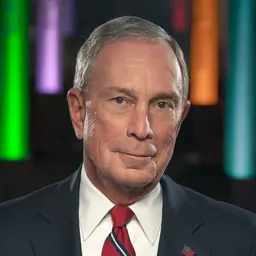
On April 25, 2006, Menino and New York City Mayor Michael Bloomberg hosted a summit at Gracie Mansion in New York City, during which the Mayors Against Illegal Guns Coalition was formed. The coalition stated its goal of "making the public safer by getting illegal guns off the streets"—Menino remained co-chair there until he left the office. The initial group consisted of 15 mayors; the 15 drafted and signed a statement of principles and set a goal to expand their membership to 50 mayors by the end of 2006. That goal was met six months ahead of schedule and led to its current membership of more than 900 mayors, with members from both major political parties and 40 states.
Menino supported the 2008 presidential campaign of Hillary Clinton, sending his own campaign workers to New Hampshire to work for her candidacy ahead of the 2008 New Hampshire Democratic presidential primary. In September 2012, he endorsed Democratic nominee Elizabeth Warren in the 2012 United States Senate election in Massachusetts.
Fiscal matters Throughout Menino's tenure, the city of Boston had an operating surplus. This led Moody's Investors Service and Standard & Poor's to boost the city's bond rating a combined nine times over the course of Menino's mayoralty. He also supported public funding of abortions.
Menino was a supporter of gay rights. By the time he was elected mayor in 1993, Menino had already taken the public position of supporting that gay and lesbian couples be allowed to act as foster parents. He was among the first mayors in the United States to extend such benefits to same-sex partners of municipal employees. At one point, Menino refused to partake in the South Boston St. Patrick's Day parade due to their exclusion of gays. Menino would state that he knew there was little he could do as mayor to prevent the company from opening restaurants in the city, but maintained that they were not welcome in the city.
Urban development
During Menino's tenure, the city's total square footage of office and residential space increased by 11%, and 80 million square feet of development was constructed.
Menino often faced criticism accusing him of playing "favorites" with developers. The influx of millions of dollars of new high-priced housing during Menino's tenure contributed to gentrification, which had the negative impact of pricing longtime residents out of neighborhoods.
Menino also known for focusing on neighborhood development in Boston, organizing services by neighborhood, and appointing neighborhood coordinators who serve as ambassadors from the city in their areas, believing that development should happen in every neighborhood. In 2001, Governing magazine named Mayor Menino Public "Official of the Year" for effective neighborhood development in Boston. This model has spread to other cities as a result of its effectiveness. Menino oversaw the development of the Seaport District in South Boston,
Menino was involved with negotiating with Boston Red Sox ownership and the state of Massachusetts a deal to provide public funds to build a new baseball stadium near the existing Fenway Park. However, the Boston City Council rejected the deal, and the existing Fenway Park was instead renovated.
Menino failed in his effort to lengthen school days, meeting resistance from the Boston Teachers Union. However, in 2009, Menino came out in support of charter schools, praising what he proclaimed to be charter schools' ability to attract quality teachers, arrange lessons to fit students' needs, and establish flexibile workplace rules.
Menino took office amid the "Boston Miracle", a successful joint effort by police, churches, and neighborhood groups which worked to decrease youth-on-youth violence. which is credited with decreasing homicide rate in the city.
In his last year in office, the Boston Marathon bombing took place. Menino, who had been recovering in the hospital from a leg fracture at the time of the attacks (confining him to a wheelchair), checked out of the hospital in order to be present in the aftermath of the attacks. In April 2011, in a similar effort to fight obesity, Menino banned advertisements and sales of sugar-heavy drinks in municipal buildings and at city-sponsored events.
Environmental issues In 2008, Boston was ranked as the third-greenest city in the United States by Popular Science. In the previous decade, there had been new initiatives around planting more trees in the city, single-stream recycling, increasing the solar power capacity of the city, investing in alternative energy, and biking. One of the most innovative ideas has been green building zoning, which requires large-scale private construction to be "green" by LEED standards. Boston is the first city to revise its building code to ensure green construction.
Menino was a founding members of the US Mayors' Alliance for Green Schools.
Under Menino, Boston became the first major city in the United States to incorporate green building standards in its zoning codes. Boston changed its zoning codes to require private construction larger than 50,000 square feet to adhere to the U.S. Green Building Council's LEED standards.
Public image
Menino enjoyed strong popularity. Menino's perennial popularity garnered him the tongue-in-cheek epithet "Mayor for Life." In July 2012, it was reported that Menino had an 82% approval rating.
Menino made appearances at community events, such as parades and community meetings.
Menino, who famously was dubbed, and even styled himself, as an "urban mechanic", had a reputation for focusing strongly on "nuts and bolts" issues. The "urban mechanic" nickname had both positive and negative connotations to it. and he co-founded the Initiative on Cities (IOC), an urban leadership research center based at the university, alongside Professor of Political Science Graham Wilson. As a co-founder and co-director of the IOC, Mayor Menino helped develop the office's mission to bridge the gap between the academic study of cities and the real-world practice of urban governance. This was accomplished by hosting conferences, seminars, and a speaker series; by providing research funding to BU faculty and students; and by providing fellowship opportunities for students interested in local government.
Under Mayor Menino, the IOC also created its flagship research project, the recently rededicated Menino Survey of Mayors, the only nationally representative survey of American mayors. The Survey stands as an annual examination of the most pressing challenges and opportunities facing America's urban leaders.
Speech errors Mayor Menino was known for his distinctive voice, thick Boston accent, and speech errors, some of which are malapropisms. The examples here also include substitution; deletion; and addition, or epenthesis—which mean that, respectively, whole words are used in place of the intended word; portions of a word are eliminated; and portions of a word are added into the intended word. As a result of these various errors, some commentators (such as conservative radio show host and author Howie Carr) refer to the mayor as "Mumbles Menino" or "Mayor Mumbles." A typical example of one of his speech errors involves a reference to Boston's parking shortage as "an Alcatraz around my neck" (meaning, instead, an albatross around his neck), which is a substitution error.
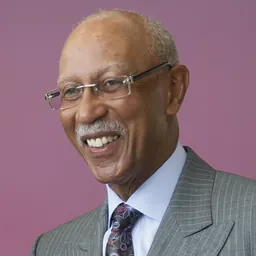
An example of Menino causing controversy with his choice of words occurred in an interview for the August 28, 2013, issue of the New York Times Magazine. Menino was quoted as saying that he would blow up Detroit and start all over, in reference to the inaction of the city's leaders. In response, Detroit mayor (and one-time member of the Boston Celtics) Dave Bing questioned his choice of words: "I would think the mayor of a city that recently experienced a deadly bombing attack would be more sensitive and not use the phrase 'blow up.'" The comments came just over four months after the Boston Marathon bombing. Menino apologized on September 4.
Personal life Menino met Angela Faletra in 1963 when the two were playing tennis in Roslindale on adjacent courts. The two were married three years later and moved to Hyde Park, where they resided until his death. They had two children, Susan and Thomas Jr., and six grandchildren.
Menino was hospitalized several times while mayor. He was admitted for abdominal pain and intestinal inflammation and was treated for kidney stones in 1995 and 1997. In 2003, Menino underwent surgery at Brigham and Women's Hospital to remove a rare sarcoma (DFSP) on his back. The tumor had not spread, and the mayor was able to return to work several days later. In 2004, he was diagnosed with Crohn's disease, helping to explain his recurring intestinal problems. The condition required lifelong treatment with anti-inflammatory medication and careful monitoring of his diet.
Illness and death
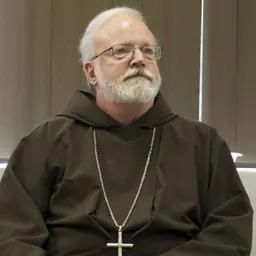
In March 2014, Menino announced that he had been diagnosed with an advanced form of cancer of unknown primary origin that had spread to his liver and lymph nodes and that he was beginning intensive chemotherapy treatment at Dana–Farber Cancer Institute in Boston. On October 23, 2014, he made the announcement that he would be halting cancer treatments, as well as his book tour, to spend more time with family. He died in Boston at the age of 71 one week later on October 30 at approximately 9 a.m. Eastern Standard Time. Menino was receiving hospice care at Brigham and Women's Hospital. The funeral services were pre-planned by Menino himself, including the list of invitees for the private funeral mass. His funeral services were presided over by Cardinal Seán Patrick O'Malley, the Archbishop of Boston; attendees included Menino's successor, Marty Walsh; Governor Deval Patrick; former Governor William Weld; Vice President (and later President) Joe Biden; former President Bill Clinton; Secretary of State and former U.S. Senator from Massachusetts John Kerry; House Minority Leader Nancy Pelosi; Boston Celtics legend Bill Russell; and David Ortiz and Pedro Martínez of the Boston Red Sox. He was buried at Fairview Cemetery in Hyde Park, around the corner from his home. Menino Arts Center, in Hyde Park Menino Pavilion, at the Boston Medical Center Thomas M. Menino Community Center, in Roslindale Thomas M. Menino Fields at Millennium Park, in West Roxbury Thomas M. Menino Convention & Exhibition Center in South Boston
Electoral history
City Council 1983 Boston City Council district 5 electionCandidates Preliminary election General election General election Votes% Thomas Menino (incumbent) 5,745 100
1987 Boston City Council district 5 electionCandidates General election Votes% Thomas Menino (incumbent) 10,437 Gerald Bagley 1,556
1989 Boston City Council district 5 electionCandidatesGeneral electionVotes% Thomas Menino (incumbent) 100
1991 Boston City Council district 5 electionCandidates Preliminary election General election General election CandidatesGeneral electionVotes% Thomas Menino (incumbent) 71 all others 29
2001 Boston mayoral electionCandidatesPreliminary election Votes% Thomas Menino (incumbent) 64,001 67.52 Maura Hennigan 30,468 32.14
2009 Boston mayoral electionCandidatesPreliminary election General election Votes%Votes% Tom Menino (incumbent) 41,026 50.52 63,123 57.27 Michael Flaherty 19,459 23.96 46,768 42.43 Sam Yoon 17,179 21.16 Kevin McCrea 3,340 4.11
Published works
Don’t just read it —
keep it.
Full-length biographies made to live with: read them, listen on the way to work, watch them tonight.
- E-book
- Audio
- Video
Instant download · yours to keep · every purchase keeps this site free
Important facts
People in Thomas Menino's life
Named in this biography and alive at the same time




Related people
Same field, nearest in time




Contemporaries
People whose lives overlapped Thomas Menino's



Frequently asked questions
Who was Thomas Menino?
53rd mayor of Boston, Massachusetts, USA (1942-2014)
When was Thomas Menino born?
Thomas Menino was born on 27 December 1942 in Boston, Hyde Park.
When did Thomas Menino die?
Thomas Menino died on 30 October 2014 in Boston.
What was Thomas Menino's occupation?
Thomas Menino was a politician.
What nationality was Thomas Menino?
Thomas Menino was American.
Sources & further reading
Cite this page
APA: Biography.guide. (2026). Thomas Menino. https://biography.guide/thomas-menino/
MLA: "Thomas Menino." Biography.guide, https://biography.guide/thomas-menino/.
Chicago: "Thomas Menino." Biography.guide. https://biography.guide/thomas-menino/.
Data last updated: 2026-09-20 · Spot an error? Report a correction.
Page generated 2026-09-27 05:21 UTC