
About Charles Verlat
Lived 1824 – 1890 (aged 65). Charles Verlat was a Belgian painter, university teacher and designer.
Charles Verlat or Karel Verlat (25 November 182423 October 1890) was a Belgian painter, watercolorist, engraver (printmaker), art educator and director of the Antwerp Academy. He painted many subjects and was particularly known as an animalier and portrait painter. He also created Orientalist works, genre scenes, including a number of singeries, religious compositions and still lifes.
Life He was born in Antwerp as the son of a manufacturer of soap, oil and soda. His mother arranged for the young Charles to get his first drawing classes from the Dutch sculptor Johannes Antonius van der Ven, who was then studying at the Antwerp Academy. From an early age he lived for art. He left formal school education at the early age of fourteen and was accepted together with Godfried Guffens to take lessons at the private studio located in the Vleeshuis of Nicaise de Keyser. De Keyser was one of the key figures in the Belgian Romantic-historical school of painting. At the time de Keyser had about 30 pupils including some who came to prominence such as Edouard Hamman, Jan Swerts, Joseph Lies and Johan Bernard Wittkamp. At the same time Verlat followed courses at the Antwerp Academy where he studied, among others, with Gustave Wappers and Josephus Laurentius Dyckmans. The work was also sharply criticized by Le Figaros art critic Jean Rousseau who wrote that the work only was good enough for use as a shop sign for a removal company. Verlat took revenge by painting a monkey shaving itself while wiping its feet on the copy of the newspaper in which the criticism had been published. He returned for a year to Antwerp to return the next year to work in his studio in Paris. During this time he started to establish a reputation as an animal painter. He also painted religious subjects and his Pietà of 1866 was so successful that it earned him the distinction of being appointed a knight in the French Legion of Honour. He was very appreciated by the Grand Duke and taught art classes to the daughters of the Grand Duke. He became later the acting head of the Art School. The Grand Duke also bestowed on him the Order of the White Falcon. During this period he was active as a portrait painter. He moved in the cultural circles of Weimar and was friends with Franz Liszt whose portrait he painted. They would stay in touch and later Verlat would be instrumental in Liszt's visit to Antwerp in 1881.
In August 1875 Verlat left his official positions in Weimar and traveled to Cairo where he stayed for six months. He then moved on to Jerusalem where he would reside for two years. He traveled throughout Palestine and painted the people, animals and landscapes. He seems to have been motivated by a desire to study the real life of the people who formed the subjects of his religious paintings. His major creations during this time included large-scale religious compositions Vox populi (1876, St. Lawrence Church, Alkmaar), Vox Dei (1877, Royal Museum of Fine Arts, Antwerp), The Tomb of Christ and The Flight into Egypt. In 1881 Verlat was made Commander in the Order of Leopold.
At the time, panoramic paintings, large artworks that show a wide, all-encompassing view of a particular subject such as a landscape, military battle or other historical event, were all the rage in Europe. Verlat also created a few panoramic paintings. In Antwerp he first created the Battle of Waterloo in 1881. This work was 120 meters wide and 10 meters high. The whole scene also included plaster figures that enlivened the experience. The next year he created for a Russian organisation another panorama showing a Review of the Russian soldiers after the signing of the Treaty of San Stefano before Constantinopel. He executed this work with the assistance of his pupils. In 1883 he was commissioned with decorating the stairwell of the Antwerp City Hall. Of the four historical paintings he planned to install only one showing The Duke of Alva's statue dragged through the streets of Antwerp was finished at the time of his death. During this period he made many portraits, animal paintings, religious compositions and decorations for the palace of Prince Philippe, Count of Flanders in Brussels. Verlat taught many other international pupils at the Academy including the illustrator Joseph Finnemore, Joseph Malachy Kavanagh and John Duncan.
Although he was hard-working and his works commanded a high price in the market, Verlat became indebted because of the high costs of organizing exhibitions of his works, the creation of the panoramas and a big loss on the Russian panorama, which was never paid. Even the financial assistance provided by his powerful friends could not save him from the pressure by his creditors and he was forced to pawn his artworks. He worked directly on the plate without other preparation which gives these works a spontaneous feel.
Don’t just read it —
keep it.
Full-length biographies made to live with: read them, listen on the way to work, watch them tonight.
- E-book
- Audio
- Video
Instant download · yours to keep · every purchase keeps this site free
Important facts
more
michel charles verlat, ch. verlat, Michel Maria Charles VerlatPeople in Charles Verlat's life
Named in this biography and alive at the same time
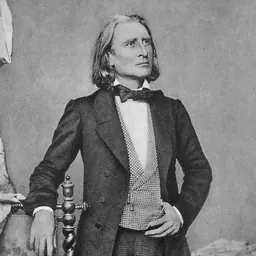




Related people
Same field, nearest in time

Contemporaries
People whose lives overlapped Charles Verlat's




Frequently asked questions
Who was Charles Verlat?
Belgian painter (1824-1890)
When was Charles Verlat born?
Charles Verlat was born on 25 November 1824 in Antwerp.
When did Charles Verlat die?
Charles Verlat died on 23 October 1890 in Antwerp.
What was Charles Verlat's occupation?
Charles Verlat was a painter, university teacher and designer.
What nationality was Charles Verlat?
Charles Verlat was Belgian.
Sources & further reading
Cite this page
APA: Biography.guide. (2026). Charles Verlat. https://biography.guide/charles-verlat/
MLA: "Charles Verlat." Biography.guide, https://biography.guide/charles-verlat/.
Chicago: "Charles Verlat." Biography.guide. https://biography.guide/charles-verlat/.
Data last updated: 2026-09-20 · Spot an error? Report a correction.
Page generated 2026-09-27 05:31 UTC