
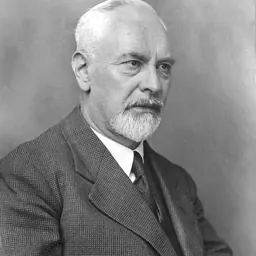
Charles Templeton
Canadian cartoonist, evangelist, agnostic, politician, newspaper editor, inventor, broadcaster and author
About Charles Templeton
Lived 1915 – 2001 (aged 85). Charles Templeton was a Canadian journalist, cartoonist, evangelist, politician and evangelism.
Charles Bradley Templeton Templeton's father left Toronto and his family in 1929, onstensibly in search of work, when Charles was 14, and he rarely saw him afterwards. His mother made ends meet during the Depression by taking in boarders to support Charles, his three sisters and younger brother.
Cartoonist In 1932, leaving high school to pursue the job. His work became syndicated and earned him a comfortable living. He converted to Christianity while working as a cartoonist, and in 1936, left his job to become a preacher. In 1955, he became the Presbyterian Church in the United States's secretary of evangelism.
Religious views Templeton was raised outside formal church life, but converted to Christianity as a young adult and became a prominent evangelist in Canada and the United States. During the 1940s he was associated with Youth for Christ International and was a close friend and preaching colleague of Billy Graham.
Templeton's attitude toward Jesus became a subject of later discussion among Christian writers. In The Case for Faith, Christian apologist Lee Strobel described interviewing Templeton near the end of Templeton's life. Strobel wrote that Templeton rejected Christian doctrine but spoke emotionally and admiringly about Jesus, saying that he "missed" him. Christian commentators have sometimes cited this passage as suggesting that Templeton retained affection for Jesus or may have had late-life second thoughts about his atheism.
Other accounts caution against treating the anecdote as evidence of a formal return to Christian belief. Templeton's published work remained explicitly skeptical of Christianity, and his son Brad Templeton later wrote that Farewell to God was completed while the first symptoms of Alzheimer's disease were already affecting him. Contemporary obituaries also reported that Templeton died from Alzheimer's disease. In 1963, he was an interviewer on the Question Mark, a CBC public affairs show exploring spirituality.
Templeton left the CBC in 1959 when he was hired as executive managing editor of the Toronto Star, a position he held until 1964, when he entered politics.
In 1958, Templeton also worked for syndication service All-Canada Radio, producing ten one-minute news commentaries a week.
He collaborated with Berton again on the radio show Dialogue from 1966 to 1970 on CFRB, and from 1970 to 1983 on CKEY, where Templeton also served as the morning news reader. The move however backfired. As Templeton acknowledged in his memoir, Liberal activists from other Toronto ridings, who might in other circumstances have helped, refrained from doing so in order to deny Templeton the momentum boost that would have came with a byelection win.
NDP candidate Jim Renwick's campaign was managed by Gerald Caplan, Stephen Lewis, and Marjorie Pinney who developed what became known as "the Riverdale model" that the NDP would use for decades in which campaign volunteers canvassed every household three or four times, identified all their supporters, and then got out the vote on election day. This system maximized the NDP's vote on election day and increased the overall turnout to over 60%, about one-third higher than the usual turnout for a by-election. The result was an upset victory for Renwick. This campaign system was adopted by the NDP throughout Ontario, and was later copied by other parties.
While the NDP was applying innovation campaign techniques that would later become standard political practice, Templeton was conducting two-front warfare. Running two election campaigns simultaneously proved challenging and Templeton came in third in Riverdale.
Having lost the byelection and incurred significant debt from the campaign, Templeton initially announced his withdrawal from the leadership contest but reversed his decision later on his supporters' urging. He surprised most observers with a strong second-place finish on the first ballot. As the outsider candidate, he had little room for growth however. While he gained a proportionate share in the two subsequent ballots, his lack of subsequent ballot support became evident when the more established candidates were eliminated. Between the third and fifth ballots Templeton gained only twenty-three votes, while the frontrunner Andy Thompson gained seventy-seven. He was defeated in the sixth ballot by Andy Thompson by a significant margin.
Results of the 1964 Ontario Liberal Party leadership convention
Thompson would resign as leader two years later due to health problems. Interim Liberal leader Robert Nixon suggested that Templeton could become the party's permanent leader, but Liberal MPP Elmer Sopha, who had been the only MPP who had supported Templeton in 1964 but had become disillusioned with him, reacted furiously against the suggestion and Templeton declined to run in the 1967 leadership convention due to caucus opposition.
Inventor Templeton made his own unsuccessful designs of a child-resistant medicine cap, a cigarette filter and a pipeline.
In 1980, he married author Madeleine Helen Stevens Leger, and they remained married until his death. In later Christian writing, Templeton's final years have sometimes been discussed because of Lee Strobel's account that Templeton became emotional when speaking about Jesus and said that he missed him. The anecdote has been cited by some Christian commentators as evidence of unresolved attachment to Christianity, but no public statement by Templeton recanting his atheism is known, and family accounts emphasize that he was experiencing the effects of Alzheimer's disease during his final years.
Books Novels The Kidnapping of the President, McClelland & Stewart (Canada) / Simon & Schuster (US) (1974) - adapted into a movie in 1980 Act of God, McClelland & Stewart (Canada) / Little, Brown (US) (1977) The Third Temptation, McClelland & Stewart (1980) The Queen's Secret, McClelland & Stewart (1986) World of One, McClelland & Stewart (1988)
Non-fiction Evangelism for Tomorrow, Harper & Brothers (1955) Life Looks Up, Harper & Brothers (1957) Jesus (also titled Jesus: A Bible in Modern English), Simon & Schuster (1973) (Online version) Succeeding: Mastering the Art of Getting Ahead, Stoddart (1989) The Winning Edge (later edition of Succeeding), Stoddart (1990) End Back Attacks, written with Charles Godfrey, M.D., Key Porter Books (1992) Farewell to God: My Reasons for Rejecting the Christian Faith, McClelland & Stewart (1996)
Don’t just read it —
keep it.
Full-length biographies made to live with: read them, listen on the way to work, watch them tonight.
- E-book
- Audio
- Video
Instant download · yours to keep · every purchase keeps this site free
Important facts
Family & relationships
People in Charles Templeton's life
Named in this biography and alive at the same time





Related people
Same field, nearest in time




Contemporaries
People whose lives overlapped Charles Templeton's




Frequently asked questions
Who was Charles Templeton?
Canadian cartoonist, evangelist, agnostic, politician, newspaper editor, inventor, broadcaster and author (1915-2001)
When was Charles Templeton born?
Charles Templeton was born on 7 October 1915 in Toronto.
When did Charles Templeton die?
Charles Templeton died on 7 June 2001 in Toronto.
What was Charles Templeton's occupation?
Charles Templeton was a journalist, cartoonist, evangelist, politician and evangelism.
What nationality was Charles Templeton?
Charles Templeton was Canadian.
Sources & further reading
· Wikipedia: Charles Templeton
Cite this page
APA: Biography.guide. (2026). Charles Templeton. https://biography.guide/charles-templeton/
MLA: "Charles Templeton." Biography.guide, https://biography.guide/charles-templeton/.
Chicago: "Charles Templeton." Biography.guide. https://biography.guide/charles-templeton/.
Data last updated: 2026-09-22 · Spot an error? Report a correction.
Page generated 2026-09-27 04:57 UTC