
About Charles Spalding
Lived 1738 – 1783 (aged 44). Charles Spalding was an inventor.
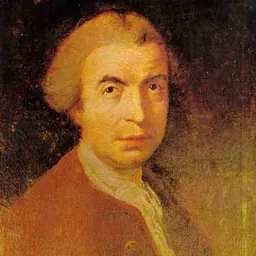
Spalding's Diving Bell, The Saturday Magazine, Vol. 14, 1839 Charles Spalding (29 October 1738 – 2 June 1783) was an Edinburgh confectioner and amateur engineer who made improvements to the diving bell. He died while diving to the wreck of the Belgioso in Dublin Bay using a diving bell of his own design.
Early life Charles Spalding was born in Canongate in Scotland on 29 October 1738, the son of Charles Spalding and Ann Findlay. His father was a bookseller in Canongate. As the son of a merchant, the younger Spalding eventually became a shop-lad.
Improvements to Halley's diving bell Spalding's introduction to diving was more the result of necessity than choice. Heavily invested in the brig Peggy, Spalding suffered a severe financial blow when she sank en route to Scotland at the Farne Islands on 4 December 1774.
With this success, Spalding founded Spalding & Co. of Edinburgh for his diving operations. Spalding was assisted in his diving efforts by his brother Thomas (born 1740), George Small, who was married to Spalding's sister Ann, and his nephew, Ebenezer Watson.
One of the first people on the scene with a diving background was Thomas Spalding, Charles' brother. The cargo of the Belgioso was valued at £150,000, with £30,000 in silver and lead. The salvage terms agreed to by the owners were that Spalding would keep one-fourth of all silver and lead recovered and one-half of all other cargo. Additionally, if Spalding failed to recover anything, his entire expense for the operation would be defrayed. The pair were buried in a single grave in St. Mark's Churchyard in Dublin. The exact location of their grave within the churchyard is unknown.
An inquest into Spalding's and Watson's deaths was eventually held. The causes reviewed during the hearings varied from the negligence of the dive ship's captain, equipment failure, including tangled signal ropes or the failure of the final cask of air reaching the divers, diver error, putrified air from the rotting cargo of the Belgioso, even sabotage and alcohol. Susan and her father were members of the Smalls of Dirnanean, Perthshire, Scotland.
At Spalding's death, he left a wife and seven children under the age of fourteen; the youngest being just six months old. A public subscription fund was opened in London for the relief of the family. eventually selling the business and moving to Musselburgh, where she died on 31 October 1818.
Charles Falconer, Baron Falconer of Thoroton is a descendant of Charles Spalding, as is Sheila Legge, the "Surrealist Phantom" from the 1936 London International Surrealist Exhibition.
Don’t just read it —
keep it.
Full-length biographies made to live with: read them, listen on the way to work, watch them tonight.
- E-book
- Audio
- Video
Instant download · yours to keep · every purchase keeps this site free
Important facts
People in Charles Spalding's life
Named in this biography and alive at the same time


Related people
Same field, nearest in time


Contemporaries
People whose lives overlapped Charles Spalding's





Frequently asked questions
Who was Charles Spalding?
Confectioner, diver, improver of the diving bell
When was Charles Spalding born?
Charles Spalding was born on 29 October 1738.
When did Charles Spalding die?
Charles Spalding died on 2 June 1783.
What was Charles Spalding's occupation?
Charles Spalding was an inventor.
Sources & further reading
Cite this page
APA: Biography.guide. (2026). Charles Spalding. https://biography.guide/charles-spalding/
MLA: "Charles Spalding." Biography.guide, https://biography.guide/charles-spalding/.
Chicago: "Charles Spalding." Biography.guide. https://biography.guide/charles-spalding/.
Data last updated: 2026-09-20 · Spot an error? Report a correction.
Page generated 2026-09-27 05:20 UTC