
About Charles Sims
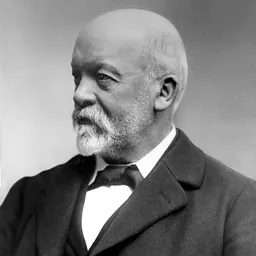
Lived 1873 – 1928 (aged 55). Charles Sims was a British painter, graphic artist and illustrator.
Charles Henry Sims (28 January 1873, Islington–13 April 1928, St. Boswells) was a British figurative painter known for his portraits and landscapes. He initially became renowned as a leading Edwardian painter, but following the death of his son in World War I, his work became increasingly idiosyncratic, surreal and controversial. In 1920, he was appointed Keeper, or head, of the Royal Academy Schools, a post he was eventually forced to resign in 1926. At the same time, he became estranged from his wife and children. Sims' final paintings, the Spiritual Ideas, were to some viewers his "most beautiful works," but to others highly disturbing. He committed suicide in 1928.
Education and early career Born in Islington, London, Sims was the son of a costume manufacturer. An injury in infancy threatened his life and resulted in lifelong lameness in one leg. His earliest memories were of painful physiotherapy, and as a child he was unable to fully participate in physical activities. This disability was to have a profound influence on his work as an artist. As his son and biographer Alan Sims writes, "His lameness…remained always a considerable burden," and "had much to do with the peculiar direction of his art towards playful subjects and athletic technique," so that "the most notable characteristics" included "a prepossession with the swift movement of flawless bodies bathed in sunlight and air" and "a determination to escape from the actual confines of physical life into a region of his own fancy.…The charm of his happiest pictures is heightened by this pathos."
Initially apprenticed in the drapery business, at age 14 he was sent to Paris, where he learned French. Turning his back on a mercantile career, he decided to study art, and in 1890 enrolled at the South Kensington College of Art before moving back to Paris for two years at the Académie Julian. In the need of bursaries to support himself, he moved back to London and enrolled at the Royal Academy Schools in 1893, but "his Parisian insolence and cavalier ways alienated the authorities, and in 1895 he was unceremoniously expelled."
Despite the expulsion, Sims "had gained the confidence to start painting bacchanalian scenes of revelry, executed with astonishing flair," including The Vine in 1896, his first painting to be exhibited at the Royal Academy. In 1897 he exhibited Childhood, which "established his mastery of the effects of sunlight"; it was shown at the Paris Salon of 1900 and purchased by the French State (it is now at the Musée d'Orsay).
In 1910 he was elected a fellow of the Royal Watercolour Society, and in 1915 to the Royal Academy.
The "breezy, sunny, outdoor subjects" for which he became known were partly inspired by holidays in Arran in Scotland and later at Bruges in Belgium and at Étaples in France, where there was an international artists' colony. In 1921, art critic P.G. Konody reflected on Sims' body of joyous paintings:
The New York Times found in Sims' works "an individuality incapable of dullness or heaviness," and "an unquenchable sprit."
The First World War The First World War was a deeply traumatic experience for Sims. His eldest son, John, serving as a midshipman in the Royal Navy, was killed in November 1914, in the loss of HMS Bulwark, a blow that caused Sims in 1915 to add to his idyllic work Clio and the Children, staining the scroll of the Muse of History with red paint to represent blood. "Sims believed that the War had violated the innocence of future generations. He felt that History could no longer be personified as a beautiful goddess passing on wisdom but that she had more violent lessons to teach." Sims's son is among the missing commemorated on the Portsmouth Naval Memorial.
Marriage, from The Seven Sacraments of the Holy Church (1917). In February 1917, Sims exhibited a suite of austere, idiosyncratic, deliberately archaic paintings depicting The Seven Sacraments of the Holy Church. According to his son Alan, "Nobody knew what to make of them." Their present location is unknown, and they are today the least-known of his works.
In 1918, he traveled to France as an official war artist, painting a series of devastated landscapes. He also painted works memorializing the war dead, using the imagery of the Crucifixion. In Greater Love Hath No Man (1916), his own son appears on a cross, with members of the family below. Another crucifixion on a much larger scale and with panoramic details, with Christ on the cross, became Sims' contribution to the Canadian War Museum, Sacrifice (1919).
In 1920 Sims was commissioned to decorate the ceiling of the Institute of Civil Engineers in Great George Street, Westminster, and the result was a more conventional but still "highly inventive" paean to the war effort, wherein "a figure of Victory swoops down, surrounded by a billowing Union Jack and holding the victor's laurels, although it also serves as a wreath for the dead. At the edges people crane their necks to peer upwards…and a biplane, emblem of modernity, crosses the composition." Victory wears a hood and most of her face cannot be seen.
Professional controversies, personal upheavals
In the last decade of his life, Sims' work became increasingly controversial.
In 2019, a surviving version of the painting, on loan from The Box, Plymouth, was put on display in the Member's Dining Room in the Palace of Westminster to mark the centenary of Astor taking her seat.
Alan Sims wrote of his father's suicide: "He himself followed out his Epicureanism to its logical conclusion, and ceased to live when he ceased to believe in future happiness."
Legacy The Faun—an Epilogue (undated; private collection) was among more than 80 works by Sims exhibited by The Royal Academy in 1933; possibly a "sequel" to The Little Faun, in both cases an imaginary self-portrait of the artist, who always felt himself to be set apart because of his lameness. In 1933, the Royal Academy presented a Commemorative Exhibition of Works by Late Members, which included over 80 works by Sims, a veritable retrospective of his career. The da Vinci expert Edward McCurdy wrote:
1934 saw the posthumous publication of Sims' Picture Making: Technique & Inspiration, a book "rich in insights into the theory and practice of painting." The illustrated volume also included Sims' notes on his own paintings and passages from his private journals, and a lengthy critical survey of his life and work by his son Alan Sims, making it an invaluable resource for researchers and art historians.
The early paintings that established his career, like Childhood, "showed a whimsicality fashionable in Edwardian London but ultimately detrimental to a late-twentieth-century revival of interest in his work."
Since 2005, three doctoral theses have dealt at length with Sims and his paintings. H. Cecilia Holmes' "A bright memory to remain": The Life and Works of Charles Sims RA (1873-1928), by delving into the archive of Sims' letters, diaries, and photographs at Northumbria University, creates a very human portrait of the artist. Holmes was the first scholar to suggest a connection between the remarriage of Vivienne Jeudwine and Sims' decision to commit suicide.
For almost a century, Sims' legacy has been dogged by rumors of insanity. The catalogue for the 1989 exhibit The Last Romantics at the Barbican Art Gallery (which included four works by Sims) repeated the notion that his final paintings were "apparently the product of a seriously disturbed mind." Ultimately, as the Bethlem acknowledges,
Alan Sims wrote that his father's series of Spiritual Ideas was both "the greatest and last work of his life."
In 1929, when the Cleveland Museum of Art acquired Sims' Here Am I, museum curator William Mathewson Milliken wrote:
In 1965, the Cleveland Museum of Art deaccessioned Here Am I. The present location of the painting is unknown.
In museum collections
Two Girls Seated: Diana and Sarah Churchill, 1922, National Trust, Chartwell.
London Clio and the Children, 1913 and 1915, Royal Academy of Arts King John assents to Magna Carta, 1925–1927, Palace of Westminster The Fountain, 1907–8; The Wood Beyond the World, 1913; The Sands at Dymchurch, c.1920–2; I Am the Abyss and I Am Light, 1928, Tate A Camouflaged Quarry: Between Chérisy and Hendicourt, 1916; "Sacrifice": Study for the painting in Ottawa, 1918; The Land of Nod (poster), 1917, Imperial War Museums Dame Lilian Braithwaite, c. 1902, The Garrick Club Collections Portrait of a Young Man; Aspiration, 1927; Crowds of Small Souls in Flame, 1927; A Spiritual Idea, 1927; Swing; My Pain Beneath Thy Sheltering Hand, 1927, Bethlem Museum of the Mind
United Kingdom Two Girls Seated: Diana and Sarah Churchill, 1922, National Trust, Chartwell. The Little Faun, version of 1905–1906, The Fitzwilliam Museum; The Little Faun, version of 1908, Royal Cornwall Museum Introduction of Lady Astor as the First Woman MP, c. 1919, The Box, Plymouth What Are These to Me and You Who Deeply Drink of Wine?, 1895, Leeds Art Gallery An Interrupted Picnic, 1901, Cartwright Hall Man's Last Pretence of Consummation in Indifference, 1927, Ulster Museum George V, c. 1924, Scottish National Portrait Gallery Mrs. MacWhirter, City Art Centre, Edinburgh
Elsewhere L'Enfance (Childhood), 1897, Musée d'Orsay Sacrifice, c. 1918, Canadian War Museum Child Worship, c. 1909, Cleveland Museum of Art An Island Festival, 1907, Art Gallery of New South Wales By Summer Seas, c. 1904; Figure of a Woman c. 1905; The Death of the Year, 1910-1912, Museum of New Zealand Te Papa Tongarewa Bacchanalia, n.d., Hermitage Museum
Cultural references A reference to Charles Sims and his work is made in Robert Aickman's story "Ravissante," where his paintings are described: "apparently confused on the surface, even demented, they made one doubt while one continued to gaze, whether the painter had not in truth broken through to a deep and terrible order."
At auction An auction record for a work by Charles Sims was set by In Elysium, auctioned for £36,000 at Sotheby's London in 2006, then equivalent to $66,212.
Don’t just read it —
keep it.
Full-length biographies made to live with: read them, listen on the way to work, watch them tonight.
- E-book
- Audio
- Video
Instant download · yours to keep · every purchase keeps this site free
Important facts
People in Charles Sims's life
Named in this biography and alive at the same time





Related people
Same field, nearest in time
Contemporaries
People whose lives overlapped Charles Sims's


Frequently asked questions
Who was Charles Sims?
British artist (1873-1928)
When was Charles Sims born?
Charles Sims was born on 28 January 1873 in Islington.
When did Charles Sims die?
Charles Sims died on 13 April 1928 in St Boswells.
What was Charles Sims's occupation?
Charles Sims was a painter, graphic artist and illustrator.
What nationality was Charles Sims?
Charles Sims was British.
Sources & further reading
· DBpedia: Charles Sims (painter)
Cite this page
APA: Biography.guide. (2026). Charles Sims. https://biography.guide/charles-sims-painter/
MLA: "Charles Sims." Biography.guide, https://biography.guide/charles-sims-painter/.
Chicago: "Charles Sims." Biography.guide. https://biography.guide/charles-sims-painter/.
Data last updated: 2026-09-26 · Spot an error? Report a correction.
Page generated 2026-09-27 05:14 UTC