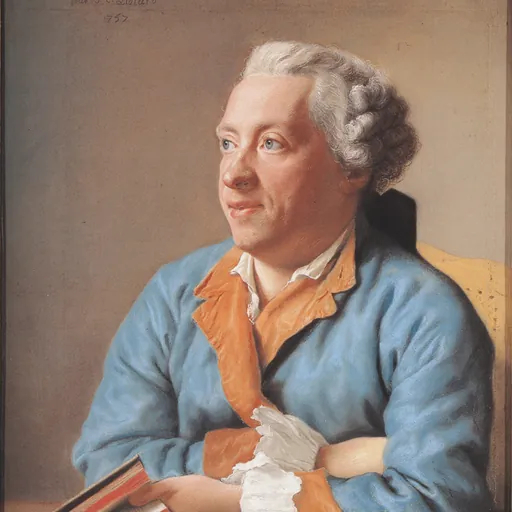
About Charles Simon Favart
Lived 1710 – 1792 (aged 81). Charles Simon Favart was a French playwright, librettist, writer and stage actor.
Charles Simon Favart (; 13 November 1710 – 12 May 1792) was a French playwright and theatre director. The Salle Favart in Paris is named after him.
Biography Born in Paris, the son of a pastry-cook, he was educated at the Lycée Louis-le-Grand, and after his father's death he carried on the business for a time. His first success in literature was La France delivrée par la Pucelle d'Orléans, a poem about Joan of Arc which obtained a prize of the Académie des Jeux Floraux. After the production of his first vaudeville, Les Deux Jumelles (1734), circumstances enabled him to relinquish business and devote himself entirely to the drama. He provided many pieces anonymously for the lesser theatres, and first put his name to La Chercheuse d'esprit, which was produced in 1741.
Among his most successful works were Annette et Lubin; Le Coq du milage (1743); Les Vendanges de Tempé (1745), later reworked as La Vallée de Montmorency (1752); Ninette à la cour (1753); Les Trois Sultanes (1761) and L'Anglais de Bordeaux (1763). Favart became director of the Opéra-Comique, and in 1745 married Marie Justine Benoîte Duronceray, a beautiful young dancer, singer and actress, who as "Mlle Chantilly" had made a successful début the year before. By their united talents and labours, the Opéra-Comique rose to such a height of success that it aroused the jealousy of the rival Comédie-Française and was suppressed.
Favart, left thus without resources, accepted the proposal of comte Maurice de Saxe, and became director of a troupe of comedians which was to accompany Maurice's army into Flanders. It was part of his duty to compose from time to time impromptu verses on the events of the campaign, amusing and stimulating the spirits of the men. So popular were Favart and his troupe that the enemy became desirous of hearing his company and sharing his services, and permission was given to gratify them, battles and comedies thus curiously alternating with each other.
Saxe, an admirer of Mme Favart, began to pay her unwanted attentions. To escape him she went to Paris, and the wrath of Saxe fell upon the husband. A lettre de cachet was issued against him, but he fled to Strasbourg and found concealment in a cellar.
Favart survived his wife by twenty years. After the marshal's death in 1750 he returned to Paris and resumed his pursuits as a dramatist. It was at this time that he became friendly with the abbé de Voisenon, who helped him with his work, to what extent is uncertain. He had grown nearly blind in his last days, and died in Paris. The Favart's second son, Charles Nicolas Favart was also an actor and dramatist.
His plays have been republished in various editions and selections (1763-1772, 12 vols.; 1810, 3 vols.; 1813; 1853). His correspondence (1759-1763) with Count Durazzo, director of theatres at Vienna, was published in 1808 as . It furnishes valuable information on the state of the literary and theatrical worlds in the 18th century.
Favart's plays are also known to have inspired his close friend, the artist François Boucher, to create numerous paintings featuring Favart's characters of "the little Shepherd" and the shepherdess "Lisette." These include Boucher's The Agreeable Lesson (also known as The Flute Players) of 1748 and An Autumn Pastoral (also known as The Grape Eaters) of 1749. In turn, these paintings inspired artists of the Sèvres Porcelain Manufactory to create a pair of figurines showing the two characters in poses imitating the characters of the play.
Works Some 60 of the c. 150 plays that he composed (essentially comedies and opéras-comiques) were published in his lifetime, in 10 volumes, under the title Théâtre de M. Favart, Paris, Duchesne (later Veuve Duchesne), 1763–1772. Reprint in fac-simile, Geneva, Slatkine, 1971, 10 t. Availabable on Gallica.
1732: Polichinelle comte de Paonfier 1734: Les Deux Jumelles 1735: La Foire de Bezons 1738: Le Bal bourgeois 1739: Moulinet premier, parody 1740: La Servante justifiée 1741: La Chercheuse d'esprit, opéra-comique 1741: La Fête de Saint-Cloud 1742: Le Prix de Cyhtère, opéra comique 1742: Hippolyte et Aricie, parody 1743: Le Coq de village, opéra comique 1744: Acajou, opéra comique 1744: Le Bal de Strasbourg, ballet 1745: Les Vendanges de Tempé 1747: Les Nymphes de Diane 1747: Les Amours grivois 1748: Cythère assiégée 1750: Zéphire et Fleurette 1751: Les Indes dansantes, parody of Indes galantes 1753: Raton et Rosette, parody of Titon et l'Aurore 1753: Les Amours de Bastien et Bastienne, parody of Devin du village 1755: La Servante maîtresse, parody of La serva padrona by Giovanni Battista Pergolesi. 1755: Ninette à la cour, opéra comique 1761: Les Trois Sultanes ou Soliman Second 1762: Annette et Lubin, opéra comique 1763: L'Anglais à Bordeaux 1765: La Fée Urgèle ou Ce qui plaît aux dames, opéra-comique 1769: La Rosière de Salency, opéra comique 1773: La Belle Arsène, opéra comique
Favart also left Mémoires, published in 1808 by his grandson.
Trivia Favart and his wife appeared in fictionalised form in Offenbach's 1878 opéra comique, Madame Favart Favart reworked Rinaldo di Capua's La Zingara as La Bohemienne. Favart's Hippolyte et Aricie (1742) is a parody of the opera by Jean-Philippe Rameau bearing the same name.
Don’t just read it —
keep it.
Full-length biographies made to live with: read them, listen on the way to work, watch them tonight.
- E-book
- Audio
- Video
Instant download · yours to keep · every purchase keeps this site free
Important facts
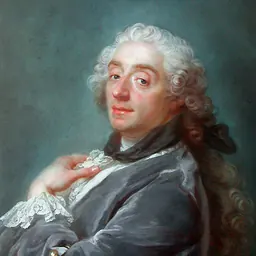
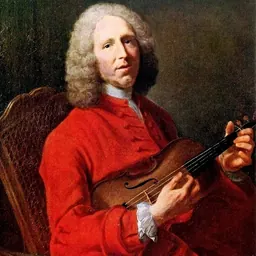
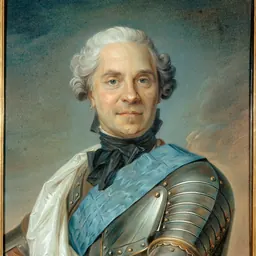
People in Charles Simon Favart's life
Named in this biography and alive at the same time


Related people
Same field, nearest in time


Contemporaries
People whose lives overlapped Charles Simon Favart's





Frequently asked questions
Who was Charles Simon Favart?
French writer (1710-1792)
When was Charles Simon Favart born?
Charles Simon Favart was born on 13 November 1710 in Paris.
When did Charles Simon Favart die?
Charles Simon Favart died on 12 May 1792 in Belleville.
What was Charles Simon Favart's occupation?
Charles Simon Favart was a playwright, librettist, writer and stage actor.
What nationality was Charles Simon Favart?
Charles Simon Favart was French.
Sources & further reading
· Wikipedia: Charles Simon Favart
· DBpedia: Charles Simon Favart
Cite this page
APA: Biography.guide. (2026). Charles Simon Favart. https://biography.guide/charles-simon-favart/
MLA: "Charles Simon Favart." Biography.guide, https://biography.guide/charles-simon-favart/.
Chicago: "Charles Simon Favart." Biography.guide. https://biography.guide/charles-simon-favart/.
Data last updated: 2026-09-23 · Spot an error? Report a correction.
Portrait: Wikimedia Commons · author & licence
Page generated 2026-09-27 05:06 UTC