
Charles Seager
English orientalist 1808–1878
About Charles Seager
Lived 1808 – 1878 (aged 70).
Charles Seager (1808–1878) was an English orientalist. A Catholic convert of 1842, he spent over 30 years as an independent scholar and author.
Early life Born in 1808, he was the second son of John Seager (1776–1849) of Evesbatch, Worcestershire, rector of Welsh Bicknor, Herefordshire, from 1808 until his death. John Seager published editions of works on Ancient Greek by Lambert Bos, , Gottfried Hermann, Michael Maittaire and François Viger. That year he gained a Kennicott Hebrew scholarship, given by public examination and open to Oxford B.A.s. The maximum tenure was four years. and was ordained priest in 1837. For some time he had been a pupil of Edward Pusey, under whom he gave public lectures in Hebrew, acting as Pusey's assistant for four years.
Catholic convert Edmund Jackson, writing in 1899 in the Dublin Review, called Seager "one of the type, growing extinct, of quaint, old-world scholars, full of out-of-the-way learning".
Seager was in Oxford during the rise of the Tractarians. He became associated with the movement, and assisted in the publication of the literature connected with it.
From 1838 Seager lived in a shared house on St Aldate's, Oxford for "young writers" set up by Pusey and John Henry Newman, with Mark Pattison and James Bowling Mozley. It was there, with the Seagers, that Marian Hughes in 1841 took the three vows as an Anglican nun, before Pusey; her cousin Thomas Chamberlain was a friend of Seager's. The Seagers then travelled in France with Hughes, visiting convents in Normandy. As did John Rouse Bloxam, a Tractarian colleague who shared his interest in liturgy, Seager visited the new Catholic chapel opened by Ambrose Phillipps De Lisle at Grace-Dieu.
With William George Ward and John Dobree Dalgairns following, Seager was in the earliest group of Tractarian converts to Catholicism. In January 1842 Pusey wrote to Newman asking him to correct Seager's romanising tendencies; Newman's efforts were in vain. His conversion grieved Pusey.
Seager then began a long itinerant period as an independent scholar. In 1847 the Seagers' daughter Marian died in Paris, aged six. In the early 1870s he tutored E. A. Wallis Budge in Biblical Hebrew and Syriac.
Academic orientalist When the Catholic University College, Kensington was founded in 1875, Seager was appointed to the chair of Hebrew and comparative philology. A Hebrew ode for the inauguration of His Grace the Duke of Wellington as Chancellor of the University of Oxford, 1834 The Daily Service of the Anglo-Catholic Church, adapted to family or private worship. By a Priest, Banbury, 1838. Stanley Morison called this "a neat quasi-liturgical piece". For the Use of Sarum, attributed to Saint Osmund, Seager published ultimately two fascicles making up the Commune of the Salisbury Breviary. The first part was published in Brussels in 1843, the second in Treves in 1856. The Spiritual Exercises of St. Ignatius of Loyola, translated from the authorised Latin, preface by Nicholas Wiseman, London, 1847. One of a number of English translations of the Spiritual Exercises. Faithfulness to Grace. On the Position of Anglicans holding the Real Presence; with considerations on the sin of unlawful obedience, London, 1850. "In Letter to a Friend." The Female Jesuit abroad; a true and romantic Narrative of True Life: including some account, with historical reminiscences, of Bonn and the Middle Rhine, London, 1853. On the imposter Marie Garside. Jemima Luke had written a novel, The Female Jesuit, a loosely-based satire about Garside, and a sequel. Seager, who had encountered Garside in Brussels, added a third novel mixing fiction and autobiography. Plutocracy as a Principle; or, does the possession of property involve, as a moral right, that of political power? A letter in which are impartially presented both sides of the question, 2nd edit. London, 1867. The Suffrage as a Moral Right: what are its grounds?, London, 1867.
Seager was also a contributor to the Classical Museum and to the Transactions of the Society of Biblical Archæology. For the Library of Anglo-Catholic Theology, he edited an English edition (1844) of the Dissertation sur la validité des ordinations des Anglais of Pierre François le Courayer, on Anglican orders. De l'Existence et de l'Institut des Jésuites (1844) by Gustave Xavier Lacroix de Ravignan, in its year of publication.
Family Seager married in 1837, Anna Smith, daughter of the late Rev. Walter Smith (died 1821). She also became a Catholic. Their children included Ignatius Seager (1845–1870), a priest, and Osmund Seager of the Admiralty. Anna Seager died at Ramsgate on 27 March 1893.
Don’t just read it —
keep it.
Full-length biographies made to live with: read them, listen on the way to work, watch them tonight.
- E-book
- Audio
- Video
Instant download · yours to keep · every purchase keeps this site free
Important facts
People in Charles Seager's life
Named in this biography and alive at the same time

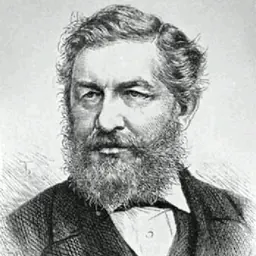

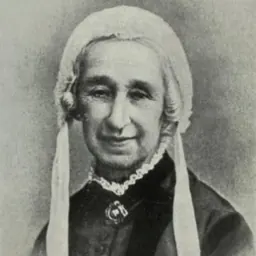
Contemporaries
People whose lives overlapped Charles Seager's






Frequently asked questions
Who was Charles Seager?
English orientalist 1808–1878
When was Charles Seager born?
Charles Seager was born on 17 January 1808.
When did Charles Seager die?
Charles Seager died on 17 January 1878.
Sources & further reading
· DBpedia: Charles Seager (orientalist)
Cite this page
APA: Biography.guide. (2026). Charles Seager. https://biography.guide/charles-seager/
MLA: "Charles Seager." Biography.guide, https://biography.guide/charles-seager/.
Chicago: "Charles Seager." Biography.guide. https://biography.guide/charles-seager/.
Data last updated: 2026-09-20 · Spot an error? Report a correction.
Page generated 2026-09-27 05:26 UTC