
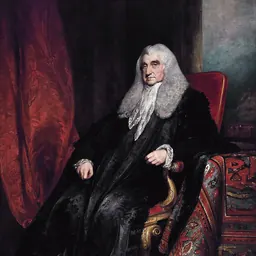
Charles Pratt, 1st Earl Camden
English lawyer, judge and Whig politician;
About Charles Pratt, 1st Earl Camden
Lived 1714 – 1794 (aged 80). Charles Pratt, 1st Earl Camden was a British judge, lawyer, politician and jurist.
Charles Pratt, 1st Earl Camden, PC (baptised 21 March 1714 – 18 April 1794) was an English lawyer, judge and Whig politician who was first to hold the title of Earl Camden. As a lawyer and judge he was a leading proponent of civil liberties, championing the rights of the jury, and limiting the powers of the State in leading cases such as Entick v Carrington.
He held the offices of Chief Justice of the Common Pleas, Attorney-General and Lord High Chancellor of Great Britain, and was a confidant of Pitt the Elder, supporting Pitt in the controversies over John Wilkes and American independence. However, he clung to office himself, even when Pitt was out of power, serving in the cabinet for fifteen years and under five different prime ministers.
During his life, Pratt played a leading role in opposing perpetual copyright, resolving the regency crisis of 1788 and championing Fox's Libel Bill. He started the development of the settlement that was later to become Camden Town in London.
Early life Born in Kensington in 1714, he was a descendant of an old Devon family of high standing, the third son of Sir John Pratt, Chief Justice of the King's Bench in the reign of George I. Charles's mother, Elizabeth, was the daughter of Rev. Hugh Wilson of Trefeglwys, and the aunt of landscape painter Richard Wilson. He received his early education at Eton, where he became acquainted with William Pitt, and King's College, Cambridge. He had already developed an interest in constitutional law and civil liberties.
He was further aided by an advantageous marriage on 5 October 1749 to Elizabeth, daughter of Nicholas Jeffreys of the Priory, Brecknock, by whom he had a son John Jeffreys, his successor in title and estates, and four daughters, of whom the eldest, Frances, married Robert Stewart, 1st Marquess of Londonderry on 7 June 1775. Pratt appeared in Owen's defence and his novel argument was that it was not the sole role of the jury to determine the fact of publication but that it was further their right to assess the intent of a libel. and John Shebbeare, a violent party writer of the day. Shebbeare had published a libel against the government contained in his Letters to the People of England, which were published in 1756–58. As evidence of Pratt's moderation in a period of passionate party warfare and frequent state trials, it is notable that this was the only official prosecution for libel that he started and that he maintained his earlier insistence that the decision lay with the jury. He led for the Crown in the prosecution of Laurence Shirley, 4th Earl Ferrers for the murder of a servant, a case that shocked European society. ) and Pratt condemned the use of general warrants for entry and search. Pratt pronounced with decisive and almost passionate energy against their legality, thus giving voice to the strong feeling of the nation and winning for himself an extraordinary degree of popularity as one of the maintainers of English civil liberties. Honours fell thick upon him in the form of addresses from the City of London and many large towns, and of presentations of freedom from various corporate bodies.
In 1762, the home of John Entick had been raided by officers of the Crown, searching for evidence of sedition. In the case of Entick v Carrington (1765), Pratt held that the raids were unlawful as they were without authority in statute or in common law.
The American Stamp Act crisis
On 17 July 1765 Pratt was created Baron Camden, of Camden Place, in Chislehurst, Kent, becoming a member of the House of Lords. Prime Minister Lord Rockingham had unsuccessfully made this, and other appointments, to curry favour with Pitt but Camden was not over-eager to get involved in the crisis surrounding the Stamp Act 1765. Camden did attend the Commons on 14 January 1766 and his subsequent speeches on the matter in the Lords are so similar to Pitt's that he had clearly adopted the party line. He was one of only five Lords who voted against the Declaratory Act 1766, a resolution of the House insisting on Parliament's right to tax colonies overseas. Camden insisted that taxation was predicated on consent and that consent needed representation. However, when he came to support the government over the act's repeal, he rather unconvincingly purported to base his opinion on the actual hardship caused by the act rather than its constitutional basis. Camden's support for the tax proposals would return to embarrass him.
The American crisis of 1774 The year 1774 brought a renewed crisis over America. The Boston Tea Party in 1773 led Lord North to seek a blockade of the city through the Boston Port Bill. Camden roundly criticised the taxes that had led to the American protests, as he had opposed them in Cabinet from 1767 to 1769, but was reminded that he was Lord Chancellor when they were imposed. The Chathamite faction went on to support the Bill and further to support the Massachusetts Government Act, Camden's inherent patriotism bringing him into line. However, by May, fears that the Bill would focus and strengthen American resistance led Camden to oppose the measure. Camden died a wealthy man, much of his wealth deriving from his wife.
By the 20th century, Camden's legal opinions were seen as subservient to Chatham's politics and Camden certainly followed the party line on Wilkes and America. However, his party loyalty was tempered by a self-serving interest in power. He served under five prime ministers and on two occasions clung to office after Chatham had resigned. In 1791 he laid out the land in plots and leased them for the construction of 1,400 houses, the beginnings of Camden Town.
The town of Camden, Maine in the United States, was named for him in 1791. This is one of several cities, towns, and counties bearing his name, including Camden, South Carolina, Camden, North Carolina, and Camden, New Jersey, as well as Camden Counties in New Jersey (of which the eponymous city is the seat and largest city), Missouri and Georgia. In turn, Camden, South Carolina gave its name both to the Battle of Camden and Camden, Alabama. Camden, Tennessee was named for the battle, and Camden, Arkansas took its name from the town in Alabama. Furthermore, Pratt Street, a major thoroughfare in Baltimore, is also named partially after him.
Cases Chapman v Pickersgill (1762) 2 Wilson 145, 146, "I wish never to hear this objection again. This action is for a tort: torts are infinitely various; not limited or confined, for there is nothing in nature but may be an instrument of mischief". Entick v Carrington (1765) 19 Howell's State Trials 1030, right to security and property without arbitrary official interference Donaldson v Beckett 98 ER 257 (1774)
Don’t just read it —
keep it.
Full-length biographies made to live with: read them, listen on the way to work, watch them tonight.
- E-book
- Audio
- Video
Instant download · yours to keep · every purchase keeps this site free
Important facts
People in Charles Pratt, 1st Earl Camden's life
Named in this biography and alive at the same time
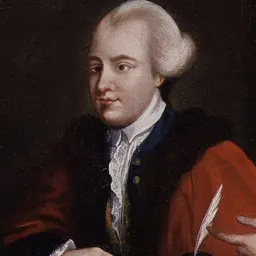

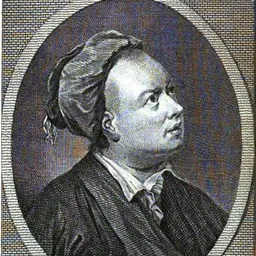
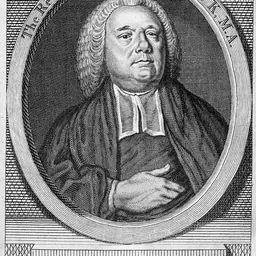

Related people
Same field, nearest in time


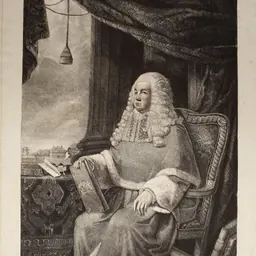

Contemporaries
People whose lives overlapped Charles Pratt, 1st Earl Camden's


Frequently asked questions
Who was Charles Pratt, 1st Earl Camden?
English lawyer, judge and Whig politician; (1714-1794)
When was Charles Pratt, 1st Earl Camden born?
Charles Pratt, 1st Earl Camden was born on 21 March 1714 in Kensington.
When did Charles Pratt, 1st Earl Camden die?
Charles Pratt, 1st Earl Camden died on 18 April 1794 in London.
What was Charles Pratt, 1st Earl Camden's occupation?
Charles Pratt, 1st Earl Camden was a judge, lawyer, politician and jurist.
What nationality was Charles Pratt, 1st Earl Camden?
Charles Pratt, 1st Earl Camden was British.
Sources & further reading
· Wikipedia: Charles Pratt, 1st Earl Camden
· DBpedia: Charles Pratt, 1st Earl Camden
Cite this page
APA: Biography.guide. (2026). Charles Pratt, 1st Earl Camden. https://biography.guide/charles-pratt-1st-earl-camden/
MLA: "Charles Pratt, 1st Earl Camden." Biography.guide, https://biography.guide/charles-pratt-1st-earl-camden/.
Chicago: "Charles Pratt, 1st Earl Camden." Biography.guide. https://biography.guide/charles-pratt-1st-earl-camden/.
Data last updated: 2026-09-20 · Spot an error? Report a correction.
Page generated 2026-09-27 05:32 UTC