
About Charles Porter
Lived 1631 – 1696 (aged 65). Charles Porter was an Irish politician and judge.
Sir Charles Porter (8 December 1696 ) was a flamboyant and somewhat controversial English-born politician and judge, who nonetheless enjoyed a highly successful career in Ireland. His mother was Mary (or Mawry), daughter of the eminent barrister and politician Sir Charles Chiborne (died 1619) of Messing Hall, Essex, and his first wife Jane Spilman, daughter of Thomas Spilman of Great Chart, Kent.
Much of what we know of his early life comes from his own colourful later account, given to his friend Roger North, which North believed to be largely true. After about five years he judged it safe to return home (his enemies said that he had no choice, as his business had failed).
He decided on a career in the law, perhaps recalling the great success of his grandfather Sir Charles Chiborne in that field. He entered Middle Temple in 1656 and was called to the Bar in 1663. His critics said that he was a poor lawyer, and his addiction to all forms of pleasure, especially drink, undoubtedly hampered his practice. (1675), one of several controversial cases on the claims of both Houses of Parliament to act as judges, Porter insisted on his right to argue against the alleged judicial powers of the House of Commons, even under threat of imprisonment for contempt of Parliament; in the event, he was sent to the Tower of London, but released after a few days. He attracted the favourable notice of several judges, especially Francis North, 1st Baron Guildford, who became a close friend of Porter and described him as "a man who had the good fortune to be universally loved". During the last years of Charles II, with Guildford, now Lord Keeper of the Great Seal, at the head of the judiciary, Porter was at the height of his professional success, and entered Parliament as member for Tregony in 1685. His earnings have been estimated at £1500 a year, which is reflected in the salary agreed for him as Lord Chancellor. Porter appears to have been the only member of the Dublin administration in whom the King confided, which suggests that James initially trusted him.
Last years
On the night of his acquittal, Porter became involved in an altercation with Robert Rochfort, the Speaker of the House of Commons and an implacable political opponent, who was evidently furious at the failure of the impeachment. Seeing the Chancellor's coach trying to pull ahead of his own, Rochfort, who had a great sense of his own dignity, jumped down and tried to physically prevent Porter's coachman from going ahead of him. Porter sensibly stayed out of this quarrel, but the following day at his request the Lords sent a protest to the Commons, who replied that no insult had been intended, and that indeed the night was so dark that Rochfort had not recognised Porter (the streets of Dublin then were notoriously dark and badly lit). The matter was allowed to drop. In 1695 Porter told Capel that he "could not bear it" if William Neave, the MP for Tulsk, a bitter political enemy who had been active in Porter's impeachment proceedings, were appointed Second Serjeant. Capel sharply retorted that he had allowed Porter to nominate his own protege, Sir Thomas Pakenham, as Prime Serjeant, as well as allowing Porter's own brother William to take silk. As regards Neave's role in the impeachment, Capel urged Porter, who was normally a magnanimous man, to forgive and forget, as he had already promised to do in his speech in his own defence. Neave was duly appointed Serjeant despite Porter's protests. and then Rev John Moore, fourth son of Henry Hamilton-Moore, 3rd Earl of Drogheda, and had issue by both marriages. Letitia (1678–1721), who married George Macartney; the celebrated statesman George Macartney, 1st Earl Macartney, was their grandson.
His brother William (1633–1716) followed him to Ireland, was called to the Irish Bar and became King's Counsel in 1695.
Four years after Porter's death, Parliament passed a motion to protect the property rights of his children. This seems to confirm the general belief that Porter died in a condition of considerable poverty, although his second wife was a wealthy heiress.
He died at his house in Chancery Lane, Dublin.
Character Porter's strong opinions and his refusal to compromise on his principles made him numerous enemies in the political sphere; yet in private life, according to Lord Guildford, he was universally loved as a man who was witty, generous, hospitable and magnanimous. His antipathy to William Neave caused some adverse comments, in a man normally very willing to forgive his political enemies. His fondness for drink and other forms of pleasure undoubtedly damaged his career, although his hospitality increased his popularity in Dublin: one enemy sourly blamed the failure of his impeachment on his "dinner guests" in the Commons.
He was a success as Lord Chancellor of Ireland, having a reputation for integrity and impartiality – despite criticisms from his English counterpart, John Somers, 1st Baron Somers, who wrote brutally that his death was a blessing for all concerned, a view heartily shared by Charles Talbot, 1st Duke of Shrewsbury. Those of a contrary view included William III, who normally regarded his Ministers with a complete lack of human emotion, but who went so far as to say on Porter's death that he "was sorry for the loss of a good Chancellor", and, as a rare mark of his regard, arranged for a grant of land to Porter's impoverished daughters, later confirmed by Parliament. Despite his chronic need of money Porter prided himself on not taking bribes. The second Earl of Clarendon, who had a very low opinion of the legal profession in general, said that Porter and their mutual friend Roger North were "the only two honest lawyers I ever knew". North himself praised Porter's many good qualities, including magnanimity, self-control and the cheerfulness with which he endured misfortune.
Don’t just read it —
keep it.
Full-length biographies made to live with: read them, listen on the way to work, watch them tonight.
- E-book
- Audio
- Video
Instant download · yours to keep · every purchase keeps this site free
Important facts
People in Charles Porter's life
Named in this biography and alive at the same time


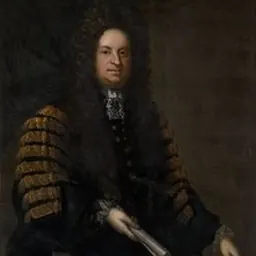

Related people
Same field, nearest in time

Contemporaries
People whose lives overlapped Charles Porter's





Frequently asked questions
Who was Charles Porter?
Irish politician (1631-1696)
When was Charles Porter born?
Charles Porter was born on 6 September 1631 in Norwich.
When did Charles Porter die?
Charles Porter died on 8 December 1696 in Dublin.
What was Charles Porter's occupation?
Charles Porter was a politician and judge.
What nationality was Charles Porter?
Charles Porter was Irish.
Sources & further reading
· DBpedia: Charles Porter (Lord Chancellor of Ireland)
Cite this page
APA: Biography.guide. (2026). Charles Porter. https://biography.guide/charles-porter-politician/
MLA: "Charles Porter." Biography.guide, https://biography.guide/charles-porter-politician/.
Chicago: "Charles Porter." Biography.guide. https://biography.guide/charles-porter-politician/.
Data last updated: 2026-09-20 · Spot an error? Report a correction.
Page generated 2026-09-27 05:09 UTC