
About Charles Peace
Lived 1832 – 1879 (aged 46). Charles Peace was a British robber, musician, burglar and murder.
Charles Peace (14 May 1832 – 25 February 1879) was an English burglar and murderer, who embarked on a life of crime after being injured in an industrial accident in a steelworks when he was 14 years old, when a hot steel rod entered his leg. He had a lifelong limp after the accident.
After killing a policeman in Manchester, he fled to his native Sheffield, where he became obsessed with his neighbour's wife, eventually fatally shooting her husband. Settling in London, he carried out multiple burglaries before being caught in the prosperous suburb of Blackheath, wounding the policeman who arrested him. He was linked to the Sheffield murder, and tried at Leeds Assizes. Found guilty, he was hanged at Armley Gaol. His story has inspired many authors and film makers.
Early life and crimes Charles Peace was born on 14 May 1832, in Darnall, Sheffield. He was the youngest son of shoemaker John Peace and his wife Jane, a naval surgeon's daughter. Peace attended schools in Pitsmoor, Dinnington and Paradise Square, before becoming an apprentice at Millsands in Sheffield. One, PC Nicholas Cock, intercepted him as he was trying to escape. Peace took out his revolver and warned Cock to stand back. The policeman came on. Peace fired, but deliberately wide of him. Cock drew his truncheon, and Peace fired again, this time seriously wounding Cock, who died on 2 August.
In the dark, Peace escaped; two brothers living nearby, John and William Habron, were arrested and charged with the killing of Constable Cock. At Manchester Assizes, John Habron was acquitted for lack of evidence, but William Habron was sentenced to death, later commuted to penal servitude for life. Peace made a point of attending the trial to confirm that he was not a suspect before returning to Darnall. He and his colleague Constable William Girling waited at the back window while their colleague Sergeant Charles Brown rang the bell and knocked on the front door. Peace tried to escape through the garden, and fired four shots at Robinson, who closed on him and managed to hold him, even though a fifth shot had passed through his arm.
Prosecution Peace was remanded for a week, in which he refused to give his name. However, while in captivity he wrote a letter to a business colleague who decided to co-operate with police. The colleague revealed its author as Peace, writing under his pseudonym John Ward. Under that name, he was tried at the Old Bailey for burglary and the attempted murder of PC Robinson. The evidence against the prisoner was clear, and he was sentenced by Justice Henry Hawkins to penal servitude for life.
From Pentonville prison, where he was serving his sentence, Peace was taken to Sheffield, where he appeared before the stipendiary magistrate at the Town Hall and was charged with the murder of Dyson. As Mrs Dyson's cross-examination was adjourned to the next hearing, Peace was taken back to London to await the second hearing. However, the hearing had to be adjourned for a further eight days: on the journey back to Sheffield, Peace jumped from the train near Kiveton Park and was found unconscious beside the track. According to another account, Peace only attempted to jump and was restrained by a warden.
Declared fit to stand trial, Peace appeared for his second examination before the magistrate. His solicitor, William Clegg, tried to prove that Mrs Dyson had been on more intimate terms with Peace than she was ready to admit, and that Dyson had been the aggressor in a struggle in which Peace had reacted in self-defence. Peace was buried in Armley Gaol. He was 46 years old.
Films and TV The Life of Charles Peace, (Sep' 1905, UK, b & w, silent, 14 '), by William Haggar, starred many members of Haggar's family. The Life of Charles Peace (Nov 1905, UK, b & w, silent) by Frank Mottershaw The Case of Charles Peace (1949, UK, b & w) by Norman Lee In the Beatles film, A Hard Day's Night, Paul's grandfather (Wilfrid Brambell) reports the arrest of Ringo to the studio by saying "The police have the poor lad in the Bridewell – he'll be pulp by now!" shortly after the police have referred to the cheeky Ringo as "Charlie Peace" suggesting that this usage refers to the Leeds Bridewell, allegedly haunted by the ghost of Charlie Peace. Peace is mentioned and features at Madame Tussauds museum in the 1969 Special Branch episode, 'You Don't Exist'.
Literature Anonymous, Charles Peace or, The Adventures of a Notorious Burglar, circa 1879–1880. London: G. Purkess. 100 parts. Mark Twain alludes to Peace's arrival in paradise in his story Extract from Captain Stormfield's Visit to Heaven. Ward, David (1963) King of the Lags: the Story of Charles Peace. London: Elek Books Wallace, Edgar (1931) The Devil Man (a fictionalised account of Peace's later career with some accurate details of his trials and execution—available from Project Gutenberg Australia) "The Astounding Adventures of Charlie Peace" was serialised in UK comic Buster in the 1960s and 1970s. Although initially set in the Victorian era, in one episode Charlie is sent through time to modern day London by an inventor who had disguised his time machine as a safe. Peace is mentioned by name in the Sherlock Holmes short story "The Adventure of the Illustrious Client". Charles Peace is mentioned in relation to the public's appetite for crime as entertainment in the P. G. Wodehouse novel A Gentleman of Leisure, also known as The Intrusion of Jimmy – "One of these days, we shall have Arthur playing Charles Peace to a cheering house." Also in Wodehouse's "The Pothunters": "Think how Charles Peace would have behaved under the circumstances." And in Wodehouse's Sam the Sudden in reference to the house that the protagonist Sam Shotter rents: "It may interest you to know that a very well-known criminal, a man who might be described as a second Charles Peace, once resided in the very house which you are renting." Peace is referenced in 'The Birds Fall Down', and 'The Fountain Overflows', by Rebecca West. Peace is referenced in 'The Lodger' by Marie Belloc Lowndes.
Music In 2018 Leeds pop group Steve Woods and the Hoods released the 'Sh*t Pub Sessions' EP featuring the song 'Charles Peace'.
Don’t just read it —
keep it.
Full-length biographies made to live with: read them, listen on the way to work, watch them tonight.
- E-book
- Audio
- Video
Instant download · yours to keep · every purchase keeps this site free
Important facts
People in Charles Peace's life
Named in this biography and alive at the same time



Related people
Same field, nearest in time
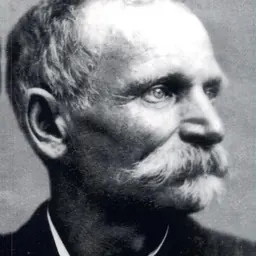



Contemporaries
People whose lives overlapped Charles Peace's



Frequently asked questions
Who was Charles Peace?
English burglar and murderer
When was Charles Peace born?
Charles Peace was born on 14 May 1832 in Darnall.
When did Charles Peace die?
Charles Peace died on 25 February 1879 in Armley Prison.
What was Charles Peace's occupation?
Charles Peace was a robber, musician, burglar and murder.
What nationality was Charles Peace?
Charles Peace was British.
Sources & further reading
Cite this page
APA: Biography.guide. (2026). Charles Peace. https://biography.guide/charles-peace/
MLA: "Charles Peace." Biography.guide, https://biography.guide/charles-peace/.
Chicago: "Charles Peace." Biography.guide. https://biography.guide/charles-peace/.
Data last updated: 2026-09-25 · Spot an error? Report a correction.
Page generated 2026-09-27 05:12 UTC