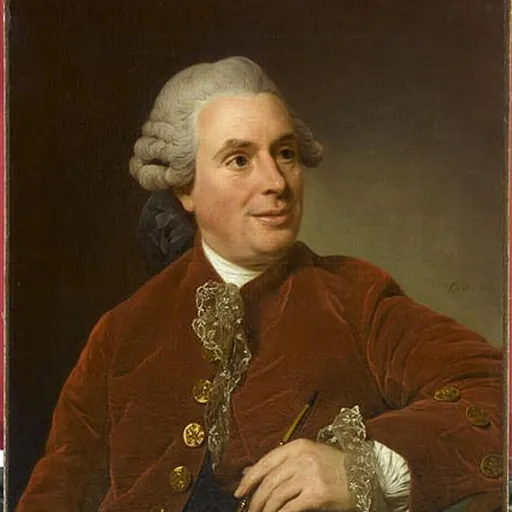
About Charles-Nicolas Cochin
Lived 1715 – 1790 (aged 75). Charles-Nicolas Cochin was a French painter, encyclopédistes, printmaker, graphic artist, writer and art critic.
Charles-Nicolas Cochin (22 February 1715 – 29 April 1790) was a French engraver, designer, writer, and art critic. To distinguish him from his father of the same name, he is variously called Charles-Nicolas Cochin le Jeune (the Younger), Charles-Nicolas Cochin le fils (the son), or Charles-Nicolas Cochin II.
Early life Abbey of Port-Royal-des-Champs, engraved by Cochin's mother Louise-Magdeleine Horthemels. Cochin was born in Paris, the son of Charles-Nicolas Cochin the Elder (1688–1754), under whom he studied engraving. His mother was Louise-Magdeleine Horthemels (1686–1767), who herself was an important engraver in Paris for some fifty years.
Beyond his artistic education, Cochin taught himself Latin, English, and Italian, and he read the work of the philosopher John Locke in the original. As well as both of his parents being engravers, his mother's two sisters, Marie-Nicole Horthemels (b. 1689, died after 1745) and Marie-Anne-Hyacinthe Horthemels (1682–1727), worked in the same field. while Marie-Anne-Hyacinthe was the wife of Nicolas-Henri Tardieu.
The Horthemels family, originally from The Netherlands, were followers of the Dutch theologian Cornelis Jansen and had links with the Parisian abbey of Port-Royal des Champs, the centre of Jansenist thought in France.
In 1749 Mme de Pompadour selected Cochin to accompany her brother Abel Poisson, the future marquis de Marigny, on a study tour of Italy, in the company of the architect Jacques-Germain Soufflot and the art-critic Jean-Bernard, abbé Le Blanc. Cochin, Soufflot and Marigny remained close friends on their return, when their considerable combined influence did much to bring about the triumph of Neoclassicism in France.
On his return in 1751 he was admitted a member of the Royal Academy of Painting and Sculpture, where he had been agréé since 1741. In 1752, following the death of Charles-Antoine Coypel, he was appointed as Coypel's successor as keeper of the king's drawings and given a lodging in the Louvre. From 1755 to 1770, he had the title of the King's administrator of the arts, and in this role he commissioned work from other artists, established programmes for the decoration of the king's palaces and chateaux, and granted pensions. the first illustrated account of the discoveries there, which largely caused the frescoes of Herculaneum to be disregarded. Editions of the work in English were published in 1753, 1756, and 1758, and in French in 1754, 1755 and 1757.
Cochin was able to influence the artistic taste of France
In 1755, he became Secretary (secrétaire historiographe) of the academy,
He was a frequent guest at the dinners given by Madame Geoffrin, and was said to speak brilliantly at them of painting and engraving.
King Louis XV rewarded Cochin's talents with a patent of nobility and membership of the Order of Saint Michael and granted him a pension. is in the Royal Library, now part of the Bibliothèque nationale.
Cochin's own compositions are usually rich, gracious, and speak of a man full of erudition.
Legacy In 1912, a typeface named Cochin, in honor of the artist, was designed by Georges Peignot. The style was inspired by Cochin's engravings, however, it is not a direct copy of those presented in the prints.
Publications
Cochin, Charles-Nicolas, Voyage d'Italie, ou recueil de notes sur les ouvrages de peinture et de sculpture qu'on voit dans les principales villes d'Italie (Paris, 1751, in 3 volumes) Cochin, Charles-Nicolas (with Bellicard, Jérôme-Charles), Observations upon the Antiquities of the Town of Herculaneum (London 1753, English edition, Paris 1754, French edition) Cochin, Charles-Nicolas, Recueil de quelques pièces concernant les arts, avec une dissertation sur l'effet de la lumière et des ombres relativement à la peinture (Paris, 1757, in 3 volumes) Cochin, Charles-Nicolas, Réflexions sur la critique des ouvrages exposés au Louvre (Paris, 1757) Cochin, Charles-Nicolas, Les Misotechnistes aux enfers, ou Examen critique des observations de N.D.L.G sur les arts (Amsterdam and Paris, 1763) Cochin, Charles-Nicolas (with Patte, Pierre, and Chaumont, chevalier de), Projet d'une salle de spectacle pour un théâtre de comédie (London and Paris, 1765, new edition Geneva, Minkoff, 1974) Cochin, Charles-Nicolas, Lettres sur les vies de M. Slodtz et de M. Deshays (Paris, 1765) Cochin, Charles-Nicolas, Lettre à une société d'amateurs prétendus (1769) Under the pseudonym of Jérôme, Réponse à M. Raphaël (Paris, 1769) Cochin, Charles-Nicolas, Les Amours rivaux, ou l'homme du monde (Paris, 1774) Cochin, Charles-Nicolas, Lettres sur l'Opéra (Paris, 1781) Cochin, Charles-Nicolas, Lettres à un jeune artiste peintre (undated)
Cochin's published and unpublished texts, including over six hundred surviving letters, and the lectures he gave at meetings of the academy, are listed by Michel. Tavernier, Ludwig, Das Problem der Naturnachahmung in den kunstkritischen Schriften Charles Nicolas Cochins (Hildesheim, Zürich, New York, 1983) Michel, Christian, Charles-Nicolas Cochin et le livre illustré au XVIIIe siècle: avec un catalogue raisonné des livres illustrés par Cochin 1735–1790 (Geneva, 1987) Michel, Christian (ed.), Le voyage d'Italie de Charles-Nicolas Cochin (1758) (Rome, École de France de Rome, 1991, 510 pp. incl. 57 illustrations) Michel, Christian, Charles-Nicolas Cochin et l'art des Lumières (École Française de Rome, 1993, 727 pp. incl. 69 illustrations) Foster, Carter E., Charles-Nicolas Cochin the Younger: The Philadelphia Portfolio in Philadelphia Museum of Art Bulletin, vol. 90, no. 381 (Summer, 1994), pp. 1–28,
Michel's Charles-Nicolas Cochin et l'art des Lumières (1993) was described in The Art Bulletin by a reviewer as "the most sophisticated study of any single figure of the 18th-century European art world known to me".
Don’t just read it —
keep it.
Full-length biographies made to live with: read them, listen on the way to work, watch them tonight.
- E-book
- Audio
- Video
Instant download · yours to keep · every purchase keeps this site free
Important facts
more
Charles Nicolas, le jeune Cochin, the younger Cochin, le fils Cochin, Charles Nicolas II Cochin, Charles Nicolas Cochin, M. Cochin, charles nicolaus cochin der jungere, Charles Nicolas Cochin d. J., Le Chevalier Cochin, CochinPeople in Charles-Nicolas Cochin's life
Named in this biography and alive at the same time

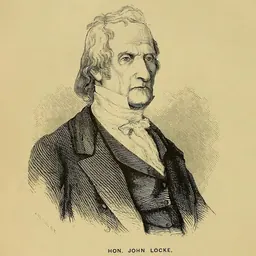
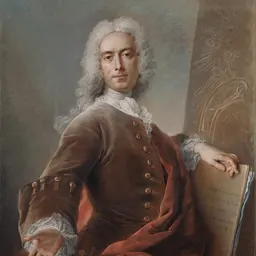

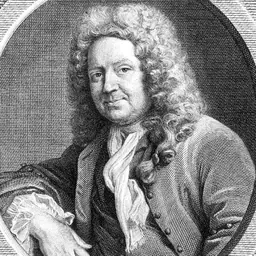

Related people
Same field, nearest in time
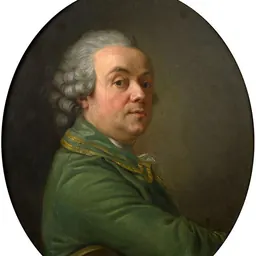
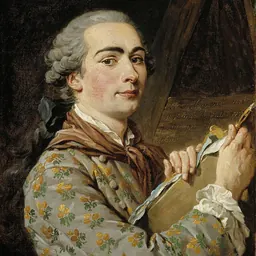

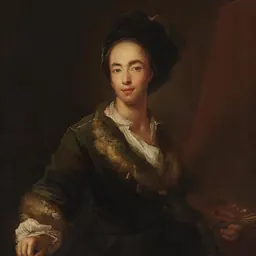
Contemporaries
People whose lives overlapped Charles-Nicolas Cochin's

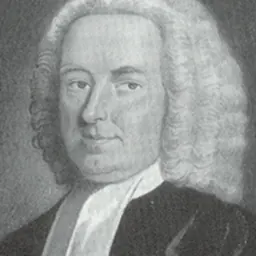



Frequently asked questions
Who was Charles-Nicolas Cochin?
French artist (1715–1790)
When was Charles-Nicolas Cochin born?
Charles-Nicolas Cochin was born on 22 February 1715 in Paris.
When did Charles-Nicolas Cochin die?
Charles-Nicolas Cochin died on 29 April 1790 in Paris.
What was Charles-Nicolas Cochin's occupation?
Charles-Nicolas Cochin was a painter, encyclopédistes, printmaker, graphic artist, writer and art critic.
What nationality was Charles-Nicolas Cochin?
Charles-Nicolas Cochin was French.
Sources & further reading
· Wikipedia: Charles-Nicolas Cochin
· DBpedia: Charles-Nicolas Cochin
Cite this page
APA: Biography.guide. (2026). Charles-Nicolas Cochin. https://biography.guide/charles-nicolas-cochin/
MLA: "Charles-Nicolas Cochin." Biography.guide, https://biography.guide/charles-nicolas-cochin/.
Chicago: "Charles-Nicolas Cochin." Biography.guide. https://biography.guide/charles-nicolas-cochin/.
Data last updated: 2026-09-22 · Spot an error? Report a correction.
Portrait: Wikimedia Commons · author & licence
Page generated 2026-09-27 05:02 UTC