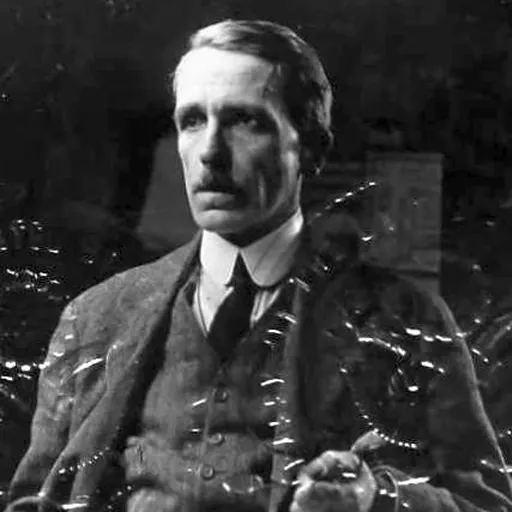
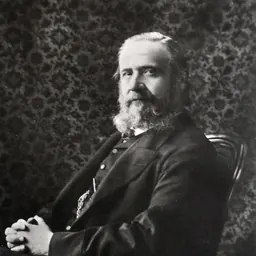
Charles Mills Sheldon
War correspondent, artist and book illustrator
About Charles Mills Sheldon
Lived 1866 – 1928 (aged 61). Charles Mills Sheldon was a war correspondent, illustrator and war artist.
Charles Mills Sheldon (24 June 186614 March 1928) was a war correspondent, artist, and book illustrator, born in the United States, who moved to Europe in 1890.
Early life Sheldon was born in Lawrenceburg, Indiana, on 24 June 1866 to George Wilbur Sheldon (11 November 18433 January 1922) and Jeanette Mills (c. 18472 February 1929). He was educated at public schools in Lawrenceburg and Des Moines. The 1880 census found him living at home with his parents at age 14, in Des Moines, Iowa. While Hogson states that his father was a publisher, the census return for both 1880 and 1910 gives his father's trade as a tinner, in a tin shop.
Work
After initially travelling the Southern United States to illustrate articles for the Associated Press in 1889, Sheldon moved to Paris where he studied at the Académie Julian under Jean-Joseph Benjamin-Constant and Jules Joseph Lefebvre. Among the magazines he illustrated were:
Pall Mall Budget The Ludgate Monthly (which was renamed a number of times) The Strand Magazine Black and White Frank Leslie's Illustrated Newspaper The Royal Magazine
Work as war correspondent He was a war correspondent for Black and White, and later for Leslie's for a number of conflicts, including:
The Jameson Raid (1895–1896), for which he famously packed and left within 17 minutes of getting notice. The raid was long over even before Sheldon set out, and his dispatches home included things like a picture of a gold mine in the Transvaal. Kitchener's campaign in the Anglo-Egyptian conquest of Sudan in 1886. This time he got 3 hours notice to pack, as a cablegram had got lost in the post office in Johannesburg for seven days. This campaign was also notable for the libel case between two war correspondents Knight and Attridge. In a letter home, Knight had accused Attridge of cowardice, and of abandoning the man he was sharing a hut with to death by cholera. Attridge sued and won damages of £1,000, an enormous sum at the time. Sheldon gave evidence at the trial. In Cuba for the Spanish–American War in 1898 In South Africa for the Second Boer War from 1899 on In India for the 1903 Delhi Durbar. His son Eugene later presented 156 photographs that Sheldon had taken at the time to the India Office Library.
Samples of illustrations from the Sudan campaign The following illustrations were drawn by Sheldon as war correspondent for Black and White for Kitchener's campaign for the Anglo-Egyptian conquest of Sudan. The days of the illustrator war correspondent were already numbered. Hodson notes that photography was becoming the dominant art and that this, and the redrawing of war correspondents' sketches to be more dramatic and photograph-like, was already leading to a falling-off in the quality of illustrations. Black and White was already redrawing some of Sheldon's sketches in this way. By the time of the campaign in Cuba, Sheldon was providing photographs for publication as well as sketches.
Work as a book illustrator Most of the books he illustrated were boys' adventure books; these illustrations frequently show fighting and conflict. Among the books he illustrated were:
1886: True to the Old Flag: A Tale of the American War of Independence by G. A. Henty 1899: Won by the Sword: A Tale of the Thirty Years' War by G.A. Henty 1899: The Four Miss Whittingtons by Geraldine Mockler 1900: In the Irish Brigade: A Tale of War in Flanders and Spain by G.A. Henty 1900: Under the Rebel's Reign: A Story of Egyptian Revolt by Charles Neufeld 1901: The Goddess of Excelsior by Bret Harte 1902: To Herat and Cabul, A Story of the First Afghan War by G.A. Henty 1903: In the grip of the mullah : A tale of adventure in Somaliland by Frederick Sadleir Brereton 1904: Tom Burnaby: A story of Uganda and the great Congo forest by Herbert Strang 1905: The Queen of Shindy Flat by Bessie Marchant 1906: !Tention: A Story of Boy-Life during the Peninsular War by George Manville Fenn 1907: On the Trail of the Arabs: A Story of Heroic Deeds in Africa by Herbert Strang 1908: The island traders: A tale of the South Seas by Alexander Macdonald 1910: John Bargreave's Gold. A tale of adventures in the Caribbean by F.S. Brereton 1911: The Invisible Island - A Story of the Far North of Queensland by Alexander MacDonald 1912: Under the Chinese dragon: A tale of Mongolia. by F.S. Brereton 1912: Captured at Tripoli: A tale of adventure by Percy F. Westerman 1912: The Nameless Prince: A tale of Plantagenet days by Grace I. Whitham 1914: Pioneers in Tropical America by Harry Johnston 1914: Edgar the Ready: A Tale of the Third Edward's Reign by W. P. Shervill 1914: The King's Knight: A tale of the days of King Edward III by Grace I. Whitham 1915: A sturdy young Canadian by Frederick Sadleir Brereton 1915: Chaloner of the Bengal Cavalry: A Tale of the Indian Mutiny by Percival Lancaster
Sample of book illustration The following illustrations were drawn by Sheldon for Under the Chinese dragon: A tale of Mongolia (by F.S. Brereton)
Marriage and family Sheldon married Grace Mary Garland (1868–1935), a childhood friend, at St George Hanover Square on 26 November 1896. He had just returned from the Sudan where he had been a war correspondent. Grace was the daughter of Eugene Fitch (1846–1918) an inventor, who invented, among other things an early mechanical digital clock. and Fannie Garland (1848–1902).
The couple had at least two children:
Grace Jeanette Sheldon (1899–1915). Eugene Fitch Mills Sheldon (1905–1991) who married Jean Raymond (1914–) in Paris on 27 July 1934. The couple had a son, born in Zug, Switzerland in 1936. His mother died at his home in Zug in 1935. She was probably living with him there as her most recent passport had been issued in Zürich on 17 May 1934.
The 1901 census found Sheldon with his wife and daughter at 3 Bath Road in Chiswick, London, which was still his address on the electoral register some 12 years later.
Death Sheldon died on 14 March at Chiswick Hospital in Chiswick, London. He was living at 45a Fairfax Road, Bedford Park, Chiswick, London at the time. His effects were valued at £1,417 12s 5d. His widow was still living at this address in 1930.
Don’t just read it —
keep it.
Full-length biographies made to live with: read them, listen on the way to work, watch them tonight.
- E-book
- Audio
- Video
Instant download · yours to keep · every purchase keeps this site free
Important facts
People in Charles Mills Sheldon's life
Named in this biography and alive at the same time




Related people
Same field, nearest in time


Contemporaries
People whose lives overlapped Charles Mills Sheldon's


Frequently asked questions
Who was Charles Mills Sheldon?
war correspondent, artist and book illustrator (1866-1928)
When was Charles Mills Sheldon born?
Charles Mills Sheldon was born on 24 June 1866 in Lawrenceburg.
When did Charles Mills Sheldon die?
Charles Mills Sheldon died on 14 March 1928 in Chiswick, London.
What was Charles Mills Sheldon's occupation?
Charles Mills Sheldon was a war correspondent, illustrator and war artist.
Sources & further reading
· Wikipedia: Charles Mills Sheldon
· DBpedia: Charles Mills Sheldon
Cite this page
APA: Biography.guide. (2026). Charles Mills Sheldon. https://biography.guide/charles-mills-sheldon/
MLA: "Charles Mills Sheldon." Biography.guide, https://biography.guide/charles-mills-sheldon/.
Chicago: "Charles Mills Sheldon." Biography.guide. https://biography.guide/charles-mills-sheldon/.
Data last updated: 2026-09-22 · Spot an error? Report a correction.
Page generated 2026-09-27 05:10 UTC