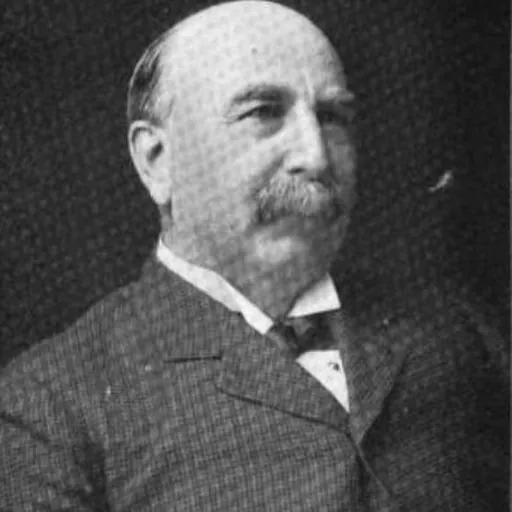
About Charles Miller
Lived 1843 – 1927 (aged 84). Charles Miller was an American businessperson.
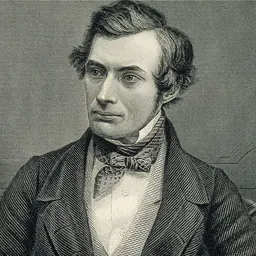
Charles Miller (June 15, 1843 – December 21, 1927) was a Pennsylvania businessman, philanthropist and Major General of the Pennsylvania Army National Guard. He commanded the organization now known as the 28th Infantry Division and was a founder of the Galena-Signal Oil Company, which later became part of the Standard Oil combine, and then part of the corporations now known as Texaco and Valvoline.
Early life Charles Miller was born in Oberhoffen-sur-Moder, Alsace, France, on June 15, 1843. His family emigrated to the United States in 1855, settling in Boston, New York. Miller began a business career by clerking in stores and working as a sewing machine salesman.
In 1861 he joined the New York National Guard's Company A, 74th Infantry Regiment. The unit performed guard duty along the border with Canada in Pennsylvania and New York to deter Confederate raids from the north (as happened during the St. Albans Raid). He served until the end of the Civil War, and turned down an Army commission despite having performed well on the competitive examination. Afterwards Miller remained active in the Grand Army of the Republic.
Business career Recognizing the potential of the fledgling oil industry, in the late 1860s Miller moved to Franklin, Pennsylvania, and organized the Galena Oil Company in partnership with his brother in law Joseph C. Sibley. This venture, which eventually became the Galena-Signal Oil Company, played a key role in replacing animal-fat based lubricants in business and industry, and grew to become the primary supplier of lubricating oil to the railroad industry. He served as the company president until 1919. Galena-Signal eventually became a Standard Oil subsidiary, and then part of the conglomerates now known as Texaco (1928) and Valvoline (1931).
In addition to the oil business, Miller expanded his interests to include founding the Jamestown, Franklin and Clearfield Railroad, a subsidiary of the New York Central Railroad, of which he served as president. He was also president of other railroads, president and chairman of the board of directors for American Steel Foundries, and owned several Franklin businesses, including a bank, newspaper, a machine shop, and several farms.
In 1919 Miller left Galena-Signal and became chairman of the board of the Home Oil Refining Company of Texas.
Political career Originally a Republican, Miller served as Mayor of Franklin in 1885 and 1886. He later advocated temperance and became a member of the Prohibition Party.
Miller also served in appointive offices, including member of the board of trustees of the Pennsylvania Soldiers' and Sailors' Home.
Philanthropy Miller made charitable contributions throughout his hometown. He operated a night school at his own expense to enable Franklin residents to finish high school or receive training in business skills, and also made substantial donations to the local Baptist church, of which he was a founder, the YMCA, and the local library.
In addition, Miller served as a trustee of Bucknell University, where he endowed a fellowship.
Military career In 1880 Miller returned to military service as ordnance officer of the Pennsylvania National Guard's 2nd Brigade with the rank of major, where he served under commander James A. Beaver. He continued to serve on the brigade staff until 1898, when he was selected to command the brigade and promoted to brigadier general.
In 1900 Miller was appointed commander of the organization now known as the 28th Infantry Division and promoted to major general. He served as commander until retiring from the military in 1906.
Awards and honors Miller received an honorary Master of Arts degree from Bucknell University in 1896.
To recognize Miller's contributions to business and industry, in 1901 the government of France awarded him the Legion of Honor (Chevalier).
Death Miller remained active in his business and charitable interests almost until his death. He suffered a stroke in December, 1927 and remained in a coma for several days until his death on December 20. He was buried at Franklin Cemetery in Franklin.
Family In 1863 Miller married Ann Adelaide Sibley, the sister of Joseph C. Sibley. Their children included Adelaide Sibley Miller; Clarence A. Miller; Charles Joseph Sibley Miller; Henry S. Miller; Leroy S. Miller; Julius French Miller and Metta Evalina Miller. Charles Miller and his first wife later divorced, and in 1905 he married Emma Bulen. In 1910, the marital discord between Miller and his second wife was the subject of national headlines. Charles and Emma Miller later reconciled. The second Mrs. Miller died in Chicago in 1928.
Don’t just read it —
keep it.
Full-length biographies made to live with: read them, listen on the way to work, watch them tonight.
- E-book
- Audio
- Video
Instant download · yours to keep · every purchase keeps this site free
Important facts
People in Charles Miller's life
Named in this biography and alive at the same time

Related people
Same field, nearest in time


Contemporaries
People whose lives overlapped Charles Miller's
Frequently asked questions
Who was Charles Miller?
American businessman (1843-1927)
When was Charles Miller born?
Charles Miller was born on 15 June 1843 in Oberhoffen-sur-Moder.
When did Charles Miller die?
Charles Miller died on 21 December 1927 in Franklin.
What was Charles Miller's occupation?
Charles Miller was a businessperson.
What nationality was Charles Miller?
Charles Miller was American.
Sources & further reading
· DBpedia: Charles Miller (businessman)
Cite this page
APA: Biography.guide. (2026). Charles Miller. https://biography.guide/charles-miller-businessperson/
MLA: "Charles Miller." Biography.guide, https://biography.guide/charles-miller-businessperson/.
Chicago: "Charles Miller." Biography.guide. https://biography.guide/charles-miller-businessperson/.
Data last updated: 2026-09-20 · Spot an error? Report a correction.
Page generated 2026-09-27 05:10 UTC