
About Charles-Michel de l'Épée
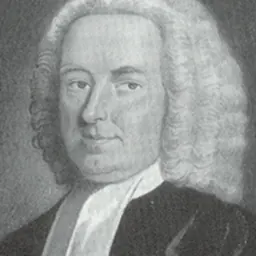
Lived 1712 – 1789 (aged 77). Charles-Michel de l'Épée was a French presbyter, educator and pedagogue.
Charles-Michel de l'Épée (; 24 November 1712 – 23 December 1789) was an 18th-century French Catholic priest and philanthropic educator who advocated for sign language as the preferred method of teaching deaf people, and has become known as the "Father of the Deaf". He founded the Institut National de Jeunes Sourds de Paris, the first public school for the deaf, in 1760.
Overview Charles-Michel de l'Épée was born to a wealthy family in Versailles, the seat of political power in what was then the most powerful kingdom of Europe. He studied to be a Catholic priest.
L'Épée then turned his attention toward charitable services for the poor, and, on one foray into the slums of Paris, he had a chance encounter with two young deaf sisters who communicated using a sign language. L'Épée decided to dedicate himself to the education of the deaf, and, in 1760, he founded a school. Deaf people were banned by the Catholic Church from receiving communion, but in line with emerging philosophical thought of the time, l'Épée came to believe that deaf people were capable of language and concluded that they should be able to receive the sacraments and thus avoid going to hell. He began to develop a system of instruction of the French language and religion. In the early 1760s, his shelter became the world's first free school for the deaf, open to the public.
Though L'Épée's original interest was in religious education, his public advocacy and development of a kind of "Signed French" enabled deaf people to legally defend themselves in court for the first time.
L'Épée died at the beginning of the French Revolution in 1789, and his tomb is in the Church of Saint Roch in Paris. He was succeeded by Roch-Ambroise Cucurron Sicard, who became the new head of the school.
Two years after L'Épée's death, the National Assembly recognised him as a "Benefactor of Humanity" and declared that deaf people had rights according to the Declaration of the Rights of Man and of the Citizen. In 1791, the Institution Nationale des Sourds-Muets à Paris, which L'Épée had founded, began to receive government funding. It was later renamed the Institut St. Jacques and then renamed again to its present name: Institut National de Jeunes Sourds de Paris. His methods of education have spread around the world, and l'Épée is seen today as one of the founding fathers of deaf education.
The Instructional Method of Signs (signes méthodiques) L'Épée's signes méthodiques are represented on his funeral monument in the Church of St. Roch, Paris The Instructional Method of Signs is an educational method that emphasised using gestures or hand signs, based on the principle that "the education of deaf mutes must teach them through the eye of what other people acquire through the ear." He recognised that there was already a signing deaf community in Paris but saw their language (now known as Old French Sign Language) as primitive. Although he advised his (hearing) teachers to learn the signs (lexicon) for use in instructing their deaf students, he did not use their language in the classroom. Instead, he developed an idiosyncratic gestural system using some of this lexicon, combined with other invented signs to represent all the verb endings, articles, prepositions, and auxiliary verbs of the French language.
In English, L'Épée's system has been known as "Methodical Signs"
Educational legacy At the time of l'Épée's death, there were six schools established around France for deaf children and by 1866, there were fifty-four – all using sign language as the mode of instruction. Their methods were closely guarded secrets, and they saw Épée as a rival. The oralism vs. manualism debate still rages to this day. Oralism is sometimes called the German method, and manualism the French method in reference to those times.
The Paris school still exists, though it now uses French Sign Language in class rather than Épée's methodical signs. Located in rue Saint-Jacques in Paris, it is one of four national deaf schools—the others being in Metz, Chambéry, and Bordeaux.
Myths Even now, L'Épée is commonly described as the inventor of sign language or as having "taught the deaf to sign". In fact, he was taught to sign by the deaf. L'Épée categorised and recorded French signs so they could be taught to others in order to be used in education, especially about the Christian faith.
Tribute On 24 November 2018, Google Doodle commemorated his 306th birthday.
Published works
He also began a Dictionnaire général des signes, which was completed by his successor, Roch-Ambroise Cucurron Sicard.
Don’t just read it —
keep it.
Full-length biographies made to live with: read them, listen on the way to work, watch them tonight.
- E-book
- Audio
- Video
Instant download · yours to keep · every purchase keeps this site free
Important facts
People in Charles-Michel de l'Épée's life
Named in this biography and alive at the same time
Related people
Same field, nearest in time



Contemporaries
People whose lives overlapped Charles-Michel de l'Épée's





Frequently asked questions
Who was Charles-Michel de l'Épée?
French priest and educator of the deaf
When was Charles-Michel de l'Épée born?
Charles-Michel de l'Épée was born on 24 November 1712 in Versailles.
When did Charles-Michel de l'Épée die?
Charles-Michel de l'Épée died on 23 December 1789 in Paris.
What was Charles-Michel de l'Épée's occupation?
Charles-Michel de l'Épée was a presbyter, educator and pedagogue.
What nationality was Charles-Michel de l'Épée?
Charles-Michel de l'Épée was French.
Sources & further reading
· Wikipedia: Charles-Michel de l'Épée
· DBpedia: Charles-Michel de l'Épée
Cite this page
APA: Biography.guide. (2026). Charles-Michel de l'Épée. https://biography.guide/charles-michel-de-l-epee/
MLA: "Charles-Michel de l'Épée." Biography.guide, https://biography.guide/charles-michel-de-l-epee/.
Chicago: "Charles-Michel de l'Épée." Biography.guide. https://biography.guide/charles-michel-de-l-epee/.
Data last updated: 2026-09-20 · Spot an error? Report a correction.
Page generated 2026-09-27 05:21 UTC