
Charles Macklin
Irish actor and playwright who introduced natural acting
About Charles Macklin
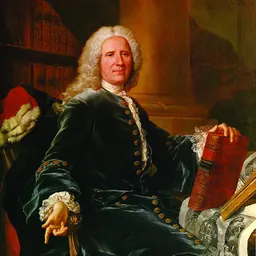
Lived 1699 – 1797 (aged 97). Charles Macklin was an Irish actor, playwright, stage actor, theatre manager and writer.
Charles Macklin (26 September 1699 – 11 July 1797), born as Cathal MacLochlainn (English: Charles McLaughlin), was an Irish actor and dramatist who performed extensively at the Theatre Royal, Drury Lane. Macklin revolutionised theatre in the 18th century by introducing a "natural style" of acting. He is also famous for accidentally killing a man during a fight over a wig at the same theatre.
Macklin was born in Inishowen in the north of County Donegal in Ulster, the northern province in Ireland. He was raised in Dublin, where he attended school in Islandbridge after his father's death and his mother's remarriage. Macklin became known for his many performances in the tragedy and comedy genre of plays. He gained his greatest fame in the role of Shylock in The Merchant of Venice. Macklin enjoyed a long career which was often steeped in controversy before dying aged 97.
Early life It is thought that Macklin was born in 1690 near Culdaff, a village in the north-east of Inishowen in the north of County Donegal in Ulster, the northern province in Ireland, and that he moved to Great Britain in either 1725 or 1726; the dates in his early life are not entirely clear. According to William Archer in Eminent Actors, "at his death, Macklin was believed to be 97, but his biographers have endeavoured to show that he was at least 107. The main lines of controversy are to be found in the 3 biographies of Congreve, Kirkman, and Cook". Thomas Kirkman and William Cooke, in Eminent Actors, assert that "William MacLochlainn, father of Charles Macklin, had a daughter and a son, who were born two months prior to the Battle of the Boyne, which took place in 1690". Given this information, this would make Macklin 107 years old at his death. However, in his own words, he was born 'in the last year of the last century', making the year 1699 the year of his birth. In fact, The Monthly Mirror of February 1796, a year before his death, stated that: "Macklin, according to this statement, must be in his hundred and sixth year, or thereabouts, whereas he is in fact no more than ninety-seven". According to William Archer, author of Eminent Actors, there "were no registers of births, deaths, and marriages kept in Ireland in 1690".
Given this information, we must once again go with the very words of Macklin himself who quoted "that he was born in the last year of the last century". His early life may remain a mystery, but we can be certain of his age at death. His family's surname was McLaughlin, but "seeming somewhat uncouth to the pronunciation of an English tongue", he changed it for the English stage. He found various jobs as an actor in London, but, apparently, his Ulster accent was an obstacle to success and he could not find a steady theatre home until he was noticed in a small character role in Henry Fielding's Coffee-House Politician at Lincoln's Inn Fields in 1725. It was after that fine performance, that would go unnoticed by a lesser actor, that he was snatched up by the Theatre Royal on Drury Lane as an actor and a resident acting manager, serving with James Quin. Their relationship was professional, but full of plenty of animosity. Macklin devotes a lengthy section of his memoirs to Quin, giving examples of their disagreements. Macklin admits that "nothing but the necessity of business could ever make them associate together". Even the necessity of business sometimes dissolved; however, after some contract and pay disagreements in the 1741–42 season, Macklin and nearly the entire Drury Lane resident company left and attempted to find work elsewhere.
Shylock and other roles Macklin's most important role, the one that catapulted him to stardom in eighteenth-century London, was Shylock in The Merchant of Venice on 14 February 1741. He opened a tavern at which he gave a nightly lecture followed by a debate, which Macklin called the British Inquisition.
Macklin returned to the stage, but finally retired in 1789, when he found he was no longer able to recall the entire part of Shylock. renamed The Irish Fine Lady for its English production, was a hit in Ireland, but a flop in England. Macklin observed: "I believe the audience are right. There's a geography in humour as well as in morals, which I had not previously considered." Brian Friel used the play as the basis for his one-act The London Vertigo produced in Dublin in 1992.
Introduction of naturalistic acting Macklin revolutionised acting in the 18th century by introducing a natural style of acting, being the first actor of his generation to break away from the old declamatory style. Due to this emphasis on speaking, rehearsal time was short, stage movement was standardised, and actors often spoke directly to the audience rather than characters onstage. Wilson and Goldfarb go on to say that there were a few innovators who were "opposed to the emphasis on declamation, stereotypical positions of performers onstage, and singsong delivery of verse; they wanted to create individual characters, and they wanted to have more careful rehearsal procedures". Appleton adds that "while he concentrated primarily on achieving clear and natural diction, he stressed as well the importance of mastering variety of tone and pause to indicate transitions of thought and associations of ideas". Macklin taught his students three fundamental pauses: moderate, longer, and grand. Each type of pause served an important function depending on the scene.
Macklin was one of the forerunners to stress the need to regularise rehearsals. Appleton states that "actors, compelled by the repertory system to know scores of parts, generally relied on conventional attitudes, gestures, and tones to carry them through a performance and felt little enthusiasm for this discipline. Sometimes they were absent from rehearsals. Often they arrived late, stumbled through their lines and drifted away". Macklin was not only concerned about his individual actors, but with the whole production, and so everyone had to come prepared and on time. This led to a relentless discipline unmatched in other students at the time. For the rest of his life, Macklin would continue to train his students with such intensity and passion and through them, make an important contribution to the English Theatre.
Marriages During the 1730s Macklin was involved in a relationship with an Irish actress. Her name was thought to be Ann Grace or Ann Grace Purvor. Ann died on 28 December 1758 and he began an affair with his servant Elizabeth Jones, of Chester, whose age was matched to that of his daughter. They were married either on 13 February 1778, ; sources differ.
Legal problems Macklin lived a tempestuous life, often involved in lawsuits, sometimes acting as his own lawyer. In 1735 he quarrelled with a fellow actor named Thomas Hallam, whom he accidentally killed by thrusting his cane through Hallam's eye. The pair had argued over a wig whilst performing a new farce, Trick for Trick. The incident occurred in the Scene Room of the Theatre Royal, Drury Lane, in front of many witnesses, and Macklin, after the sudden fit of temper, was sorry and arranged for a physician to attend to Hallam. The cane had pierced through Hallam's eye into his brain and he died one day later. Macklin was tried for murder, conducted his own defence and, though not acquitted, escaped with manslaughter. The punishment for manslaughter was the branding of a letter 'M' upon the hand, by this period not with a hot but with a cold iron, although there is no evidence that this was actually carried out on Macklin. In 1772 he sued the organizers of a riot among the theatregoers who had demanded that he be fired. He recovered £600, but chose to accept instead the defendants' purchase of £100 in tickets at three benefits for himself, his daughter and the management.
Don’t just read it —
keep it.
Full-length biographies made to live with: read them, listen on the way to work, watch them tonight.
- E-book
- Audio
- Video
Instant download · yours to keep · every purchase keeps this site free
Important facts
Family & relationships
People in Charles Macklin's life
Named in this biography and alive at the same time

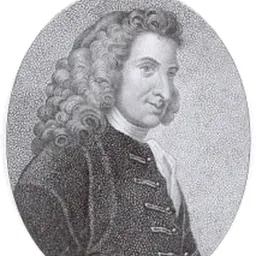
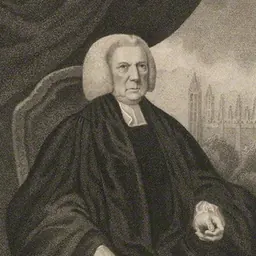
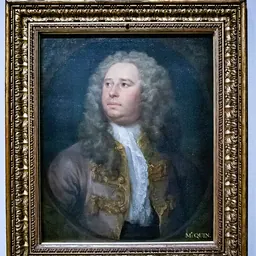
Related people
Same field, nearest in time




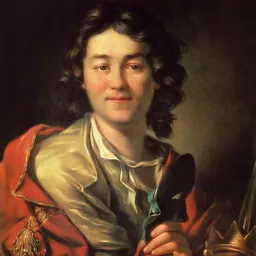
Contemporaries
People whose lives overlapped Charles Macklin's

Frequently asked questions
Who was Charles Macklin?
Irish actor and playwright who introduced natural acting
When was Charles Macklin born?
Charles Macklin was born on 26 September 1699 in County Donegal.
When did Charles Macklin die?
Charles Macklin died on 11 July 1797 in London.
What was Charles Macklin's occupation?
Charles Macklin was an actor, playwright, stage actor, theatre manager and writer.
What nationality was Charles Macklin?
Charles Macklin was Irish.
Sources & further reading
Cite this page
APA: Biography.guide. (2026). Charles Macklin. https://biography.guide/charles-macklin/
MLA: "Charles Macklin." Biography.guide, https://biography.guide/charles-macklin/.
Chicago: "Charles Macklin." Biography.guide. https://biography.guide/charles-macklin/.
Data last updated: 2026-09-26 · Spot an error? Report a correction.
Page generated 2026-09-27 05:14 UTC