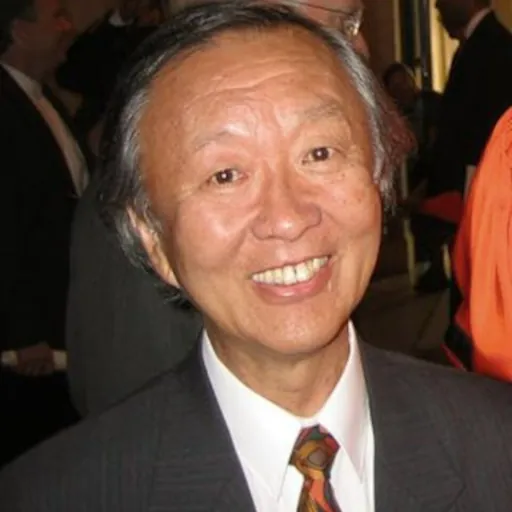
About Charles K. Kao
Lived 1933 – 2018 (aged 84). Charles K. Kao was a Chinese, British and American physicist, inventor, entrepreneur, electrical engineer, scientist and university teacher, known for Fiber optics and Fiber-optic communication.
Sir Charles Kuen Kao (November 4, 1933 – September 23, 2018) was a Hong Kong electrical engineer who contributed to the development and use of fibre optics in telecommunications. In the 1960s, Kao created various methods to combine glass fibres with lasers in order to transmit digital data, which laid the groundwork for the evolution of the Internet and the eventual creation of the World Wide Web.
Born in 1933 in Shanghai, Kao and his family settled in Hong Kong in 1949. He graduated from St. Joseph's College in Hong Kong in 1952 and went to London to study electrical engineering. In the 1960s, he worked at Standard Telecommunication Laboratories, the research center of Standard Telephones and Cables (STC) in Harlow, and it was here in 1966 that he laid the groundwork for fibre optics in communication. Known as the "godfather of broadband," the "father of fibre optics," and the "father of fibre optic communications," he continued his work in Hong Kong at the Chinese University of Hong Kong, and in the United States at ITT (the parent corporation of STC) and Yale University.
In 2009, Kao was awarded the Nobel Prize in Physics "for groundbreaking achievements concerning the transmission of light in fibres for optical communication." The following year, he was knighted by Queen Elizabeth II "for services to fibre-optic communications."
Kao was a permanent resident of Hong Kong, and a citizen of the United Kingdom and the United States. that was founded by a number of progressive Chinese educators, including Cai Yuanpei.
After the Communist Revolution in 1949, Kao's family settled in Hong Kong, which at the time was a British crown colony. Much of his mother's siblings moved to Hong Kong in the late 1930s. Among them, his mother's youngest brother took good care of him.
Kao's family lived on Lau Sin Street at the edge of the North Point, a neighbourhood of Shanghai immigrants.
Kao obtained high score in the Hong Kong School Certificate Examination, which at the time was the territory's matriculation examination, qualifying him for admission to the University of Hong Kong (HKU). However, electrical engineering wasn't a programme available at HKU, the territory's then only tertiary education institution. He then pursued doctoral research under Harold Barlow at University College London (UCL) while working at Standard Telecommunication Laboratories in Harlow, the research centre of Standard Telephones and Cables (STC).
Ancestry and family Kao's father , He was a judge at the Shanghai Concession and later a professor at Soochow University (then in Shanghai) Comparative Law School of China.
His grandfather Kao Hsieh was a scholar, poet, and artist. Several writers including Kao Hsü, , and were also Kao's close relatives.
His father's cousin was astronomer Kao Ping-tse (Kao crater is named after him ). Kao's younger brother Timothy Wu Kao is a civil engineer and professor emeritus at the Catholic University of America; his research is in hydrodynamics.
Kao met his future wife Gwen May-Wan Kao (née Wong; ) in London after graduation, when they worked together as engineers at STC. She was British Chinese. They were married in 1959 in London, and had a son and a daughter, both of whom reside and work in Silicon Valley, California. According to Kao's autobiography, Kao was a Catholic who attended Catholic Church, while his wife attended the Anglican Communion.
In the 1960s at Standard Telecommunication Laboratories (STL) based in Harlow, Essex, England, Kao and his coworkers did their pioneering work in creating fibre optics as a telecommunications medium, by demonstrating that the high-loss of existing fibre optics arose from impurities in the glass, rather than from an underlying problem with the technology itself.
In 1963, when Kao first joined the optical communications research team he made notes summarising the background situation and available technology at the time, and identifying the key individuals Later that year, Kao was appointed head of the electro-optics research group at STL. He took over the optical communication program of STL in December 1964, because his supervisor, Karbowiak, left to take the chair in Communications in the School of Electrical Engineering at the University of New South Wales (UNSW), Sydney, Australia.
Although Kao succeeded Karbowiak as manager of optical communications research, he immediately decided to abandon Karbowiak's plan (thin-film waveguide) and overall change research direction with his colleague George Hockham. This study proposed the use of glass fibres for optical communication. The concepts described, especially the electromagnetic theory and performance parameters, are the basis of today's optical fibre communications.
In 1965, Efn|Some sources show around 1964, for example, "By 1964, a critical and theoretical specification was identified by Dr. Charles K. Kao for long-range communication devices, the 10 or 20 dB of light loss per kilometer standard." from Cisco Press. However, at the time of this determination, optical fibres commonly exhibited light loss as high as 1,000 dB/km and even more. This conclusion opened the intense race to find low-loss materials and suitable fibres for reaching such criteria.
Kao, together with his new team (members including T. W. Davies, M. W. Jones and C. R. Wright), pursued this goal by testing various materials. They precisely measured the attenuation of light with different wavelengths in glasses and other materials. During this period, Kao pointed out that the high purity of fused silica (SiO2) made it an ideal candidate for optical communication. Kao also stated that the impurity of glass material is the main cause for the dramatic decay of light transmission inside glass fibre, rather than fundamental physical effects such as scattering as many physicists thought at that time, and such impurity could be removed. This led to a worldwide study and production of high-purity glass fibres. When Kao first proposed that such glass fibre could be used for long-distance information transfer and could replace copper wires which were used for telecommunication during that era, his ideas were widely disbelieved; later people realized that Kao's ideas revolutionized the whole communication technology and industry.
Kao also played a leading role in the early stage of engineering and commercial realization of optical communication. He subsequently traveled to Japan and gained support.
Kao developed important techniques and configurations for glass fibre waveguides, and contributed to the development of different fibre types and system devices which met both civil and military application requirements, and peripheral supporting systems for optical fibre communication. In mid-1970s, he did seminal work on glass fibre fatigue strength. Kao has published more than 100 papers and was granted over 30 patents,
At an early stage of developing optic fibres, Kao already strongly preferred single-mode for long-distance optical communication, instead of using multi-mode systems. His vision later was followed and now is applied almost exclusively. Kao was also a visionary of modern submarine communications cables and largely promoted this idea. He predicted in 1983 that world's seas would be littered with fibre optics, five years ahead of the time that such a trans-oceanic fibre-optic cable first became serviceable.
Ali Javan's introduction of a steady helium–neon laser and Kao's discovery of fibre light-loss properties now are recognized as the two essential milestones for the development of fibre-optic communications.
Kao was Vice-Chancellor of the Chinese University of Hong Kong from 1987 to 1996. From 1991, Kao was an Independent Non-Executive Director and a member of the Audit Committee of the Varitronix International Limited in Hong Kong. From 1993 to 1994, he was the President of the Association of Southeast Asian Institutions of Higher Learning (ASAIHL). In 1996, Kao donated to Yale University, and the Charles Kao Fund Research Grants was established to support Yale's studies, research and creative projects in Asia. The fund currently is managed by Yale University Councils on East Asian and Southeast Asian Studies. After his retirement from CUHK in 1996, Kao spent his six-month sabbatical leave at the Department of Electrical and Electronic Engineering of Imperial College London; from 1997 to 2002, he also served as visiting professor in the same department.
Kao was chairman and member of the Energy Advisory Committee (EAC) of Hong Kong for two years, and retired from the position on July 15, 2000. Kao was a member of the Council of Advisors on Innovation and Technology of Hong Kong, appointed on April 20, 2000. In 2000, Kao co-founded the Independent Schools Foundation Academy, which is located in Cyberport, Hong Kong. He was its founding chairman in 2000, and stepped down from the board of the ISF in December 2008. In 2003, Kao was named a Chair Professor by special appointment at the Electronics Institute of the College of Electrical Engineering and Computer Science, National Taiwan University.
Later life and death Kao's international travels led him to opine that he belonged to the world instead of any country. An open letter published by Kao and his wife in 2010 later clarified that "Charles studied in Hong Kong for his high schooling, he has taught here, he was the Vice-Chancellor of CUHK and retired here too. So he is a Hong Kong belonger."
Pottery making was a hobby of Kao's. Kao also enjoyed reading Wuxia (Chinese martial fantasy) novels.
Kao suffered from Alzheimer's disease from early 2004 and had speech difficulty, but had no problem recognising people or addresses. His father suffered from the same disease. Beginning in 2008, he resided in Mountain View, California, United States, where he moved from Hong Kong in order to live near his children and grandchild. he said, "I am absolutely speechless and never expected such an honor." Kao's wife Gwen told the press that the prize will primarily be used for Charles's medical expenses. In 2010 Charles and Gwen Kao founded the Charles K. Kao Foundation for Alzheimer's Disease to raise public awareness about the disease and provide support for the patients.
In 2016, Kao lost the ability to maintain his balance. At the end-stage of his dementia he was cared for by his wife and intended not to be kept alive with life support or have CPR performed on him. Kao died at Bradbury Hospice in Hong Kong on September 23, 2018, at the age of 84.
Recognition Awards Year Organisation Award Citation 1977 Franklin Institute Stuart Ballantine Medal "Conceptual studies of lightguide communications using laser generated light waves guided in a hair-thin glass fiber for transmitting messages." 1978 IEEE IEEE Morris N. Liebmann Memorial Award "For making communication at optical frequencies practical by discovering, inventing and developing the materials, techniques and configurations for glass fiber waveguides." 1978 Rank Foundation Rank Prize for Optoelectronics "For their outstanding contribution to research into the properties of clad optical fibres and their subsequent successful development leading to the commercial production of such fibres which are playing an increasing role into the field of communications." 1985 Marconi Society Marconi Prize "For being instrumental in contributing toward a revolution in communication techniques in the form of optical fiber technology." 1985 IEEE IEEE Alexander Graham Bell Medal "For pioneering contributions to optical fiber communications." 1987 NEC C&C Foundation C&C Prize "For Pioneering Contributions to the Realization of Optical Fiber Communications as the First to point out Theoretically the Feasibility and Significance of Low-loss Glass Fiber." 1989 Institution of Electrical Engineers Faraday Medal — 1989 American Physical Society International Prize for New Materials "For their contributions to the materials research and development that resulted in practical low loss optical fibers, one of the cornerstones of optical communications technology." 1992 SPIE SPIE Gold Medal — 1996 Japan Prize Foundation Japan Prize "For pioneering research on wideband, low-loss optical fiber communications." 1996 Royal Academy of Engineering Prince Philip Medal — 1999 National Academy of Engineering Charles Stark Draper Prize "For development of fiber-optic technology." 2009 Royal Swedish Academy of Sciences Nobel Prize in Physics "For groundbreaking achievements concerning the transmission of light in fibers for optical communication." 1989 Hong Kong Computer Society Distinguished Fellow 1989 Royal Academy of Engineering Fellow 1990 National Academy of Engineering Member 1992 Academia Sinica Academician 1994 Hong Kong Institution of Engineers Honorary Fellow 1994 Hong Kong Academy of Engineering Sciences Honorary Fellow 1997 Royal Society Fellow
Honorary degrees Year University Degree 1990 National Chiao Tung University Doctor of Engineering 1994 Durham University Doctor of Science 1998 University of Hull Doctor of Science 1999 Yale University Doctor of Science 2002 University of Greenwich Doctor of Science 2005 University of Toronto Doctor of Laws 2010 University College London Doctor of Science 2011 University of Hong Kong Doctor of Science
Chivalric titles Year Head of state Title 1993 Elizabeth II Commander of the Order of the British Empire 2010 Elizabeth II Knight Commander of the Order of the British Empire
Commemoration The landmark auditorium in the Hong Kong Science Park was named after Kao on December 30, 2009.
The minor planet 3463 Kaokuen, discovered in 1981, was named after Kao in 1996. 1996 (November 7): The north wing of the Chinese University of Hong Kong Science Center was named the Charles Kuen Kao Building. 2009 (December 30): The landmark auditorium in the Hong Kong Science Park was named after Kao – the Charles K. Kao Auditorium. 2010 (March 18): Professor Charles Kao Square, a square of the Independent Schools Foundation Academy 2014 (September): Sir Charles Kao UTC (now known as BMAT STEM Academy) was opened. 2014: Kao Data, a data center operator based on the former site of Sir Charles Kao's work on fibre optics cables, was founded.
Others Featured in Science Museum London Hong Kong Affairs Adviser (May 1994 – June 30, 1997) Advisor of the Macao Science and Technology Council 1999: Asian of the Century, Science and Technology 2002: Leader of the Year – Innovation Technology Category, Sing Tao, Hong Kong October 21, 2002: Inducted into the Engineering Hall of Fame, the 50th Anniversary Issue, Electronic Design January 3, 2008: Inducted into the Celebration 60, British Council's 60th anniversary in Hong Kong November 4, 2009: Honorary citizenship, and the "Dr. Charles Kao Day" in Mountain View, California, U.S. 2009: Hong Kong's Person of the Year The Top 10 Asian Achievements of 2009 – No. 7 2010 (February): Honoree, Committee of 100, U.S. The 2010 OFC/NFOEC Conferences were dedicated to Kao, March 23–25, San Diego, California, U.S. May 14–15, 2010: Two sessions were dedicated to Kao at the 19th Annual Wireless and Optical Communications Conference (WOCC 2010), Shanghai, P.R. China. May 22, 2010: Inducted into the memento archive of the 2010 Shanghai World Expo Mid-2010: Hong Kong Definitive Stamp Sheetlet (No. 1), Hong Kong March 25, 2011: Blue plaque unveiled in Harlow, Essex, U.K. November 4, 2014: Gimme Fibre Day on Kao's birthday, FTTH Councils Global Alliance November 4, 2021, Google celebrated Kao's birthday with a Google Doodle. The binary output in the graphic spells out 'KAO' when converted to ASCII.
Works Optical Fiber Technology; by Charles K. Kao. IEEE Press, New York, U.S.; 1981. Optical Fiber Technology, II; by Charles K. Kao. IEEE Press, New York, U.S.; 1981, 343 pages. . Optical Fiber Systems: Technology, Design, and Applications; by Charles K. Kao. McGraw-Hill, U.S.; 1982; 204 pages. . Optical Fibre (IEE materials & devices series, Volume 6); by Charles K. Kao. Palgrave Macmillan on behalf of IEEE; 1988; University of Michigan; 158 pages. A Choice Fulfilled: the Business of High Technology; by Charles K. Kao. The Chinese University Press/ Palgrave Macmillan; 1991, 203 pages. Tackling the Millennium Bug Together: Public Conferences; by Charles K. Kao. Central Policy Unit, Hong Kong; 48 pages, 1998. Technology Road Maps for Hong Kong: a Preliminary Study; by Charles K. Kao. Office of Industrial and Business Development, The Chinese University of Hong Kong; 126 pages, 1990. Nonlinear Photonics: Nonlinearities in Optics, Optoelectronics and fibre Communications; by Yili Guo, Kin S. Chiang, E. Herbert Li, and Charles K. Kao. The Chinese University Press, Hong Kong; 2002, 600 pages.
Don’t just read it —
keep it.
Full-length biographies made to live with: read them, listen on the way to work, watch them tonight.
- E-book
- Audio
- Video
Instant download · yours to keep · every purchase keeps this site free
Important facts
more
Sir Charles Kao KuenPeople in Charles K. Kao's life
Named in this biography and alive at the same time
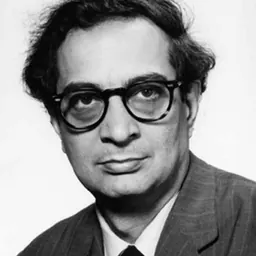
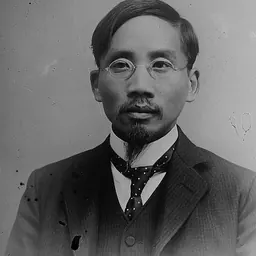
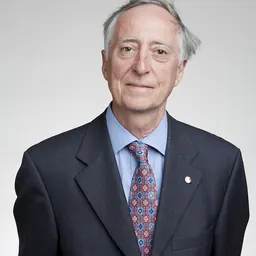



Related people
Same field, nearest in time


Contemporaries
People whose lives overlapped Charles K. Kao's



Frequently asked questions
Who was Charles K. Kao?
Hong Kong-British-American physicist
When was Charles K. Kao born?
Charles K. Kao was born on 4 November 1933 in Shanghai.
When did Charles K. Kao die?
Charles K. Kao died on 23 September 2018 in Bradbury Hospice.
What was Charles K. Kao's occupation?
Charles K. Kao was a physicist, inventor, entrepreneur, electrical engineer, scientist and university teacher.
What was Charles K. Kao known for?
Charles K. Kao was known for Fiber optics and Fiber-optic communication.
What nationality was Charles K. Kao?
Charles K. Kao was Chinese, British and American.
Sources & further reading
Cite this page
APA: Biography.guide. (2026). Charles K. Kao. https://biography.guide/charles-k-kao/
MLA: "Charles K. Kao." Biography.guide, https://biography.guide/charles-k-kao/.
Chicago: "Charles K. Kao." Biography.guide. https://biography.guide/charles-k-kao/.
Data last updated: 2026-09-20 · Spot an error? Report a correction.
Portrait: Wikimedia Commons · author & licence
Page generated 2026-09-27 05:29 UTC