
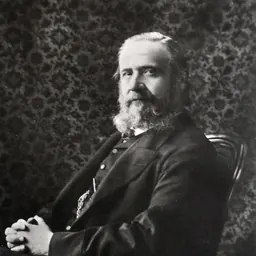
About Charles James Briggs
Lived 1865 – 1941 (aged 76). Charles James Briggs was a British military personnel.
Early life and military career The son of Charles James Briggs, a colonel in the British Army, of Hylton Castle, then in County Durham, the younger Briggs was born on 22 October 1865. He was educated privately in France and Germany before entering the Royal Military College at Sandhurst, Berkshire. It was from here where he received his commission as a subaltern, with the rank of lieutenant, into the 1st Dragoon Guards (later the 1st King's Dragoon Guards) in January 1886. an appointment he held until the following year. Promoted to captain on 1 March 1893, he became adjutant of his regiment in November 1894 and brigade adjutant of the 4th Cavalry Brigade in April 1897, He was awarded the Queen Victoria Diamond Jubilee Medal, in connection with the Diamond Jubilee celebrations in June 1897. All of these appointments "were the mark of a coming man". This role marked his "first experience of active service," which would "bring him considerable distinction." He was also promoted to the substantive rank of major, backdated to 14 June 1902. For his service in the conflict, Briggs was mentioned in dispatches twice and awarded the Queen's South Africa Medal with five clasps and the King's South Africa Medal with two clasps.
With the war now over, he left Cape Town on the SS Sicilia and returned to Southampton, Hampshire, in late July. Reported to be medically unfit for foreign service after his return from the war, he was on 1 November appointed in command of a provisional regiment of lancers, then stationed at Ballincollig, Ireland. He transferred as a major to the 6th Dragoons in July 1904 "usually the sign of someone being fast-tracked for promotion", and was promoted to lieutenant colonel in May 1905, while serving on half-pay.
Briggs returned to South Africa later in 1905 to serve as commander of the Transvaal Volunteers. While serving in this role, he played a prominent role in suppressing the Bambatha Rebellion of 1906. He was also mentioned in despatches and awarded the Natal Native Rebellion Medal with the '1906' clasp. After ceasing to command the volunteers in May 1908, and after returning to Britain, he was once more placed on half-pay.
He returned to normal pay and active service in November 1910 when he was appointed to command the South Eastern Mounted Brigade of the newly created Territorial Force (TF). Briggs commanded the Blue Cavalry in the Army Manoeuvres of 1912, during which it "was Briggs who persuaded a somewhat reluctant Grierson to employ aircraft for reconnaissance, allowing Grierson to worst his rival, Douglas Haig. This may not have been a wise career move". In May 1913 he relinquished command of his TF brigade and took over as general officer commanding (GOC) of the 1st Cavalry Brigade, a Regular Army formation, in succession to Colonel Charles Kavanagh. He was raised to the temporary rank of brigadier general while employed in this role.
First World War France and Belgium Still GOC after the British entry into World War I in August 1914, Briggs led his brigade, which now formed part of Major General Edmund Allenby's Cavalry Division (later the 1st Cavalry Division) to France later that month with the first elements of the British Expeditionary Force (BEF). to the rank of major general, for his distinguished conduct in the war so far. He remained in command of his 1st Cavalry Brigade until 7 May, when he succeeded Major General The Hon. Julian Byng as GOC of the 3rd Cavalry Division. and appointed GOC of XVI Corps. In May he was made a Commander of the Legion of Honour by the government of France. Throughout most of 1917, he directed a series of aggressive localized raids at Homondos, Bairakli, and Kumli to pin down Bulgarian forces and maintain a secure outpost line. His command culminated in the final Allied offensive of September 1918. During the breakthrough, Briggs's XVI Corps launched critical diversionary attacks near Lake Doiran and the Struma River, which successfully prevented the Bulgarian Second Army from shifting reinforcements to the main point of attack. These actions contributed to the general collapse of the Bulgarian front and the subsequent Armistice of Salonica, which knocked Bulgaria out of the war.
Post-war and retirement In January 1919, Briggs was promoted to the substantive rank of lieutenant general as a reward "for distinguished service in connection with Military Operations in Salonika". He relinquished command of XVI Corps in February in order to become chief of the British military mission to South Russia, serving as the primary liaison to Lieutenant-General Anton Denikin, C-in-C of the Armed Forces of South Russia. During this tenure, he oversaw the coordination of British technical assistance and supplies for the White Army during the Russian Civil War. He relinquished this assignment in June and returned to Britain, remaining on special duty at the War Office in London.
He was heavily decorated by various foreign nations for his services both during and after the war; in June 1919 he was appointed a Grand Officer of the Order of the White Eagle with Swords (Serbia) and the Order of the White Eagle (Russia); he was awarded the War Cross with Palm (Greece) in July, and in August the Medal of Military Merit, 1st Class (Greece).
He remained in this post until his retirement from the army in February 1923, He held this position throughout the remainder of the interwar period until finally relinquishing the role on 31 December 1939, almost four months after the outbreak of the next Second World War.
Personal life Briggs married Rosamund Daphne Ryder, the second daughter of Mr C. F. Ryder of the Hall, Thurlow, Suffolk, with whom he had a daughter. He died at the age of 76 on 27 November 1941 at his home, the Manor House in Wickhambrook, near Newmarket, Suffolk.
Don’t just read it —
keep it.
Full-length biographies made to live with: read them, listen on the way to work, watch them tonight.
- E-book
- Audio
- Video
Instant download · yours to keep · every purchase keeps this site free
Important facts
People in Charles James Briggs's life
Named in this biography and alive at the same time



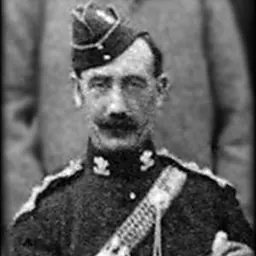

Related people
Same field, nearest in time


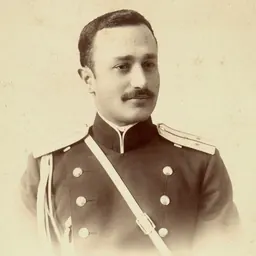



Contemporaries
People whose lives overlapped Charles James Briggs's

Frequently asked questions
Who was Charles James Briggs?
British Army officer
When was Charles James Briggs born?
Charles James Briggs was born on 22 October 1865 in Hylton Castle.
When did Charles James Briggs die?
Charles James Briggs died on 27 November 1941 in Wickhambrook.
What was Charles James Briggs's occupation?
Charles James Briggs was a military personnel.
What nationality was Charles James Briggs?
Charles James Briggs was British.
Sources & further reading
· Wikipedia: Charles James Briggs
· DBpedia: Charles Briggs (British Army officer)
Cite this page
APA: Biography.guide. (2026). Charles James Briggs. https://biography.guide/charles-james-briggs/
MLA: "Charles James Briggs." Biography.guide, https://biography.guide/charles-james-briggs/.
Chicago: "Charles James Briggs." Biography.guide. https://biography.guide/charles-james-briggs/.
Data last updated: 2026-09-20 · Spot an error? Report a correction.
Page generated 2026-09-27 05:32 UTC