
About Charles-Irénée Castel de Saint-Pierre
Lived 1658 – 1743 (aged 85). Charles-Irénée Castel de Saint-Pierre was a French writer and author.
Charles-Irénée Castel, abbé de Saint-Pierre (18 February 1658 – 29 April 1743) was a French writer.
Biography In 1718, Saint-Pierre published Discours sur la polysynodie, where he proposed that appointed ministers be replaced by elected councils. As a consequence of his criticism of the policy of Louis XIV (died 1715) he was expelled from the Académie later the same year.
In 1723, with Pierre-Joseph Alary he founded the Club de l'Entresol, an early modern think tank in Paris; the club was closed for political reasons in 1731.
He died in Paris on 29 April 1743.
Ideas Saint-Pierre's works are centered on an acute and visionary criticism of politics, law and social institutions. He had a great influence on Rousseau, who left elaborate examinations of some of them, and was a forerunner of Kant's 1795 essay on perpetual peace. His was published in 1713 in Utrecht, where he was acting as secretary to the French plenipotentiary, the Abbé de Polignac, and his contained severe strictures on the government of Louis XIV, with projects for the administration of France by a system of councils for each department of government. His works include a number of memorials and projects for stopping duelling, equalizing taxation, treating mendicancy, reforming education and spelling, etc. It was not, however, for his suggestions for the reform of the constitution that he was disgraced, but because in the he had refused to Louis XIV the title of .
Saint-Pierre was one of the first to mention the possibility of a European union made by independent and autonomous states. His work on a European community directly inspired the idea of an international order based on the principle of collective self-defense, and was important to the creation of the Concert of Europe, and later the League of Nations, whose successor is the United Nations Organisation. Friederich the Great of Prussia, writing to Voltaire about the Projet pour rendre la paix perpétuelle en Europe, stated that: "The Abbe de Saint-Pierre has sent me a fine work on how to re-establish peace in Europe. The thing is very practicable. All it lacks to be successful, is the consent of all Europe and a few other such small details."
Works
Printed books Ouvrages de morale et de politique. Rotterdam: J.-D. Beman; Paris: Briasson, 1733–1740 Projet pour rendre la paix perpétuelle en Europe. Utrecht: A. Schouten, 1713 A lasting peace through the federation of Europe; and, The state of war English translation Discours sur la polysynodie. Amsterdam: Du Villard & Changuion, 1719 Projet pour perfectionner l'éducation. Paris: Briasson, 1728 Abrégé du projet de paix perpétuelle. Rotterdam: J.-D. Bernan, 1729. An Abridged Version of the Project for Perpetual Peace, ed. Roderick Pace, trans. Carmen Depasquale. Valletta: Midsea Books, 2009. De la douceur. Amsterdam: Briasson, 1740 André Robinet (ed.), Correspondance G. W. Leibniz, Ch. I. Castel de Saint-Pierre, Paris: Centre de philosophie du droit, 1995.
Correspondence Saint-Pierre exchanged letters with a number of luminaries of his time, including Voltaire. His letters often ended with the formula "Paradise to those who do good".
Don’t just read it —
keep it.
Full-length biographies made to live with: read them, listen on the way to work, watch them tonight.
- E-book
- Audio
- Video
Instant download · yours to keep · every purchase keeps this site free
Important facts
People in Charles-Irénée Castel de Saint-Pierre's life
Named in this biography and alive at the same time
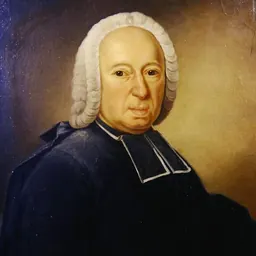
Related people
Same field, nearest in time



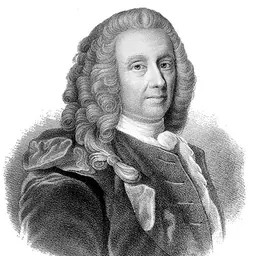

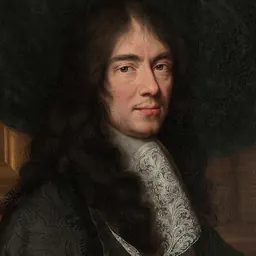
Contemporaries
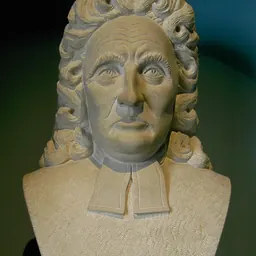
People whose lives overlapped Charles-Irénée Castel de Saint-Pierre's



Frequently asked questions
Who was Charles-Irénée Castel de Saint-Pierre?
French author
When was Charles-Irénée Castel de Saint-Pierre born?
Charles-Irénée Castel de Saint-Pierre was born on 13 February 1658 in Saint-Pierre-Église.
When did Charles-Irénée Castel de Saint-Pierre die?
Charles-Irénée Castel de Saint-Pierre died on 29 April 1743 in Paris, rue du Faubourg-Saint-Honoré.
What was Charles-Irénée Castel de Saint-Pierre's occupation?
Charles-Irénée Castel de Saint-Pierre was a writer and author.
What nationality was Charles-Irénée Castel de Saint-Pierre?
Charles-Irénée Castel de Saint-Pierre was French.
Sources & further reading
· Wikipedia: Charles-Irénée Castel de Saint-Pierre
· DBpedia: Charles-Irénée Castel de Saint-Pierre
Cite this page
APA: Biography.guide. (2026). Charles-Irénée Castel de Saint-Pierre. https://biography.guide/charles-irenee-castel-de-saint-pierre/
MLA: "Charles-Irénée Castel de Saint-Pierre." Biography.guide, https://biography.guide/charles-irenee-castel-de-saint-pierre/.
Chicago: "Charles-Irénée Castel de Saint-Pierre." Biography.guide. https://biography.guide/charles-irenee-castel-de-saint-pierre/.
Data last updated: 2026-09-22 · Spot an error? Report a correction.
Page generated 2026-09-27 05:24 UTC