
About Charles Hoole
Lived 1610 – 1667 (aged 56–57). Charles Hoole was an English pedagogue, translator, philologist and teacher.
Charles Hoole (1610–1667) was an English cleric and educational writer. He produced a visually-improved English translation of the Orbis Pictus of Comenius, a year after its original publication in 1658.
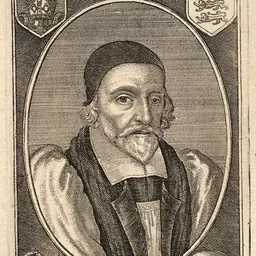
Life The son of Charles Hoole of Wakefield in Yorkshire, he was born there. He was educated at Wakefield free school, and at Lincoln College, Oxford, where he proceeded B.A. on 12 June 1634 and M.A. on 7 July 1636. Robert Sanderson, a relative, helped him get a place at Oxford, and continued through life to support him.
Hoole took holy orders around 1632, and through the influence of Sanderson was appointed master of Rotherham free school. He became rector of Great Ponton, Lincolnshire in 1642, at the outbreak of the First English Civil War but was sequestrated from the living by Parliament. L. Culmann's Sentences for Children … translated into English, 1658. From the Sententiæ pueriles of Leonhard Culmann. J. A. Commenii, Orbis Sensualium pictus … translated as "The Visible World", 1659. Pueriles Confabulatiunculæ. Children's Talk. English and Latin, 1659. Catonis disticha de Moribus, with Dicta septem sapientum Græciæ, 1659. From the Distichs of Cato.
Centuria Epistolarum. Anglo-Latinarum, ex Tritissimis Classicis Authoribus … A Century of Epistles, 1660. Based on Cicero, it covers letter composition in both Latin and English. New Discovery of the Old Art of Teaching School, 1660. Examinatio Grammaticæ Latinæ in usum Scholarum adornatæ, 1660. An edition of the New Testament in Greek, 1664. P. Terentii Comœdiæ Sex Anglo-Latinæ, 1676. The Common Accidence Examined and Explained by Short Questions and Answers, 1679. Æsop's Fables. English and Latin, 1700.
Views on pedagogy For the upper school forms Hoole recommended a rhetoric text, derived from the Rhetorica of Audomarus Talaeus in the edition by Charles Butler. It was the Rhetorices Elementa (1648) of William Dugard. He advocated the traditional approach of having pupils converse in Latin, but it was dying out by the end of his career. Alongside Latin poetry, he introduced pupils to contemporary poetry in English: George Herbert, Francis Quarles, and Ovid in the translation of George Sandys.
Don’t just read it —
keep it.
Full-length biographies made to live with: read them, listen on the way to work, watch them tonight.
- E-book
- Audio
- Video
Instant download · yours to keep · every purchase keeps this site free
Important facts
People in Charles Hoole's life
Named in this biography and alive at the same time




Related people
Same field, nearest in time



Contemporaries
People whose lives overlapped Charles Hoole's




Frequently asked questions
Who was Charles Hoole?
British educationist
When was Charles Hoole born?
Charles Hoole was born in 1610 in Wakefield.
When did Charles Hoole die?
Charles Hoole died in 1667.
What was Charles Hoole's occupation?
Charles Hoole was a pedagogue, translator, philologist and teacher.
What nationality was Charles Hoole?
Charles Hoole was English.
Sources & further reading
Cite this page
APA: Biography.guide. (2026). Charles Hoole. https://biography.guide/charles-hoole/
MLA: "Charles Hoole." Biography.guide, https://biography.guide/charles-hoole/.
Chicago: "Charles Hoole." Biography.guide. https://biography.guide/charles-hoole/.
Data last updated: 2026-09-20 · Spot an error? Report a correction.
Page generated 2026-09-27 05:10 UTC