
Charles Henry Pearson
British-born Australian historian, educationist, politician and journalist
About Charles Henry Pearson
Lived 1830 – 1894 (aged 63). Charles Henry Pearson was a British sports journalist, politician, head teacher and historian.
Charles Henry Pearson (7 September 1830 – 29 May 1894)
Academic career In 1855, Pearson became lecturer in English language and literature at King's College, London, and shortly afterward was given the professorship in modern history. The salary was not large, and Pearson did a good deal of writing for the Saturday Review, the Spectator, and other London weekly reviews. In 1862, he was editor of the National Review for a year. He travelled in Russia in 1858 and in 1863 spent some time in Poland. In 1864, as a result of ill health and depressed by his failure to be appointed Oxford University's inaugural Chichele Professor of Modern History and his low salary at King's College, he took a year off in South Australia. He attempted to establish a 640 acres (259 ha) sheep station near Mount Remarkable but was beaten by severe drought and returned to England.
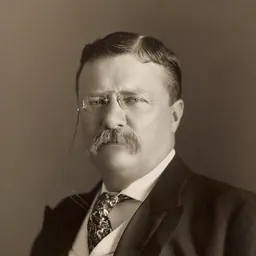
Pearson remained a private member until 18 February 1886 when he became Minister of Public Instruction and created an international sensation. Theodore Roosevelt wrote to Pearson to praise the book; Prime Minister William Ewart Gladstone recommended it highly, and the late nineteenth century English novelist George Gissing read it in January 1896.
Pearson's book caused a shock because it challenged the conventional wisdom about Western expansion, progress and triumph. Pearson argued that the "Black and Yellow" races were in the ascendant, as they were powered by population increase and, in the case of the Chinese, industrial capacity. He argued the so-called higher races, under the impact of declining birth rates and state socialism, had become "stationary." Colonized and otherwise subordinated peoples would soon escape relations of 'tutelage' and become self-governing states active on the world stage. Pearson was a prophet of decolonization and was immediately seen as such, with great attention paid to his theme of the white man under siege.
The argument strongly reinforced demands for a White Australia policy.
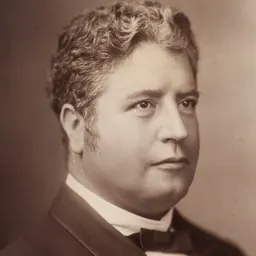
In August 1902 Prime Minister Edmund Barton, spoke in parliament in support of the White Australia policy; he quoted Pearson's disturbing forecast: "The day will come, and perhaps is not far distant, when the European observer will look round to see the globe girdled with a continuous zone of the black and yellow races, no longer too weak for aggression or under tutelage, but independent, or practically so, in government, monopolising the trade of their own regions, and circumscribing the industry of the Europeans; when Chinamen and the natives of Hindostan, the states of Central and South America, by that time predominantly Indian . . . are represented by fleets in the European seas, invited to international conferences and welcomed as allies in quarrels of the civilized world. The citizens of these countries will then be taken up into the social relations of the white races, will throng the English turf or the salons of Paris, and [End Page 43] will be admitted to inter-marriage. It is idle to say that if all this should come to pass our pride of place will not be humiliated.... We shall wake to find ourselves elbowed and hustled, and perhaps even thrust aside by peoples whom we looked down upon as servile and thought of as bound always to minister to our needs. The solitary consolation will be that the changes have been inevitable."
Other writings Pearson also wrote Russia by a recent traveller (1859), Insurrection in Poland (1863), The Canoness: a Tale in Verse (1871), History of England in the Fourteenth Century (1876), Biographical Sketch of Henry John Stephen Smith (1894). A selection from his miscellaneous writings, Reviews and Critical Essays, was published in 1896, with an interesting memoir by his friend, Professor Herbert Strong.
Assessment "Pearson had a remarkable memory and a good knowledge of classic and modern European languages; he read Ibsen and Gogol in their original tongues. Slightly built, he had the appearance of a scholar, but being shy he found it difficult to be superficially genial. He was kind with his friends and had an excellent sense of humour. Of his honesty it has been said "he was one of the small class of persons whose practical adhesion to their convictions is only made more resolute by its colliding with popular sentiment or with self-interest". His health was always uncertain, probably his sojourn in Australia prolonged his life. But the debt he owed Australia was more than repaid by the public services he rendered."
Don’t just read it —
keep it.
Full-length biographies made to live with: read them, listen on the way to work, watch them tonight.
- E-book
- Audio
- Video
Instant download · yours to keep · every purchase keeps this site free
Important facts
People in Charles Henry Pearson's life
Named in this biography and alive at the same time


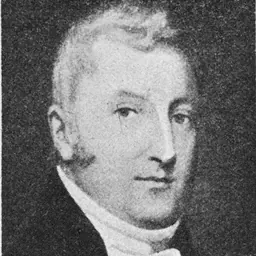
Related people
Same field, nearest in time

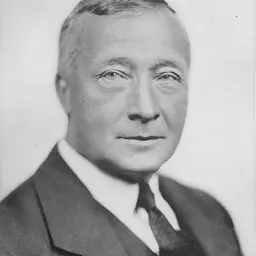
Contemporaries
People whose lives overlapped Charles Henry Pearson's




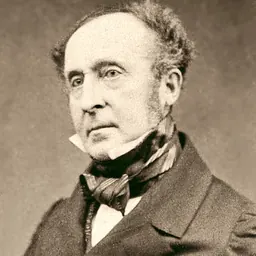
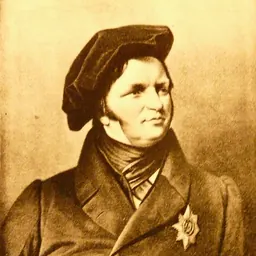
Frequently asked questions
Who was Charles Henry Pearson?
British-born Australian historian, educationist, politician and journalist
When was Charles Henry Pearson born?
Charles Henry Pearson was born on 7 September 1830 in Islington.
When did Charles Henry Pearson die?
Charles Henry Pearson died on 29 May 1894 in London.
What was Charles Henry Pearson's occupation?
Charles Henry Pearson was a sports journalist, politician, head teacher and historian.
What nationality was Charles Henry Pearson?
Charles Henry Pearson was British.
Sources & further reading
· Wikipedia: Charles Henry Pearson
· DBpedia: Charles Henry Pearson
Cite this page
APA: Biography.guide. (2026). Charles Henry Pearson. https://biography.guide/charles-henry-pearson/
MLA: "Charles Henry Pearson." Biography.guide, https://biography.guide/charles-henry-pearson/.
Chicago: "Charles Henry Pearson." Biography.guide. https://biography.guide/charles-henry-pearson/.
Data last updated: 2026-09-20 · Spot an error? Report a correction.
Page generated 2026-09-27 05:26 UTC