
About Charles Hanford Henderson
Lived 1861 – 1941 (aged 79). Charles Hanford Henderson was an American educator.
Charles Hanford Henderson (December 30, 1861 – January 2, 1941) was an American educator and author.
Biography Born in Philadelphia, he graduated from the University of Pennsylvania in 1882; was lecturer at the Franklin Institute 1883–86; Professor of Physics and Chemistry in the Philadelphia Manual Training School 1889–91, principal 1893–95; Ph.D. at Zurich in 1892; lecturer on education at Harvard 1897–98; and director Pratt Institute, Brooklyn, 1898–99.
Professor Henderson was a major figure in the creation of educational camps for boys. He founded Camp Marienfeld a Summer Camp for Boys and was its headmaster for 17 years, and was headmaster of the Marienfeld Open-Air School at Samarcand, North Carolina, 1914–16. Marienfeld; a pioneer among camps was established by Dr. Henderson in the summer of 1896 in Milford, Pennsylvania, and was moved to Chesham, New Hampshire in 1899 and operated into the 1950s. It was a study camp for boys and stressed the educational program of the progressive camp.
Dr. Henderson was an early proponent of manual training and the Arts and Crafts movement in industry. He advocated redesigning the school to suit the nature and needs of the child. Marietta Johnson, the founder of the Marietta Johnson School of Organic Education in Fairhope, Alabama credited Dr. Henderson with having coined the term "organic education" in his 1902 book Education and the Larger Life which was one of her educational bibles. Dr. Henderson was then a rival of John Dewey in the education reform movement. Although Dewey grew greatly in stature, Henderson was highly regarded and spent his career implementing reform.
He was a prolific author who wrote about progressive education, manual training for boys, the value of hand work and the benefits of summer camps. Dr. Henderson's reputation rests largely on his academic papers published in periodicals such as Popular Science, Harper's Magazine, the Atlantic Monthly and the North American Review. His books include: Elements of Physics (1900); Education and the Larger Life (1902); John Percyfield: The Anatomy of Cheerfulness (1903); Children of Good Fortune (1905); Lighted Lamp (1908); Pay-day (1911); What It Is to Be Educated (1914).
Henderson was an elected Member of the American Philosophical Society (1896).
In retirement he designed and maintained a summer home in the Arts and Crafts style in the artist’s colony of Tryon, North Carolina. Henderson's winter home was in Daytona Beach, Florida, where he died in 1941.
Don’t just read it —
keep it.
Full-length biographies made to live with: read them, listen on the way to work, watch them tonight.
- E-book
- Audio
- Video
Instant download · yours to keep · every purchase keeps this site free
Important facts
People in Charles Hanford Henderson's life
Named in this biography and alive at the same time



Related people
Same field, nearest in time

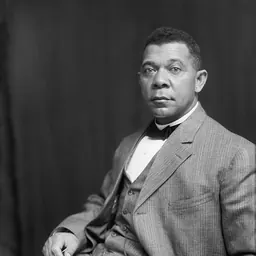




Contemporaries
People whose lives overlapped Charles Hanford Henderson's
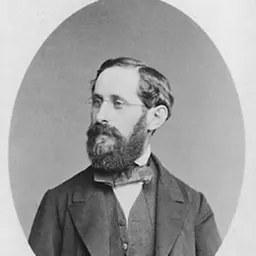
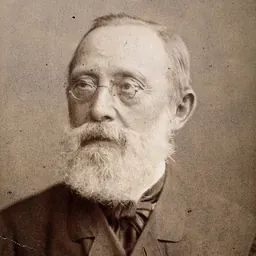
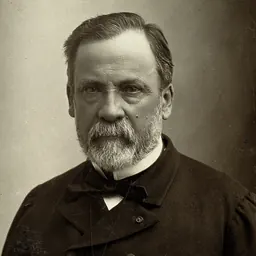

Frequently asked questions
Who was Charles Hanford Henderson?
American educator
When was Charles Hanford Henderson born?
Charles Hanford Henderson was born on 30 December 1861 in Philadelphia.
When did Charles Hanford Henderson die?
Charles Hanford Henderson died on 2 January 1941 in Daytona Beach.
What was Charles Hanford Henderson's occupation?
Charles Hanford Henderson was an educator.
What nationality was Charles Hanford Henderson?
Charles Hanford Henderson was American.
Sources & further reading
· Wikipedia: Charles Hanford Henderson
· DBpedia: Charles Hanford Henderson
Cite this page
APA: Biography.guide. (2026). Charles Hanford Henderson. https://biography.guide/charles-hanford-henderson/
MLA: "Charles Hanford Henderson." Biography.guide, https://biography.guide/charles-hanford-henderson/.
Chicago: "Charles Hanford Henderson." Biography.guide. https://biography.guide/charles-hanford-henderson/.
Data last updated: 2026-09-20 · Spot an error? Report a correction.
Page generated 2026-09-27 05:12 UTC